Mantua
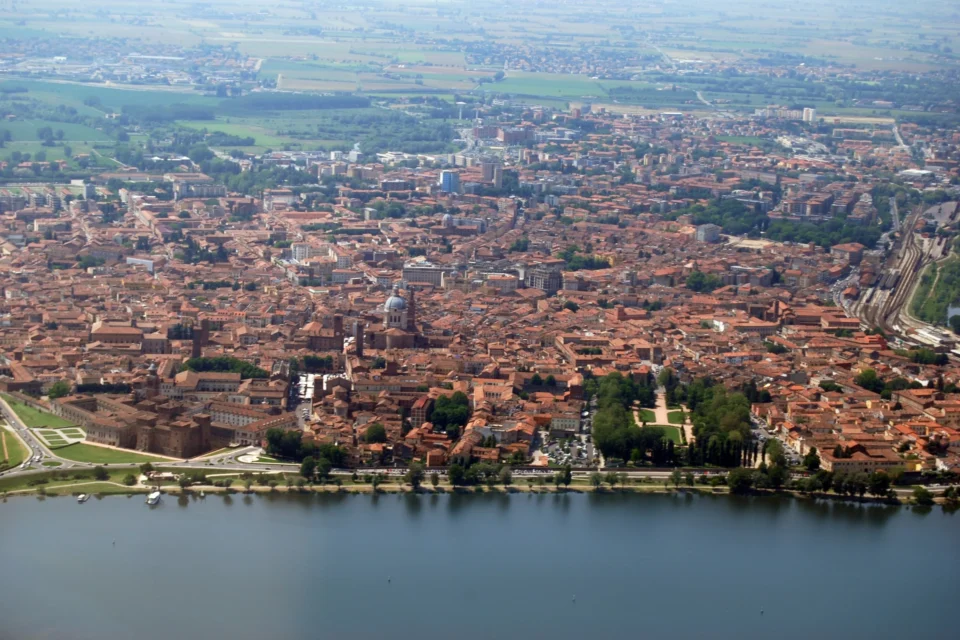
Mantua sits in Lombardy’s Po Valley, ringed by the calm lakes of the slow-moving Mincio. For four centuries the Gonzaga family turned this modest peninsula into one of Europe’s most brilliant Renaissance courts, commissioning Alberti, Mantegna and Giulio Romano and leaving a city so intact that UNESCO inscribed it, with nearby Sabbioneta, on the World Heritage List in 2008.
Why visit
Few Italian cities give you so much art in so little space. Within a compact, walkable historic centre you can stand in the room Mantegna frescoed for a marriage, gape at Giulio Romano’s falling giants, and cross a medieval square that has barely changed in five hundred years. Mantua rewards slow travel: the pace is gentler than in the big-name cities, the food is serious, and the water that wraps around three sides of the old town gives every walk an unexpectedly luminous backdrop. It is also a live city, not a museum set — students, markets, aperitivo crowds and cyclists along the lakeshore keep it moving.
Character and history
The Gonzaga ruled Mantua from 1328 until 1707, and their ambitions shaped everything you see. They married into Europe’s great dynasties, collected painters the way others collected coins, and rebuilt the city as a stage for their court. Federico II Gonzaga gave Giulio Romano, Raphael’s pupil, the freedom to design Palazzo Te as a pleasure villa whose rooms still startle visitors. Music mattered here too: Monteverdi’s Orfeo was first performed at the Gonzaga court in 1607, and a later echo of the city’s theatrical reputation survives in the legend of Rigoletto, Verdi’s jester, whose story Verdi set in Mantua. The Jewish quarter around the Norsa Torrazzo Synagogue testifies to a community present since the medieval period. Earthquakes, wars and floods have dented the city but never erased its Renaissance frame, which is precisely what UNESCO recognised.
What to see
Begin at Piazza Sordello, the grandest of the city’s squares, flanked by the cathedral and the entrance to the vast Ducal Palace, Mantua, a sprawl of some 35,000 square metres of halls, courtyards and gardens. Inside, book ahead for the Camera degli Sposi (Bridal Chamber), where Mantegna’s ceiling illusion of a painted oculus changed European painting; art lovers should also seek the fresco fragments of Pisanello in the palace’s display rooms. Neighbouring San Giorgio Castle, whose moated towers watch the lake, has reopened its historic prisons to visitors. Across town, Palazzo Te delivers Giulio Romano at his most audacious, above all the Sala dei Giganti. In the centro storico, Basilica of Sant’Andrea, Alberti’s monumental church, guards what is venerated as relics of the Blood of Christ, while the round Rotonda di San Lorenzo (Rotunda of St Lawrence) on Piazza delle Erbe sank below street level for centuries before its restoration. Do not miss the improbable Teatro Scientifico Bibiena, a miniature bell-shaped opera box that made young Mozart play in 1770, or Casa del Mantegna (Mantegna’s House), the painter’s own rational, ring-shaped home. For a lighter note, the small Tazio Nuvolari Museum honours Mantua’s legendary racing driver.
How to experience
Mantua is best on foot and by bicycle, with flat lanes linking the lakeside to the squares. Start early at Piazza delle Erbe when the market stalls are out, take a long lunch — the tortelli di zucca, pumpkin-filled pasta, and the crumbly sbrisolona almond cake are the classics — then devote the afternoon to one palace rather than rushing two. Cross to Palazzo Te by way of the Giardini dei Semplici or rent a bike and follow the Mincio cycle path; boat trips on the upper lake run in season. Opera and literature festivals fill the summer calendar, and the city’s literary pedigree — it was a European Capital of Culture runner-up long associated with Virgil, Mantegna and Monteverdi — shows in its bookshops and reading series. Check the official tourism portal turismomantova.it for current events, opening arrangements and combined tickets, since individual sites close on rotating weekdays.
Practical planning
Mantua has no airport; the practical gateways are Verona, about 45 minutes away by train or road, Milan, or Bologna. Direct trains connect Mantua with Milan, Verona and Modena, though services are regional and slower than the high-speed network. The historic centre is a ZTL, a traffic-restricted zone, so leave the car in a signed car park outside the centre and walk. Accommodation ranges from lakeside hotels to palazzo B&Bs; weekends in festival season fill quickly. Most palaces and museums charge admission and keep individual closing days, so confirm hours on official sites before you go and pre-book the Camera degli Sposi time slot, which is strictly limited.
Nearby places
Sabbioneta, the Gonzagas’ planned ideal city, makes the natural companion visit and shares Mantua’s UNESCO inscription. Cremona, with its violin-making tradition, and Brescia, with its Roman ruins and hilltop castle, are both easy day trips, and the southern shores of Lake Garda begin barely half an hour to the north.
Worth building a day around.
Basilica Concattedrale di Sant'Andrea
Parrocchia di Sant'Anselmo: basilica aperta 8-19; cripta con Sacri Vasi del Preziosissimo Sangue (Diocesi di Mantova); salita alla cupola con visite guidate.
Basilica Palatina di Santa Barbara
Chiesa gonzaghesca di Leone Battista Alberti/Giulio Romano dentro il complesso di Palazzo Ducale; scheda ufficiale del Comune.
Biblioteca Teresiana
Portale ufficiale del Comune: biblioteca civica storica (1780, voluta da Maria Teresa d'Austria) con apertura al pubblico e attività didattiche.
Camera degli Sposi
Pagina ufficiale 'Camera Picta' con link di prenotazione dedicato; accesso a fasce orarie per capienza limitata.
Casa del Mantegna
Elenco ufficiale del Comune (categoria Palazzo); sede espositiva civica nel palazzo progettato da Andrea Mantegna.
Casa del Rigoletto
Scheda ufficiale del Comune con info pratiche: edicola medievale con giardino e statua del Rigoletto; ospita mostre temporanee; ingresso non accessibile a persone con…
Castello di San Giorgio
Sito ufficiale Palazzo Ducale: celle restaurate delle 'Carceri' e camminamenti della torre sud-ovest aperti; Sala delle Armi.
Cattedrale di San Pietro apostolo (Duomo)
Scheda ufficiale del Comune (categoria Cattedrale/Duomo); chiesa attiva in Piazza Sordello.
Chiesa di San Francesco
Scheda ufficiale del Comune (Convento e Chiesa di San Francesco); chiesa gotica aperta al culto.
Chiesa di Santa Maria del Gradaro
Scheda ufficiale del Comune; chiesa storica aperta al culto presso il cimitero.
Chiesa di Santa Maria della Vittoria
Scheda ufficiale del Comune ('Madonna della Vittoria'); chiesa di ex-voto gonzaghesca aperta al culto.
MACA - Mantova Collezioni Antiche (Palazzo di San Sebastiano)
Sito museale civico con tariffe, orari e biglietteria online (museicivicimantova.vivaticket.it).
Monumento alla Donna
Categoria Monumento dell'elenco ufficiale del Comune; memorial in spazio pubblico.
Museo Archeologico Nazionale
Sito MiC (museoarcheologicomantova.beniculturali.it) e scheda Comune: museo statale completamente accessibile, al Palazzo della Gran Guardia.
Museo della Gazzetta
Elenco musei ufficiale del Comune: museo dedicato alla Gazzetta di Mantova, il più antico quotidiano d'Italia (1664).
Museo Diocesano Francesco Gonzaga
Elenco musei ufficiale del Comune; museo diocesano d'arte sacra gestito dalla Diocesi.
Museo Tazio Nuvolari
Scheda ufficiale del Comune: collezione custodita e promossa dall'Automobile Club Mantova; ingresso accessibile e guida digitale gratuita.
Museo Vigili del Fuoco
Elenco musei ufficiale del Comune: museo storico dei pompieri.
Museo Virgilio
Elenco musei ufficiale del Comune: museo archeologico sotterraneo under Piazza Virgiliana, aperto nel 2024.
Palazzo d'Arco
Elenco ufficiale del Comune; dimora storica della famiglia Arco con museo e collezioni aperte al pubblico.
Palazzo della Ragione
Elenco ufficiale del Comune; sede storica di mostre ed eventi in Piazza delle Erbe.
Palazzo Ducale
Sito ufficiale MiC con biglietteria e orari; residenza dei Gonzaga con oltre 600 sale (pagina ufficiale: orari/biglietti dedicati).
Palazzo Te
Fondazione Palazzo Te: biglietteria online (Clappit), orari dedicati; palazzo di Giulio Romano (1525-1535).
Piazza delle Erbe
Categoria Piazza dell'elenco ufficiale del Comune; piazza storica con mercato, Rotonda, Palazzo della Ragione e Torre dell'Orologio.
Piazza Sordello
Scheda ufficiale del Comune: 'considerata il cuore della città', spazio pubblico circoscritto da Palazzo Ducale, Duomo, Palazzi Bonacolsiani.
Rotonda di San Lorenzo
Comune di Mantova e Associazione Monumenti Domenicani: orari di apertura pubblici e ingresso gratuito.
Sinagoga Norsa Torrazzo
Elenco ufficiale del Comune (categoria Sinagoga); unica sinagoga storica attiva della città, con Museo Ebraico nel cortile.
Sonnabend Collection Mantova
Elenco musei ufficiale del Comune: collezione d'arte contemporanea Sonnabend visitabile su prenotazione.
Teatro Scientifico dell'Accademia (Teatro Scientifico Bibiena)
Scheda ufficiale del Comune (gestore): aperto ai visitatori, biglietteria tramite Musei Civici/Mantova Card; ancora usato per concerti e conferenze.
Tempio Leon Battista Alberti (San Sebastiano)
Scheda ufficiale del Comune; il sito Fondazione Palazzo Te indica che l'ingresso è incluso nel biglietto di Palazzo Te.
Torre dell'Orologio (Museo del Tempo)
Scheda ufficiale del Comune: torre di Luca Fancelli (1472-73) con orologio astronomico di Bartolomeo Manfredi; ospita il Museo del Tempo, gestito dai Musei Civici.
Torre della Gabbia
Torre medievale visibile da Via Cavour; categoria Torre dell'elenco ufficiale del Comune; interno non regolarmente aperto.
Journeys in Mantua.
Demo — Mantua Private Highlights Tour
Let a local expert design your Mantua day.
Tell us your dates and pace. A travel designer replies within one working day.