Lipari
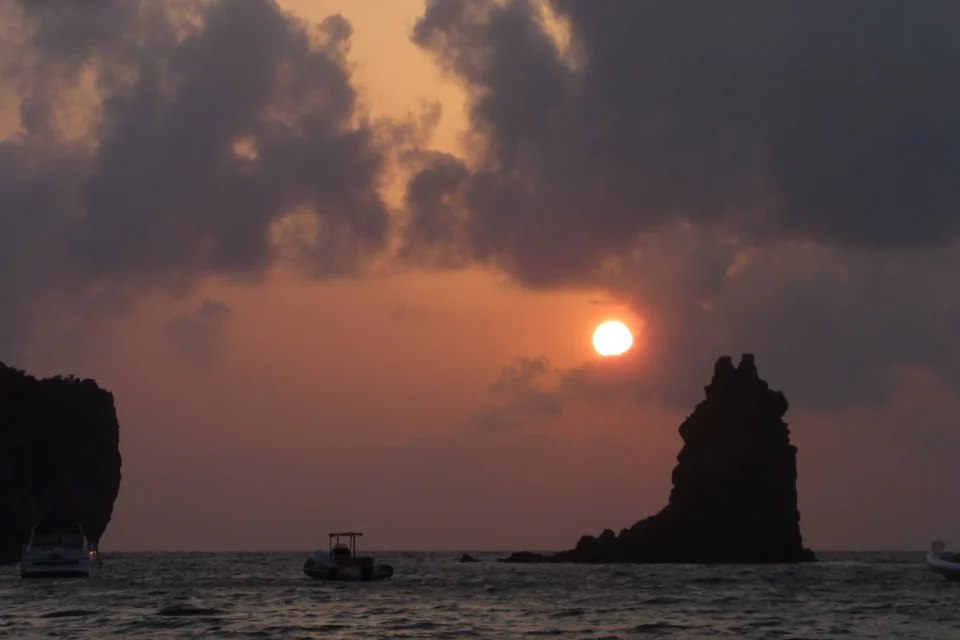
Lipari is the largest and busiest of the Aeolian Islands, a UNESCO World Heritage volcanic archipelago off Sicily’s north coast, and it works as the group’s capital: principal port, main town, and the place where six thousand years of Mediterranean settlement are gathered inside one citadel. Black volcanic rock, white pumice cliffs and a pastel seafront set the scene.
Why visit
Lipari is where the Aeolian archipelago makes sense. Its castle-crowned headland holds the regional archaeological museum, one of the most important in southern Italy, where the islands’ story — Neolithic obsidian traders, Greek colonists, Roman shipwrecks, eruptions — is told from material found on these islands alone. Beyond the culture, the town delivers everything visitors want from an island capital: a lively marina and corso, swimming off smooth white pumice beaches, boat trips to sea grottoes and across to smoking fumaroles, and ferries radiating to every other island in the group. It suits both base-makers, who stay a week and day-trip outward, and overnighters who want a full Aeolian experience without leaving one island.
Character and history
Obsidian, the black volcanic glass the islands export to the ancient world, made Lipari wealthy long before Greece or Rome: from the Neolithic onwards, its material travelled across the Mediterranean as the sharpest cutting edge available. Myths attached the islands to Aeolus, keeper of the winds. Greeks founded a city here in the classical period; Romans fought Carthage in the waters offshore; the medieval castle repelled corsairs, and the terrible raid of Barbarossa in 1544 emptied the island for years before resettlement under Charles V brought new families from the mainland and Naples. The citadel was rebuilt and fortified in the sixteenth century, and within its walls the island’s archaeology — excavated systematically from 1950 onwards by Luigi Bernabò Brea and Madeleine Cavalier — found its permanent home. Today’s Lipari is both working island and resort: fishing boats share the harbour with arriving hydrofoils, school runs cross the corso in the morning, and the pale scars of old pumice quarries along the coast recall the industry that shaped the modern age before tourism took its place.
What to see
The Castle di Lipari e Parco Archeologico occupies the acropolis above the old town: walls of successive ages, a Norman cloister and excavation areas stand within one citadel complex. Inside it, the Museum Archeologico Regionale Luigi Bernabò Brea unfolds through a series of pavilions — prehistoric Lipari and the Neolithic obsidian economy, the smaller islands, epigraphy, the Greek and Roman city with its theatrical masks and Dionysiac kraters, and a volcanology section — plus an underwater archaeology sector reconstructing cargoes of ships wrecked in Aeolian waters. At the citadel’s heart, the Cathedral di San Bartolomeo, dedicated to the island’s patron saint, rises over the town with its Norman-era origins and baroque remaking. Out on the western slopes, the Church Vecchia di Quattropani rewards a scooter ride with quiet and one of the archipelago’s broadest sea views, stretching from Salina’s twin peaks to the horizons over Filicudi and Alicudi.
How to experience
Start with the castle and museum in the morning, before the heat, and let the museum’s obsidian and shipwreck rooms explain the islands before you go out among them. Swim in the afternoon at Canneto or the white pumice beach of Papagayo, or take one of the boat excursions that circle the island’s grottoes and continue to the fumaroles of Vulcano. Eat on the marina: fresh tuna and swordfish, caper salad — Lipari’s capers are among Italy’s most prized — and Malvasia delle Lipari, the sweet amber wine grown on these steep terraces. Evening is for the passeggiata on the corso, then a drink looking across to the castle floodlit above the rooftops. If you plan to island-hop, buy ferry tickets a day or two ahead in summer.
Practical planning
Lipari is reached by hydrofoil or ferry from Milazzo (about an hour by hydrofoil), with seasonal services from Palermo, Naples and Messina; the island is the archipelago’s transport hub, and vehicles can come across by ferry in the low season, though most visitors walk or use the local shuttle buses. Accommodation spans campsites to smart hotels; book early for July and August. The castle, museum and excavations charge admission and keep seasonal hours — check the regional archaeological park’s current timetable before travelling. Bring windproof layers for boat trips, sturdy shoes for pumice paths, and note that the old town’s lanes are steep and mostly stepped.
Nearby places
Vulcano, smoking and sulphurous, is minutes away by hydrofoil; Stromboli draws evening boats to watch its eruptions after dark. Salina offers green slopes and Malvasia vineyards, Panarea its fashionable little hamlet, and Milazzo on the mainland is the jumping-off point for the whole archipelago.
Worth building a day around.
Castello di Lipari e Parco Archeologico
Official source page for Castello di Lipari e Parco Archeologico. Not stated on the source page.
Cattedrale di San Bartolomeo
Official source page for Cattedrale di San Bartolomeo. Not stated on the source page.
Chiesa Vecchia di Quattropani
Official source page for Chiesa Vecchia di Quattropani. Not stated on the source page.
Museo Archeologico Regionale Luigi Bernabò Brea
Official source page for Museo Archeologico Regionale Luigi Bernabò Brea. Not stated on the source page.
Journeys in Lipari.
Demo — Aeolian Islands Private Highlights Tour
Let a local expert design your Lipari day.
Tell us your dates and pace. A travel designer replies within one working day.