Panarea
The smallest of the inhabited Aeolian Islands, Panarea blends prehistory and glamour: a Bronze Age village above a turquoise cove, fumaroles hissing beneath clear water, and whitewashed houses popular with the Mediterranean’s summer set. Car-free lanes, volcanic islets offshore and a single summit path make it an island best explored slowly, on foot and by boat.
Why visit
Panarea works on visitors differently from its larger neighbours. The island is tiny, barely three and a half square kilometres, yet it offers a compressed anthology of everything the Aeolians stand for: volcanic terrain recognised by UNESCO as an outstanding record of island-building, ancient history you can touch, water of remarkable clarity and a fashionably quiet social scene. Its signature site is the prehistoric village of Capo Milazzese, where stone huts of a Bronze Age settlement perch above the sheltered cove of Cala Junco, ringed by rust-red rock. Hikers can climb to Punta del Corvo, the island’s highest point, for views over the archipelago, while swimmers and divers find submerged fumaroles, rock formations and a shipwreck offshore. There are no airports and no significant roads; arrivals come by sea, and the pace of the island is set by footpaths and boat timetables. For travellers, that smallness is the point: a day or a week feels pleasantly self-contained.
Character and history
The island the Greeks called Euonymos has been settled since deep prehistory, and its position on ancient sea routes gave it outsize importance for its size. The village of Capo Milazzese dates to the mid-second millennium BC, part of a Aegean-flavoured culture that traded across these waters; Greek settlers followed, then Romans, before piracy made the small islands untenable for centuries. In the modern era Panarea lived quietly as a fishing and farming outpost until the twentieth century, when its beauty and its car-free streets drew artists, then an international summer society, a reputation that endures even as UNESCO’s 2000 inscription of the entire Aeolian chain brought strict limits on construction. Geologically the island remains an active volcano, part of the same submarine edifice that raises the islets of Basiluzzo, Dattilo, Bottaro and the Lisca rocks offshore. Year-round residents number only a few hundred, swelling dramatically each summer, and the island keeps its permanent character through the seasons of a fishing village rather than a resort.
What to see
The Villaggio preistorico di Capo Milazzese is the essential site: the foundations of oval stone huts of a Bronze Age settlement set on a headland above the sea, reached on a marked path from the harbour area. Immediately below lies Cala Junco, a deep sheltered bay with red-tinged cliffs and remarkably clear water, one of the loveliest swims in the archipelago; the combination of site and cove makes this coast the island’s natural half-day. From the village lanes, a path leads to Punta del Corvo, the four-hundred-and-twenty-one-metre summit, whose view takes in Lipari and Salina, the smoking outline of Stromboli and the cluster of islets offshore. Out on the water, Basiluzzo, the largest of the satellite islets, offers a serene picnic anchorage above ruins of a Roman settlement, with the underwater fumaroles of the surrounding shoals visible as silvery bubbles between the rocks.
How to experience
Walk, don’t drive: there are no cars to speak of, and every site, harbour, beach and summit connects by footpath. Do Capo Milazzese and Cala Junco in the morning before the sun reaches the headland, then swim in the bay’s corner where the water is calmest. Book a boat or gommone day to circle the islets, drop anchor at Basiluzzo and look down on the fumarole fields between Dattilo and Lisca Bianca; experienced divers can arrange trips to deeper sights, including the wreck of the Lanishen resting upright at thirty to forty metres. In the evening, return to the lanes around the harbour for aperitivo, dinner and the island’s gentle version of nightlife. Bring proper shoes for the trails, since the terrain is sharp volcanic rock, and carry cash, as services thin out beyond the main village. If your dates allow, come in June or September: the sea is warm, the paths are quiet, and the island breathes.
Practical planning
Panarea is reached by hydrofoil and ferry from Milazzo, with additional seasonal links from Messina, Palermo and Reggio Calabria; sailing times run longer from the mainland ports. There is no airport, and luggage moves by electric porter carts, so pack accordingly. Accommodation ranges from simple rooms to upscale hotels, and it books out far in advance for July and August. Trails are sun-exposed and stony; take water, a hat and sturdy footwear, and be realistic about the summit path in high summer heat. Swimming from rocks rather than sand is the norm, so consider water shoes. Ferry and hydrofoil schedules shift with the season and with sea conditions, so confirm sailings on the operators’ sites shortly before travel, and check current information on the regional portal visitsicily.info. Two nights suit most travellers; three if the islets by boat are a priority.
Nearby places
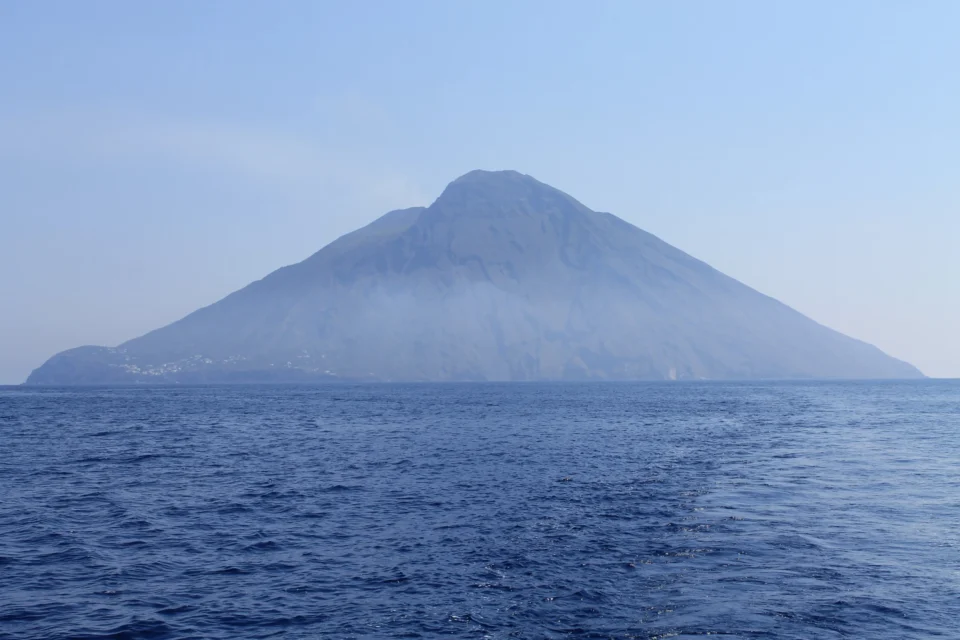
The island capitals of Lipari and Salina are short sailings away, and the nightly spectacle of Stromboli‘s eruptions lies within reach on an evening boat excursion.
Worth building a day around.
Basiluzzo
Regione Siciliana — Visit Sicily, in “Panarea Aeolian Islands | Visit Sicily official page”, identifies Basiluzzo as a visitor-relevant attraction associated with Panarea. Verified…
Cala Junco
Regione Siciliana — Visit Sicily, in “Panarea Aeolian Islands | Visit Sicily official page”, identifies Cala Junco as a visitor-relevant attraction associated with Panarea.…
Punta del Corvo
Regione Siciliana — Visit Sicily, in “Panarea Aeolian Islands | Visit Sicily official page”, identifies Punta del Corvo as a visitor-relevant attraction associated with…
Villaggio preistorico di Capo Milazzese
Regione Siciliana — Visit Sicily, in “Panarea Aeolian Islands | Visit Sicily official page”, identifies Villaggio preistorico di Capo Milazzese as a visitor-relevant attraction…
Journeys in Panarea.
Demo — Panarea Private Highlights Tour
Let a local expert design your Panarea day.
Tell us your dates and pace. A travel designer replies within one working day.