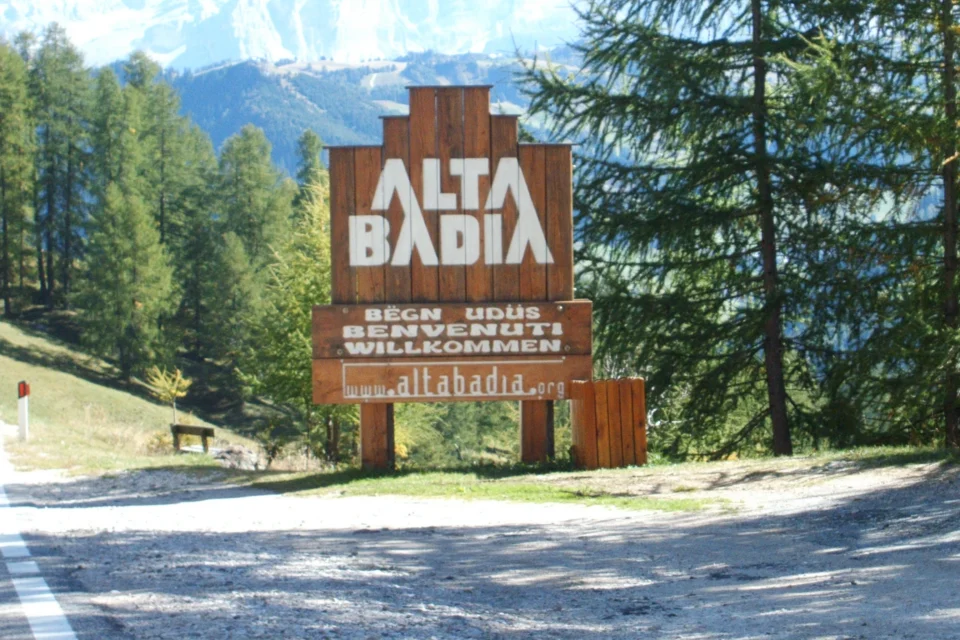
Alta Badia
A valley basin of the Dolomites where the Ladin language still sounds in the streets, Alta Badia binds six villages beneath the Sella, Sassongher and Conturines peaks. It is at once a UNESCO-listed natural landscape, a pilgrim destination at La Crusc, a centre of alpine gastronomy, and the winter arena of the Ski World Cup on the Gran Risa.
Why visit
Alta Badia does everything at altitude with unusual grace. The villages — Corvara, Colfosco, La Villa, San Cassiano, Badia and La Val — sit in a broad green amphitheatre of the Val Badia, where the rock walls belong to the Dolomites UNESCO World Heritage Site and glow pink at dawn and dusk in the enrosadira. Summer is a hiker’s landscape of high meadows, via ferratas and mountain inns, stitched together by lifts; winter belongs to the Sellaronda ski circuit, the steep gran Risa World Cup slope and the gentle upper pastures. What distinguishes the valley, though, is culture. Here the Ladin language — older than both Italian and German in these mountains — is spoken daily, taught in schools and explained in a first-rate castle museum; the food ranges from farm cooking to restaurants with international standing; and festivals like the bread and harvest celebrations keep agrarian life on show. For travellers who want mountains with a civilisation attached, few places in the Alps compete.
Character and history
The valley’s identity was formed by its language. Ladin, rooted in the Vulgar Latin of the Alps and preserved by isolation in these enclosed basins, remains the first tongue of most inhabitants across the five Ladin valleys — Val Badia, Val Gardena, Val di Fassa, Livinallongo and Ampezzo — whose shared story is told at the Museum Ladin. Alta Badia’s villages grew as farming communities of the abbey lands and noble courts of the Middle Ages, and their fabled prosperity came later, from the passage trade and from twentieth-century tourism, which arrived early and was managed, on the whole, with a sense of stewardship. The sacred geography is old and deliberate: mountain sanctuaries like La Crusc, chapels above 2,000 metres, wayside crosses on every mown slope. Modern fame was sealed on snow — the Gran Risa slope at La Villa, one of the steepest and most technical giant slalom venues on the FIS World Cup circuit, brings the ski world here every December — while summer’s Maratona dles Dolomites does the same for road cycling each July. Agriculture never left: hay from these meadows still feeds the cows whose milk makes the valley’s cheeses, and the festivals of bread and the peasant wedding are working commemorations, not costumes.
What to see
Start with the Ladin story itself at the Museum Ladin Ciastel de Tor in San Martino in Badia, a castle raised around 1230 by ministerials of the bishops of Brixen and now filled with dioramas, talking portraits and interactive exhibits on Ladin history, language and economy; its sister site in San Cassiano extends the story with the bear cave finds of the Conturines. High on the eastern wall of the valley, the Santa Croce Sanctuary (La Crusc) clings to the foot of the Sas dla Crusc at the edge of the Armentara uplands — a pilgrimage church whose recorded story reaches back past 1511 to a chapel of around 1010, rebuilt and enlarged across the centuries, holding relics of several saints and still the goal of the early-summer processions. The walk there through the Armentarola meadows, a high hay landscape laced with trails beneath the rock face, is among the easiest and most beautiful introductions to the valley’s open country. Beyond these three anchors, the villages themselves are the sights: Corvara’s lift hub, Colfosco beneath its sheer pyramid, the aristocratic facades of La Villa, San Cassiano’s lanes, and the scattered farmsteads (viles) that dot the valley floor.
How to experience
Plan days around the lifts as much as the legs. In summer, buy the valley lift pass, ride up in the morning and walk the high routes between huts — the Alta Badia Summer Card and the marked trail network make hut-to-hut walking straightforward even for mixed groups. Book one serious food experience: the valley’s starred restaurants and hut tables have made Alta Badia a byword for mountain gastronomy, and events like the summer dinner served under the stars on the Sella massif sell out well ahead. In winter, ski the Sellaronda clockwise and anticlockwise, test the Gran Risa from the piste, and sample the ski-safari gourmet lunches that have become the valley’s signature. Whatever the season, learn ten words of Ladin — the museum, the street signs and the older villagers reward the effort.
Practical planning
Alta Badia lies about 45 minutes by road from Bolzano and Brunico; the nearest railhead is Brunico, with buses up the Val Badia, and airports at Bolzano, Innsbruck and Verona serve the region. Lifts operate from late spring to early October and from late November to Easter, with precise dates varying each year — check the current calendar. Summer weekends and the December World Cup week are the busiest moments; book beds and restaurants early for both. At 1,500 metres on the valley floor and far higher on the pastures, evenings are cool all summer. Two or three days let you combine La Crusc, the museum and a high traverse; a week allows the passes, Corvara and San Cassiano included, as bases for the wider Dolomites.
Nearby places
Corvara and San Cassiano are the valley’s two lift-and-culture hubs; Val Gardena over the Gardena pass shares the Ladin world; Alpe di Siusi offers gentler plateau walking; and Bolzano or Bressanone anchor any itinerary with urban depth.
Worth building a day around.
Museo Ladin Ciastel de Tor
Official museum website publishes visitor page, opening times, ticket prices and address; also listed by the official Alta Badia tourism portal. Open 1 May…
Prati di Armentarola
Official Alta Badia tourism portal publishes the route from Badia to the La Crusc sanctuary through the Armentara meadows; regional portal suedtirol.info documents the…
Santuario di Santa Croce (La Crusc)
Official Alta Badia tourism portal POI page documents the sanctuary, its setting at the foot of Sas dla Crusc and access from Badia; historic…
Journeys in Alta Badia.
Demo — Alta Badia Private Highlights Tour
Let a local expert design your Alta Badia day.
Tell us your dates and pace. A travel designer replies within one working day.