Alicudi
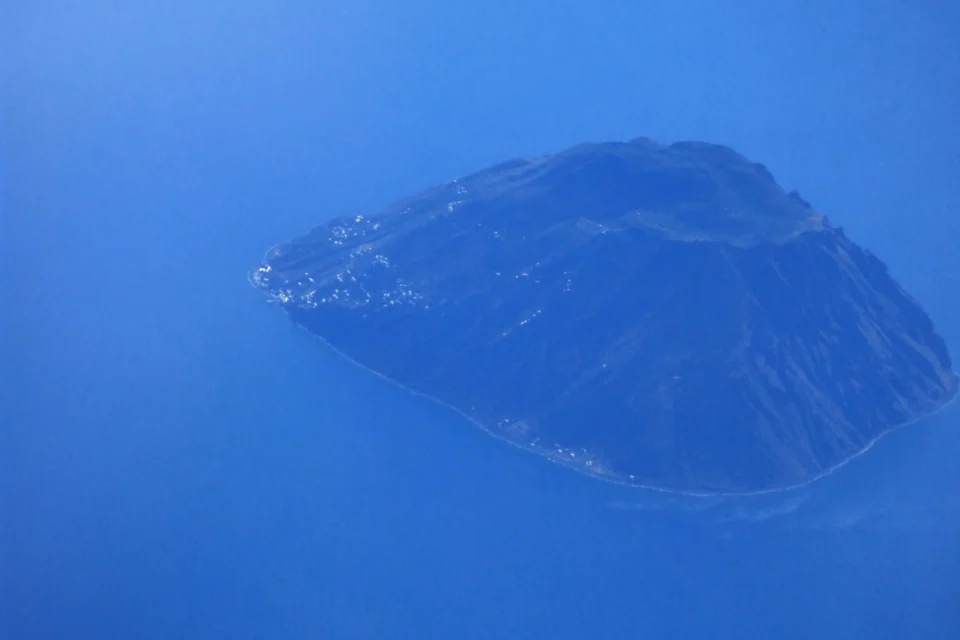
The westernmost of the Aeolian Islands, Alicudi is a dormant volcano’s cone rising sheer from the Tyrrhenian Sea, home to a few dozen islanders, one mule track and no cars. Travellers who make the crossing find an island stripped to essentials: whitewashed houses stacked above a tiny jetty, terraces of capers and figs, and paths climbing toward a silent crater.
Why visit
Alicudi is the Aeolian Islands at their most elemental. Where Lipari and Vulcano hum with day-trippers, here the ferry simply leaves fewer people. There is no hotel strip and no proper harbour — boats tie to temporary moorings, and everything the island consumes arrives, like its residents, by small vessel. What you get in exchange is volcanic scenery without filter: black lava shores, a cone climbing about 675 metres from the sea, and air so clear the neighbouring islands line up on the horizon. Days are spent walking the stone staircases that serve as streets, swimming off smooth rock, and eating whatever the fishermen brought in. Nights are properly dark, lit by the torches some islanders still carry up the path. It is a place that asks you to slow to its pace — donkey pace, as the local trekking guides put it — and rewards anyone who does.
Character and history
The island appears in the record as Ereikousa, “the place of heather,” named by Greek settlers who found the slopes covered in it. People have lived here since at least the seventeenth century BC, and Roman-era ceramics have surfaced along the eastern coast. Centuries of pirate raids pushed the islanders to build high, on terraces reachable only by stairs — a defensive habit that still shapes village life. The island’s past also carries stranger notes: sailors’ tales of witches, which scholars link to ergotism, the poisoning from fungus-touched rye eaten in years of scarcity. Under the Bourbons, Alicudi was even drawn into aristocratic title, when the King of Naples created a Count of Alicudi in 1807 for a Spanish diplomat who had likely never seen it. Today the island belongs to the comune of Lipari, and the Aeolian archipelago as a whole is inscribed on the UNESCO World Heritage List for the volcanic character that built every one of its islands.
What to see
The island is the sight, and its named points make a natural itinerary. The whole upper island is dominated by Mount Filo dell’Arpa, the cone whose slopes the paths climb; from the top, on clear days, you can pick out Filicudi, Salina and the Sicilian coast. The climb itself follows the Antichi sentieri di Alicudi, the old stone ways that thread between terraces, dry-stone walls and the ruined threshing floors of the island’s farming past. Halfway up, the little whitewashed Church di San Bartolo marks one of the few buildings outside the jetty hamlet and a fine excuse to pause. For a gentler walk, Timpone del Monte gives a shorter ridge route with the same sea views, past caper gardens and fig trees gone half wild.
How to experience
Come for a night or two rather than a day trip — the island’s character only opens after the afternoon boat departs. Swim early off the rocks below the village, then take a guided donkey trek or simply walk the stairs toward Filo dell’Arpa with serious shoes and more water than seems reasonable; there are no fountains on the upper trails. Meals are unpretentious: one restaurant serves the catch, and pane cunzato — bread dressed with oil, tomatoes and capers — is the island’s unofficial dish. Ask before photographing people or gardens; a community this small earns its privacy. Bring cash, a torch for evening paths, and anything specific you need, since shops are minimal. Weather decides everything here: when the wind rises, hydrofoils stop, and plans change. Treat that as part of the island’s terms.
Practical planning
Alicudi is reached by ferry or hydrofoil from Milazzo and, in season, from Palermo and Cefalù, usually via Lipari or Filicudi; crossings take from about an hour and a half upward, and schedules thin badly outside the summer months, so verify timetables on the operators’ sites shortly before travel. There are no car rentals — there are no roads — so pack for walking, including grip-soled shoes and sun protection. Accommodation consists of small guesthouses and rented houses, best booked well ahead for July and August. Carry cash, as the island’s few businesses cannot always take cards. The Visit Sicily pages and the comune of Lipari publish updated visitor information.
Nearby places
Filicudi, the next island east, shares the same wild, far-flung feel and its own volcanic silhouettes. Salina offers green slopes, caper fields and the archipelago’s finest sweets. Lipari, the main island, holds the citadel, the archaeological museum and the widest choice of services.
Worth building a day around.
Antichi sentieri di Alicudi
Regione Siciliana — Visit Sicily, in “Alicudi Aeolian Islands | Visit Sicily official page”, identifies Antichi sentieri di Alicudi as a visitor-relevant attraction associated…
Chiesa di San Bartolo
Regione Siciliana — Visit Sicily, in “Alicudi Aeolian Islands | Visit Sicily official page”, identifies Chiesa di San Bartolo as a visitor-relevant attraction associated…
Monte Filo dell'Arpa
Regione Siciliana — Visit Sicily, in “Alicudi Aeolian Islands | Visit Sicily official page”, identifies Monte Filo dell'Arpa as a visitor-relevant attraction associated with…
Timpone del Monte
Regione Siciliana — Visit Sicily, in “Alicudi Aeolian Islands | Visit Sicily official page”, identifies Timpone del Monte as a visitor-relevant attraction associated with…
Journeys in Alicudi.
Demo — Alicudi Private Highlights Tour
Let a local expert design your Alicudi day.
Tell us your dates and pace. A travel designer replies within one working day.