Alba
Alba is the capital of the Langhe, the Piedmontese wine country inscribed by UNESCO, and the world’s reference point for white truffle. A medieval centre of towers, a Romanesque cathedral, legendary cellars and one of Italy’s great food fairs make this elegant town on the Tanaro river the natural base for exploring Barolo and Barbaresco country.
Why visit
Alba condenses the pleasures of Piedmont into walkable form. Between courses of tajarin and hazelnut desserts you can trace Roman walls, count the medieval towers that earned the town its old name of the city of a hundred towers, and step into a cathedral that guards an archaeological dig beneath its floor. Come autumn, the International White Truffle Fair fills the town with buyers and cooks from every continent, and the surrounding vineyards turn copper and red. This is also working country: a town of wineries, of the writer Beppe Fenoglio’s partisan landscapes, and of contemporary art projects that have made it a UNESCO Creative City and a coming Italian Capital of Contemporary Art. Few food destinations anywhere are so complete.
Character and history
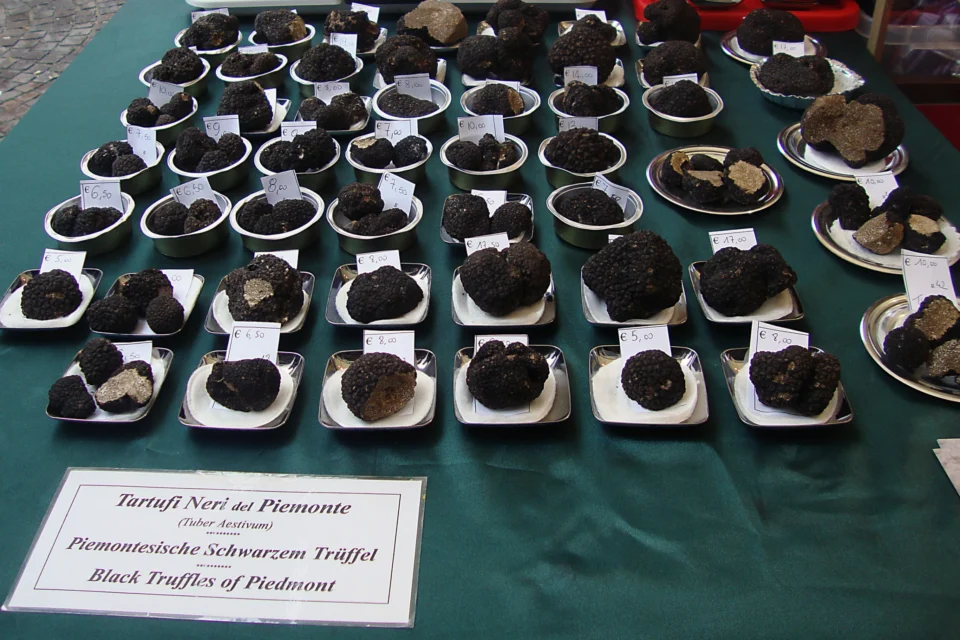
The site predates Rome; the town became Alba Pompeia under the consul Gnaeus Pompeius Strabo, and the emperor Pertinax was born here. The Middle Ages left the deeper mark: a proud free commune in the Lombard League, ringed by noble tower-houses, later contested by Montferrat, the Visconti and the Gonzaga until the House of Savoy took it by the Treaty of Cherasco in 1631. The twentieth century added two unlikely chapters — partisan resistance, which briefly created a free “Republic of Alba” in 1944 and earned the town a Gold Medal for Military Valour, and the rise of Ferrero, the confectionery empire founded here, whose Nutella made this quiet provincial town a global industrial name. Writers matter too: Fenoglio set his bitter, beautiful novels of the Resistance in these streets, and the study centre dedicated to him keeps his archive in town. Above all, Alba lives from its hills — Nebbiolo, Barbera, Dolcetto and Moscato on every slope, and beneath the woods, the white truffle that commands the world’s highest prices.
What to see
Start at Piazza Risorgimento (Cathedral Square), laid out over the Roman forum, where the Alba Town Hall faces the Alba Cathedral of Saint Lawrence, a Romanesque-Gothic church with a carved sixteenth-century choir and excavations below. Nearby, the Torre Sineo (Sineo Tower) and the route of the Medieval towers and palaces of Alba’s historic centre recall the tower rivalry of the commune. The cultural quarter of the Cortile della Maddalena gathers the civic library, the Federico Eusebio Civic Archaeological and Natural Sciences Museum and the MUDET – Museum of the Alba Truffle, where the local treasure gets the full curatorial treatment. For literature, the Beppe Fenoglio Study Centre is worth the detour, and the deconsecrated Church of San Domenico now hosts exhibitions. Mark, too, the newer landmarks: Valerio Berruti’s sculpture “Alba” and the monumental installation Porta di Luce (Gate of Light).
How to experience
Time matters more than anything else in Alba. The truffle fair runs from early October into early December and is the town at full throttle — book lodging far ahead. Shoulder months offer the same landscape with easier tables. Structure days around eating: a slow lunch, cellar visits in the surrounding villages, an evening stroll down the food-lined Via Maestra. Take the Giorgio Busca Social Theatre tour or check the visititalba events calendar — concerts and exhibitions fill the autumn season. Above all, get into the hills: the Langhe villages and vineyard viewpoints around Alba are minutes away by car, and the Roero side of the river offers quieter ridges. If you visit in spring, wild asparagus and the first vegetables take the truffle’s place on menus.
Practical planning
Alba sits on the Tanaro about 50 kilometres from both Turin and Cuneo, reachable by car from the Torino–Savona motorway or by rail with changes from Turin. The historic centre is compact; parking is easiest just outside the walls on fair days. The tourist office and the visititalba portal publish museum hours, fair dates and events — check before travelling, since seasonal schedules shift. November fog is real and atmospheric; October weekends are the busiest of the year. Book restaurants, cellar tastings and especially October accommodation well in advance, and note that the town’s museums keep varied closing days through the week.
Nearby places
The wine villages begin immediately: Barolo, with its castle and wine museum; Barbaresco, on its slope above the Tanaro; La Morra and Monforte d’Alba with their celebrated viewpoints; Serralunga d’Alba under its keep-like castle; and Grinzane Cavour with its historic castle. Neive and Bra — home of Slow Food — round out a loop through Langhe and Roero country. All are on the same-province list and make natural half-day excursions from an Alba base.
Worth building a day around.
Biblioteca Civica “Giovanni Ferrero”
VisitAlba: accesso libero per consultazione; orari mar-sab; polo del sistema bibliotecario delle Langhe (39 comuni).
Cattedrale di San Lorenzo
Portale turistico ufficiale VisitAlba: accesso libero, aperta tutti i giorni 7:30-19:00 (escluso culto).
Centro Studi Beppe Fenoglio
VisitAlba: archivio consultabile su appuntamento con modulo e regolamento; aperture mar-ven 9-12 e 15-18.
Chiesa dei Santi Cosma e Damiano
VisitAlba: aperta tutti i giorni 8-19 (escluso culto).
Chiesa di San Domenico
VisitAlba: apertura mar-ven 15-18, sab-dom 10-12 e 15-18, contributo di 2 euro per il restauro; visite fuori orario su contatto preventivo.
Chiesa di San Giovanni
VisitAlba: accesso libero tutti i giorni 7:30-19:00 (escluso culto); visite guidate 'Visioni d'arte' su prenotazione.
Chiesa di San Giuseppe
VisitAlba: ingresso a pagamento (4 euro campanile + percorso archeologico; 2 euro parziale); orari lun-ven 14:30-17:30, sab-dom 10-13 e 14:30-18:30.
Chiesa di Santa Caterina
VisitAlba: apertura mar-ven 14:30-18:30, dom 14:30-19:00 (chiusa durante le funzioni).
Chiesa di Santa Maria Maddalena
VisitAlba: accesso libero tutti i giorni 9-19; coro ligneo aperto sab-dom 10-18.
Cortile della Maddalena
VisitAlba: cortile porticato pubblico, luogo di passaggio e sosta, cuore autunnale della Fiera Internazionale del Tartufo Bianco d'Alba.
Ex Casa Miroglio
VisitAlba: sede museale catalogata tra i musei cittadini, attualmente in fase di ristrutturazione con aggiornamenti promessi al termine dei lavori.
Fondazione Piera, Pietro e Giovanni Ferrero (spazio espositivo)
Sito istituzionale della Fondazione e VisitAlba: attività espositiva di arte e fotografia (Burri, Berruti, Penone, Lartigue), concerti e convegni; orari variabili in base agli…
MUDET - Museo del Tartufo d'Alba
VisitAlba e Comune di Alba: 10 sale su due piani, aperto dal 2 aprile al 6 gennaio, 10:30-18:00, chiuso martedì; biglietto 5 euro, ridotto…
MUDI - Sistema Culturale della Diocesi di Alba (Museo Diocesano)
VisitAlba: orari mar-ven 15-18, sab-dom 14:30-18:30, biglietto 5 euro, prenotazione obbligatoria, gruppi max 15.
Museo Civico archeologico e di scienze naturali “Federico Eusebio”
VisitAlba: biglietto 5 euro (ridotto 3), chiuso lunedì; sezioni preistorica, romana, geologia, zoologia, botanica.
Palazzo Municipale
VisitAlba: edificio amministrativo con orari di segreteria; visite possibili in aperture straordinarie o con visite guidate organizzate.
Percorso archeologico della Chiesa di San Giuseppe (resti del teatro romano)
VisitAlba: sotto i gradini della cappella percorso museo-archeologico con resti del teatro romano e della torre medievale; biglietto congiunto con il campanile.
Piazza Risorgimento (Piazza del Duomo)
VisitAlba: la piazza scende dal foro della romana Alba Pompeia e dalla platea medievale; prospettano Duomo, Palazzo Comunale e Torre Sineo.
Porta di Luce
VisitAlba: opera abitabile di Samuel Di Blasi e Ugo Costantino, inaugurata il 23 novembre 2024, liberamente accessibile e percorribile.
Scultura “Alba” di Valerio Berruti (Piazza Michele Ferrero)
VisitAlba: profilo di bambina in acciaio bronzato alto 12,5 metri, inaugurata nel 2022 e donata alla comunità, al centro della fontana circolare.
Sferisterio Mermet
VisitAlba: impianto in uso dall'Ottocento (concessione 1854, progetti 1855-1857); accessibile in occasione di eventi e gare, orari variabili.
Teatro Sociale “Giorgio Busca”
VisitAlba: teatro attivo con stagione 2026 pubblicata; orari variabili in base agli eventi, visite tramite biglietteria.
Tempio di San Paolo
VisitAlba: oratorio aperto con messa quotidiana, confessione e adorazione perpetua; orari di apertura non pubblicati.
Torre Sineo
VisitAlba (Torri e Palazzi Medievali): itinerario esterno nel centro storico; le torri sono visibili dall'esterno come punti di riferimento.
Torri e palazzi medievali del centro storico di Alba
VisitAlba: itinerario pedestre nel tessuto medievale a cavallo del cardo (via Maestra) e decumano (via Cavour) romani.
Journeys in Alba.
Demo — Alba Private Highlights Tour
Let a local expert design your Alba day.
Tell us your dates and pace. A travel designer replies within one working day.