Barbaresco
Barbaresco is a small village on a ridge above the Tanaro whose name is synonymous with one of Italy’s noblest red wines. A single medieval tower rises over the UNESCO-listed vineyards, cellars surround the church square, and the parish calendar still turns with the vines — the Langhe at its most concentrated.
Why visit
The pleasure of Barbaresco is proportion. Everything fits together — the eleventh-century tower, the baroque parish church, the monumental sundial painted on a house wall, and vineyards that walk right into the village. Tastings need no car: the village’s cellars and the regional enoteca sit within a few minutes of each other, pouring Nebbiolo grown on the surrounding crus. Between glasses, walking trails thread the vineyard landscape recognised by UNESCO as part of the Langhe-Roero and Monferrato World Heritage site, and the tower’s summit platform gives a 360-degree view over the Tanaro bend. For wine lovers, the village is a pilgrimage; for everyone else, it is one of Italy’s most beautiful small agricultural places.
Character and history
The name descends from the Latin “Barbarica silva”, a barbarian wood; Ligurian peoples farmed these hills long before Rome, and the local dialect still keeps Celtic echoes in words like “bric” for a hilltop. The Middle Ages fortified the ridge, and the town crest — “De Barbarisco turris et Arx”, the tower and citadel of Barbaresco — records what still defines the silhouette. The modern identity arrived with wine. For centuries local Nebbiolo grapes were sold across the river to Barolo producers; the turning point came in 1894, when agronomist Domizio Cavazza founded a social winery here with nine growers, the accepted birth year of Barbaresco as a wine in its own right. After mid-century decline, a second rebirth came in the late 1950s and 1960s through the Produttori del Barbaresco cooperative and celebrated names like Bruno Giacosa and Angelo Gaja, who carried the wine to international tables. The wine gained DOC status in 1966 and Italy’s top DOCG ranking in 1980; today its zone takes in Barbaresco, Neive and Treiso, with the village itself contributing nearly half of production. A softer, slightly earlier-ripening counterpart to Barolo, it is prized for rose-scented perfume over fine tannin.
What to see
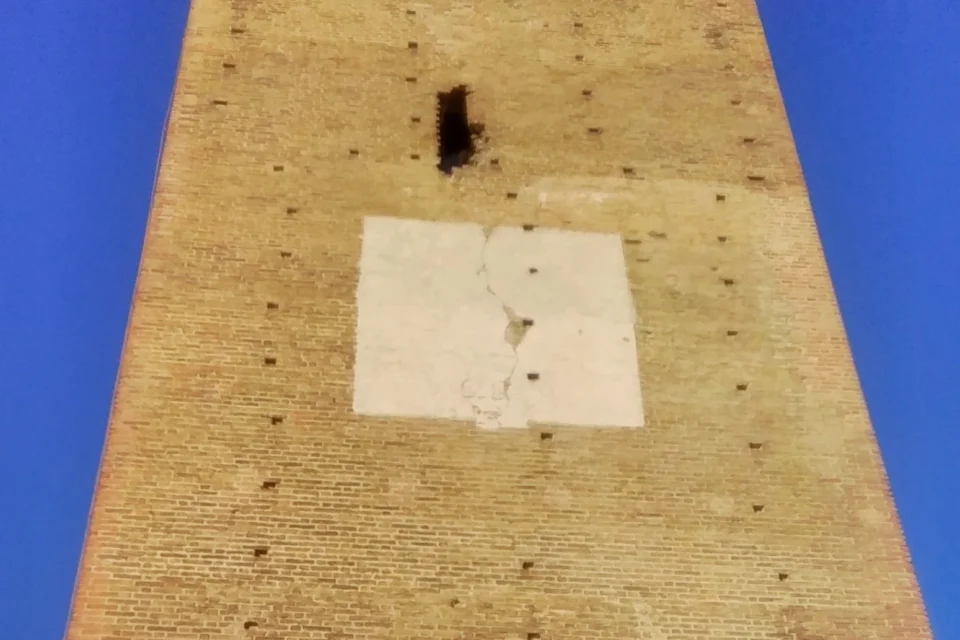
The Medieval Tower of Barbaresco is the village’s emblem — an eleventh-century sighting tower, partly ruined, whose open summit doubles as a panoramic terrace over the Tanaro valley. The Parish Church of San Giovanni Battista, built between 1728 and 1730, anchors the village square and honours the patron celebrated each 24 June. On the same square, look down at The Sundial of Barbaresco, a monumental sundial of 1999 whose painted vineyard imagery turns a house façade into a working monument. Out in the hamlet of Asili — itself the name of a famous cru — the Chapel of San Teobaldo (Asili hamlet) makes a natural rest point on the vineyard walks. The castle beside the church now serves the village as a community wine cellar, and the regional enoteca occupies a former church nearby, so a complete tasting itinerary needs nothing more than your own two feet.
How to experience
Come for a tasting and stay for a walk. Book ahead with one of the village wineries for a cellar visit, then follow the marked sentieri through the vineyards toward the river and back — an hour or a morning, as you like, with the crus of Rabajà, Martinenga and Asili readable from the ridges. Lunch in the village or at a hilltop agriturismo, ordering the classic Langhe table: tajarin, vitello tonnato, cheeses, and of course a bottle from the glass you just learned about. The tower climb is best late afternoon, when the light flattens the rows into gold. Serious wine travellers should come in late autumn after harvest, when barrels are open and vintners have time; casual visitors may prefer spring greenery or the October truffle season, when the whole Langhe is busy and festive.
Practical planning
Barbaresco lies about five kilometres east of Alba and less than an hour from Turin; the practical access is by car via Alba, though local buses run on weekdays and taxis or transfers are easy to arrange from Alba’s railway station. The village is tiny — park once and walk. Most cellars require an appointment; the enoteca offers walk-in tasting flights of the DOCG’s different crus and subzones. The municipal site lists producers, accommodation, restaurants and walking-trail maps, and is the best single reference before a visit: comune.barbaresco.cn.it. Weekends in spring and October fill up; midweek is quieter everywhere.
Nearby places
The wine country begins at the village edge. Alba, the truffle-and-wine capital a few minutes away, is the essential anchor; Neive, across the hills, shares the Barbaresco production zone and is one of Italy’s official “borghi più belli”; Barolo, across the Tanaro to the west, pairs its rival wine with a castle museum; and Treiso — the third commune of the DOCG — continues the ridge into quieter vineyards. All are same-province neighbours, and the loops between them make the classic Langhe driving and cycling itinerary.
Worth building a day around.
Cappella di San Teobaldo (località Asili)
Municipal Luoghi di culto page documents the chapel (dedicated to co-patron of Alba San Teobaldo, reduced in the 1950s) and its panoramic garden benches;…
Chiesa Parrocchiale di San Giovanni Battista
Municipal Luoghi di culto page: church documented before 1000 (diploma of 1014), rebuilt 1728 by eng. Castelli, opened 1730, bell tower 1756; high altar…
La Meridiana di Barbaresco
Municipal Edifici e Monumenti page: created June 1999 by gnomonist Lucio Maria Morra, decorated with twelve illustrations from Pietro de' Crescenzi's 'Ruralia Commoda', Latin…
Torre medievale di Barbaresco
Municipal Edifici e Monumenti page documents the tower's identity, ownership and panoramic role; official Langhe Roero tourism portal describes it as the scenic viewpoint…
Journeys in Barbaresco.
Demo — Barbaresco Private Highlights Tour
Let a local expert design your Barbaresco day.
Tell us your dates and pace. A travel designer replies within one working day.