Palau
Palau is a compact seaside town on Sardinia’s far northeastern coast in Gallura, facing the La Maddalena archipelago across a strait studded with granite islets. Known since antiquity for the bear-shaped rock that guided ancient sailors, it combines a lively port, island ferries, wind-brushed beaches and one of the finest nineteenth-century military fortresses in Europe.
Why visit
Palau earns its place on a Sardinian coast itinerary for several reasons at once. Its harbour is the main departure point for ferries into the La Maddalena archipelago national park, so the island-hopping day most travellers dream about begins here. On land, the town’s symbol is the Roccia dell’Orso, a granite bear on the Capo d’Orso promontory that the geographer Ptolemy noted in the second century and ancient navigators used as a landmark. Beaches run from the town sand at Sciumara to the Nordic-looking shore at Porto Faro, the exclusive white villas of Porto Rafael and the pinkish cove of Cala Trana. Wind is the local currency: the breezes funnelling past Isuledda and Porto Pollo have made this the island’s iconic arena for windsurfers and kitesurfers, with international competitions each year. And above it all stands the Fortress of Monte Altura, granite-camouflaged and crowned with views from Corsica to the archipelago.
Character and history
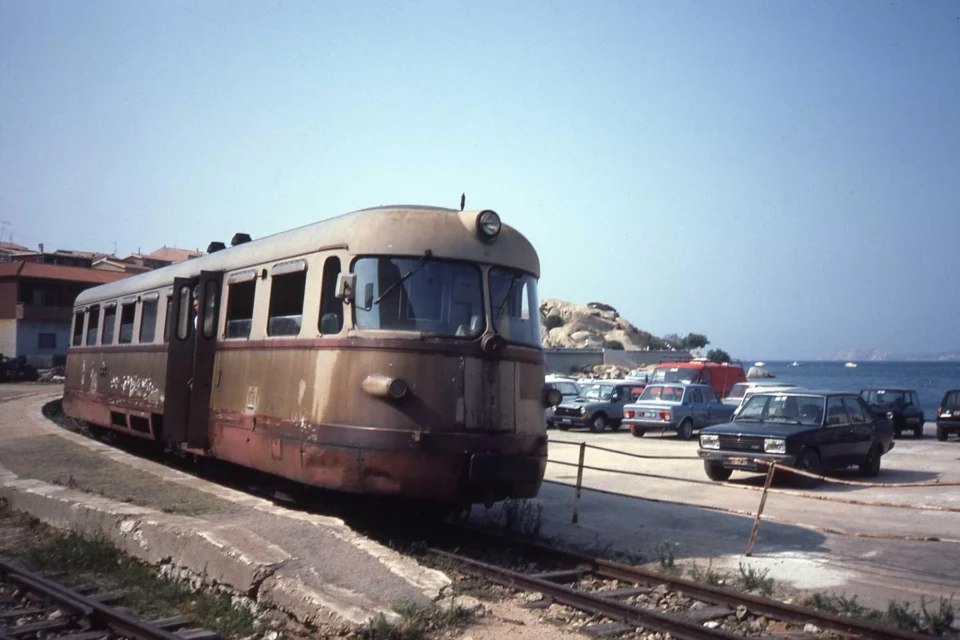
Palau is young by Sardinian standards — a town founded at the end of the nineteenth century as the port and railway terminus serving the archipelago — with roughly four thousand year-round residents whose numbers swell dramatically in summer. The military history embedded in its hills is older and graver: the Fortress of Monte Altura was raised in 1887-1889 in just two years, its granite cut on site so that the works would melt into the hill, one of three forts with Capo d’Orso and Barragge watching the strait in a full circle from the coast of Arzachena to Corsica. It never came under attack, surviving two world wars and decades of neglect; the Capo d’Orso battery nearby could not prevent the sinking of the cruiser Trieste in April 1943. Prehistory is present too — neolithic remains, tafoni tombs, the nuraghe Luchìa and the giants’ tombs of Li Mizzani and Sajacciu dot the headlands.
What to see
The Monte Altura Fortress is the essential visit: barracks, warehouses, a powder magazine and the monumental ramp to its firing positions, all in local granite a step from Porto Rafael, and often called one of the most beautiful military works built in nineteenth-century Europe. The climb rewards with 360-degree views over the La Maddalena archipelago national park. Down at the water, walk the promontory to the Roccia dell’Orso, then swim from Palau Vecchio, La Sciumara or Porto Faro, or cross the sandy isthmus to Isuledda, whose twin beaches of Arenaria and Porto Pollo face opposite winds. The Talmone battery adds a second military ruin on the headland. Keep a day for the water: boats and ferries leave the port continuously in season for the islands, and sunset sails round the archipelago’s granite sculptures are a Palau ritual.
How to experience
Let the wind set the programme. On breezy days, join the boards at Porto Pollo or watch the funboarders fly; on calm days, take the first ferry to La Maddalena and carry on by bike or boat. Reserve a guided visit of the fortress for late afternoon, when the light is soft over the strait and the stone glows. September is the local sweet spot: the sea is warm, the crowds thin, and the feast of Santa Maria delle Grazie in early September brings the town’s main festival to life, while carnival draws visitors even in winter. Sailors, divers and hikers can all organise outings from the port — wreck dives lie offshore, and coastal paths link the beaches and headlands. Evenings are for the waterfront bars of the old harbour, gelato in hand, watching the islands turn rose-gold.
Practical planning
Palau is about forty minutes’ drive from Olbia’s airport and port, the main gateway to the northeast coast; the town is walkable, but beaches and the fortress spread out along the coast road, so a car or scooter helps. Summer parking is tight and paid — arrive early at Porto Pollo and the Capo d’Orso area. Fortress visits run on seasonal schedules and charge admission; check current hours on sardegnaturismo.it or with local operators before setting out. Book accommodation well ahead for July and August, when the population multiplies; spring and autumn are quieter with reliably good wind for sailing. The port connects by ferry to La Maddalena throughout the day in season. Bring wind protection for the exposed beaches, and water for the headland walks, which are shadeless granite.
Nearby places
Palau sits at the hinge of Gallura’s great names. Santa Teresa Gallura and the clifftop walks of Capo Testa lie up the coast to the north, Arzachena holds the nuragic heartland inland, and the La Maddalena Archipelago and Costa Smeralda frame the water either side of the strait.
Journeys in Palau.
Demo — Palau Private Highlights Tour
Let a local expert design your Palau day.
Tell us your dates and pace. A travel designer replies within one working day.