Sant’Antioco
The largest island of the Sulcis archipelago, joined to mainland Sardinia by an ancient causeway, holds one of the island’s oldest towns. Phoenician Sulky, Sardinia’s only catacombs, a saint’s basilica, sea-silk weaving and a coast of trachyte cliffs and turquoise coves all share this self-contained corner of the southwest.
Why visit
Sant’Antioco rewards travellers who like their beaches served with substance. The town, home to about 11,000 residents, is built on layered history: founded by the Phoenicians as Sulky around 770 BC, contested by Carthage, prosperous under Rome, and named for the African martyr exiled here who became Sardinia’s patron saint. Around it spreads an island of contrasts — dark volcanic cliffs on the southern shore, softer sandy bays to the north, lagoons where flamingos feed, and islets offshore that hosted one of antiquity’s naval battles.
Few places in Sardinia compress so much into a compact area: an archaeological museum with bronze figurines, a basilica first recorded in 1089, pre-Nuragic tombs and nuraghi across the countryside, and working traditions such as tuna fishing and the rare craft of weaving byssus, silk drawn from the sea. It feels lived-in rather than staged, which is precisely its appeal.
Character and history
The island has been inhabited since the 3rd millennium BC, and its earliest layers are everywhere: domus de janas such as those of is Pruinis, standing menhirs, giants’ tombs and the ruins of roughly thirty nuraghe. The Phoenicians planted Sulky on the isthmus, and the tophets and Punic necropolis that remain — along with the remarkable Grutt’i acqua complex, combining a polylobed nuraghe, a sacred well and hydraulic works — trace centuries of Punic life. Under Rome, Sulci ranked with Karalis among the island’s most prosperous municipia, and on the same hill where the Punic dead were buried the city later cut its Roman necropolis and catacombs, the only ones in Sardinia.
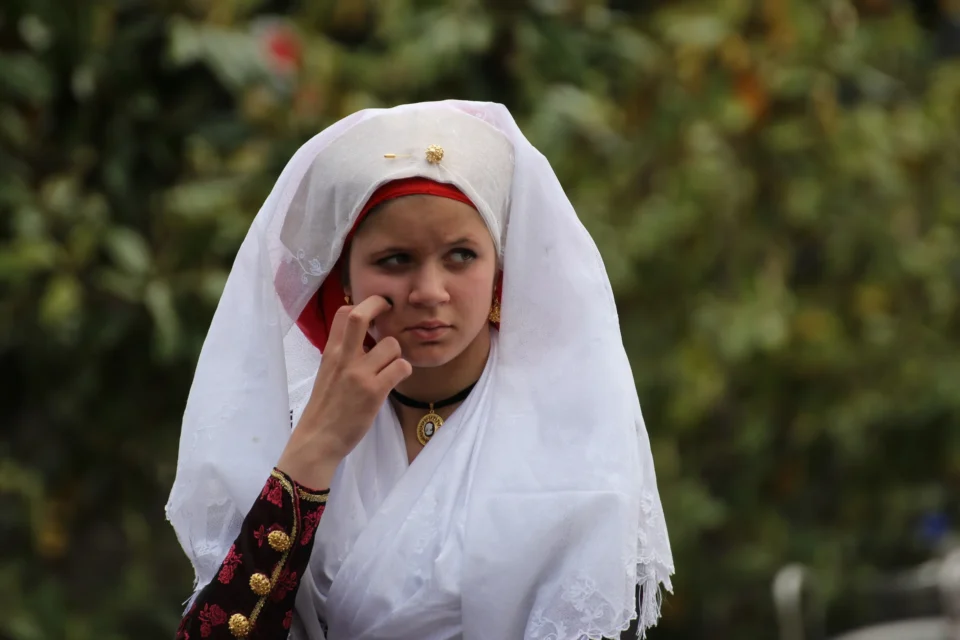
The island’s spiritual identity fixed early: Sant’Antioco (Saint Antiochus), the martyr who gave the town its name, is honoured in a basilica that began as a Byzantine cruciform building. Fifteen days after Easter the town stages what is considered the oldest religious festival in Sardinia, its rites unchanged since 1615, when ceremonial breads — is coccois — are carried through the streets; a second celebration in traditional dress follows on August 1. Fishing, salt and agriculture shaped the island’s working life, and their memory fills its small museums.
What to see
Begin at the Museum Archeologico Ferruccio Barreca, whose collection of Punic and Roman finds, above all its bronze figurines, narrates the island from Sulky onwards; then climb to the Basilica di Sant’Antioco Martire, a three-naved church whose crypt and adjoining catacombs descend into the town’s earliest Christian past.
On the coast, Cala Sapone pairs clear water with the ruins of a 19th-century tuna facility where Phoenician fishermen once worked the same waters. At the island’s southern tip, Capo Sperone opens onto a sweep of headland where the sea shifts from sky-blue to deep blue, pink peonies bloom in spring, and the islets of Vacca and Toro rise offshore — the latter the site of a naval battle in 258 BC. A former naval semaphore built in 1887 stands a short walk inland.
How to experience
Give the town a morning: museum, basilica, catacombs, then coffee in the lanes around the harbour among the pastel houses. Reserve the rest for the coast. The southern shore favours cliff-top walks and snorkelling over a sandy, rock-dotted seabed; on the northern side, beaches such as Portixeddu with its ancient junipers, Maladroxa with its thermal springs used since Roman times, and the wide Coqquaddus, past a lagoon where flamingos nest, each deserve a slow afternoon.
If your visit coincides with the festival fifteen days after Easter, join the crowds for the bread procession — it is the island at its most authentic. Seek out the bisso (sea-silk) museum to learn about the thread once drawn from pinna nobilis shells, and the MuMa maritime museum for the fishing heritage. Divers and boaters will find rental and excursion operators around the marina and the southern coves.
Practical planning
Sant’Antioco is roughly an hour’s drive from Cagliari, the final stretch crossing the causeway that has linked island to mainland since antiquity — possibly first built by the Phoenicians and improved by the Romans. A car is the practical way to reach the scattered beaches and archaeological sites. Museums keep variable seasonal hours, so confirm times on the official tourism site before setting out. Summer is busy but rarely claustrophobic outside the town; spring is ideal for wildflowers on the capes and flamingos on the lagoons. Bring wind protection for exposed headlands, and book festival-week accommodation well ahead.
Nearby places
The southwest has a tight network of rewarding stops. Iglesias preserves a medieval mining town’s streets and the Serbariu coal-mine museum lies just beyond it in Carbonia. The fishermen’s island of Carloforte, a ferry ride away, offers a Ligurian dialect and tuna cuisine of its own. Inland and north, Villaperuccio guards southern Sardinia’s largest domus de janas necropolis, while Pula links the area back to Nora and the Gulf of Cagliari.
Worth building a day around.
Basilica di Sant'Antioco Martire
Regione Sardegna — SardegnaTurismo, in “SardegnaTurismo - Sito ufficiale del turismo della Regione Sardegna”, identifies Basilica di Sant'Antioco Martire as a visitor-relevant attraction associated…
Cala Sapone
Regione Sardegna - SardegnaTurismo (official regional tourism portal), in “Cala Sapone | SardegnaTurismo”, identifies Cala Sapone as a visitor-relevant attraction associated with Sant'Antioco. Verified…
Capo Sperone
Regione Sardegna - SardegnaTurismo (official regional tourism portal), in “Capo Sperone | SardegnaTurismo”, identifies Capo Sperone as a visitor-relevant attraction associated with Sant'Antioco. Verified…
Museo Archeologico Ferruccio Barreca
Regione Sardegna — SardegnaTurismo, in “SardegnaTurismo - Sito ufficiale del turismo della Regione Sardegna”, identifies Museo Archeologico Ferruccio Barreca as a visitor-relevant attraction associated…
Journeys in Sant’Antioco.
Demo — Sant'Antioco Private Highlights Tour
Let a local expert design your Sant’Antioco day.
Tell us your dates and pace. A travel designer replies within one working day.