Sansepolcro
The Tiberina valley’s capital of art and quiet pride, Sansepolcro is the town of Piero della Francesca: home of the Resurrection, one of the most celebrated paintings of the Renaissance, and of a crossbow contest the whole community still fights each September. A planned-looking grid of streets, Medici walls, Franciscan hermitages and herbalist tradition complete the picture.
Why visit
Sansepolcro rewards travellers who come for art and stay for atmosphere. In the Civic Museum, inside the medieval palace where the town’s governors once ruled, Piero della Francesca’s Resurrection rises above the visitors’ route — the fresco of the sleeping soldiers and the impassive risen Christ that British author Aldous Huxley famously reckoned among the world’s greatest pictures. The town that produced Piero, and where the painting has never left, keeps its Renaissance dignity intact: stone porticoes, a noble grid of streets, a cathedral that once housed Camaldolese monks, and a main square crowned by a medieval tower.
But this is no museum-only town. Every second Sunday of September the Palio della Balestra sends crossbowmen in costume to the Piazza Torre di Berta to defend their city’s honour against rivals from Gubbio, in a contest documented since at least 1594. A scientific herbalist tradition lives on in a private museum of healing plants, a Franciscan hermitage clings to a wooded slope above the Tiber, and the surrounding valley — the Valtiberina, Tuscany’s easternmost wedge — remains one of the region’s least-visited and most self-contained corners.
Character and history
The town’s name tells its founding story: tradition holds that two medieval pilgrims, Egidio and Arcano, settled here with relics of the Holy Sepulchre, and the abbey that grew around their oratory became Borgo San Sepolcro. Positioned on the Tiber’s upper course between Tuscany, Umbria and the Papal States, the town changed masters repeatedly — communal rule, Malatesta lordship from 1371, papal returns — until Cosimo I de’ Medici’s new walls fixed it, definitively and fortuitously, inside Tuscany. Those sixteenth-century Medici fortifications still gird the city, their Porta Fiorentina opening the road towards Florence.
Its most famous son, Piero della Francesca, was born here around 1415 and maintained deep ties to the town all his life; local records even place him among the crossbowmen in the mid-fifteenth century. His scientific mind — mathematician as much as painter — suits this orderly city. The twentieth century tested it: in 1944, as the Gothic Line passed nearby, Allied bombardment damaged the town, and the art historian whose writings helped spare the Resurrection from destruction is remembered with gratitude here. Today Sansepolcro is the largest town of the Valtiberina, a commercial and cultural capital that feels lived-in rather than staged.
What to see
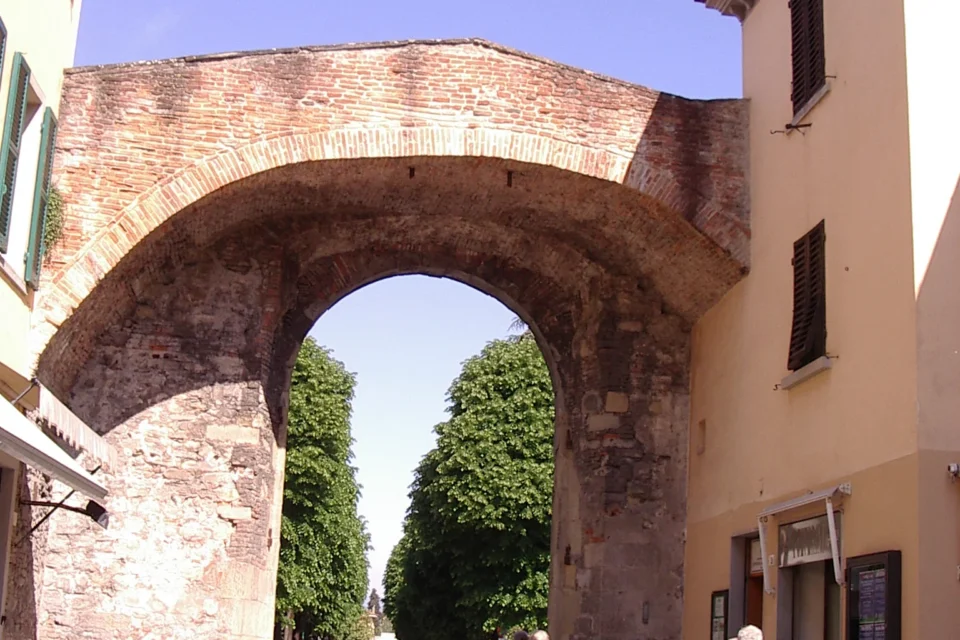
The Sansepolcro Civic Museum (Picture Gallery) is the essential stop. Its seat, the medieval Palazzo della Residenza — the governing palace until the Malatesta takeover of 1371 — grew into its present form around 1456, and in the Conservatori’s hall hangs the Resurrection, painted by Piero for this very civic building. The galleries gather further works of the Tuscan and Umbrian Renaissance, and the museum’s restorations have opened medieval vaults, a street-level passage and the Arch of the Pesa that links its two palaces.
Two blocks away stands the Birthplace of Piero della Francesca, a modest stone house-museum on Via Niccolò Aggiunti now preserved as a state monument. The Gothic Sansepolcro Cathedral (St John the Evangelist), seat of the old Camaldolese community and today a co-cathedral, closes the sacred circuit, while the nearby Church of San Lorenzo keeps Rosso Fiorentino’s Mannerist Deposition, painted by Piero’s radical heir from this same town. The Franciscan Church of San Francesco and the Marian Shrine of Santa Maria delle Grazie round out the historic centre’s churches.
Civic life centres on the Palazzo delle Laudi (Sansepolcro Town Hall) and the tower-shadowed main square. For something unexpected, visit the Aboca Museum – Museum of Herbs, which traces the town’s herbalist and phytotherapy tradition from Renaissance apothecaries to the modern herbal science company that founded it. Above the valley in the hamlet of Basilica, the Montecasale Hermitage preserves a Franciscan retreat where Saint Francis himself is said to have stayed, its silence a counterpoint to the town below.
How to experience
Plan the museum visit for the morning, then follow the Piero trail on foot: birthplace, churches, and the square where his geometry is replayed each autumn in the flag-throwers’ choreography. If your trip falls on the second Sunday of September, watch the Palio della Balestra — the morning messengers, the afternoon shooting at the corniolo target and the evening procession are a complete lesson in small-town civic pride. The Sant’Egidio Renaissance market accompanies the event.
Sansepolcro also makes a natural base for the Valtiberina: the road to Anghiari crosses hills Piero painted, and the hermitage road towards Montecasale climbs into quiet woodland good for slow drives and short hikes. Eat in traditional trattorias here — the valley’s kitchen leans on handmade pasta, game, and breads of the Tiber plain. Linger in the evening, when day visitors have gone and the stone centre settles back into its own rhythms.
Practical planning
Sansepolcro sits in the far east of Tuscany, reached by road from Arezzo (about half an hour) or from Umbertide and Città di Castello up the Tiber valley; regional buses link the town with Arezzo, which has the nearest main rail station. The historic centre is flat and compact — one of the easiest Tuscan centres for walking — with parking just outside the Medici walls.
The Civic Museum keeps published hours with occasional special-event closures in individual rooms, and the Piero birthplace requires reservations; the Aboca Museum, cathedral and hermitage each keep their own schedules, so confirm before setting out. Spring and autumn are ideal, and September combines the Palio with harvest season. A full day covers the town thoroughly; add a second for the valley and its hermitages.
Nearby places
Worth building a day around.
Aboca Museum - Museo delle Erbe
Sito ufficiale abocamuseum.it con sezioni Orari e biglietti, Come raggiungerci e bookshop; museo delle erbe officinali della Fondazione Aboca in palazzo Bourbon di Sorbello.…
Casa Natale di Piero della Francesca
Scheda ufficiale MiC (cultura.gov.it) con orari; portale Meet Valtiberina: aperture e apertura su prenotazione al +39 0575 740411, biglietto acquistabile presso il Museo Civico.…
Chiesa di San Francesco
Chiesa francescana gotica (XIII-XIV sec.) davanti al Duomo, documentata dalle fonti turistiche della destinazione come tappa della visita cittadina. unknown
Chiesa di San Lorenzo
Documentata dal portale regionale Borghi Toscana: conserva la Deposizione di Rosso Fiorentino (1528), capolavoro manierista; aperta alla visita lungo l'asse centrale della città. unknown
Duomo di Sansepolcro (Concattedrale di San Giovanni Evangelista)
Sede concattedrale della Diocesi di Arezzo-Cortona-Sansepolcro (portale diocesano, sezione Sansepolcro); visitabile liberamente; conserva il Volto Santo (crocefisso ligneo medievale) e l'Ascensione del Perugino. unknown
Eremo di Montecasale
Sito ufficiale dell'eremo: aperto tutti i giorni 6:30-18:30; frati disponibili per visite guidate (fonte Diocesi di Arezzo-Cortona-Sansepolcro); luogo francescano dal 1213. A ~10 km…
Mura medicee di Sansepolcro e Porta Fiorentina
Porta Fiorentina è l'unico accesso originale rimasto delle mura medicee (XV-XVI sec.), documentata come punto d'ingresso tradizionale della visita dalle fonti turistiche della destinazione.…
Museo Civico di Sansepolcro (Pinacoteca)
Sito ufficiale con pagina orari e biglietti: estate (16/6-15/9) 9:30-13:00 e 14:30-19:00; intero 8 euro, ridotto 5, speciale 3; biglietteria Ticket One. Ospita la…
Palazzo delle Laudi
Sede del Municipio documentata dalle fonti turistiche della destinazione; esperienza pubblica limitata agli spazi esterni/di rappresentanza. unknown
Piazza Torre di Berta
Piazza principale della città, dominata dalla Torre di Berta (torre medievale del palazzo Pretorio), cuore della visita documentato dalle fonti turistiche della destinazione. Spazio…
Santuario di Santa Maria delle Grazie
Santuario mariano del XVI secolo documentato dalle fonti turistiche della destinazione; aperto alla visita. unknown
Journeys in Sansepolcro.
Demo — Sansepolcro Private Highlights Tour
Let a local expert design your Sansepolcro day.
Tell us your dates and pace. A travel designer replies within one working day.