San Miniato
A dignified hill town between Pisa and Florence where imperial history, Franciscan memory and white truffles share the same ridgeline. San Miniato rewards travellers who slow down: a rebuilt Frederick II tower, a star-studded cathedral façade, Francigena lanes, curious small museums and an autumn that smells of tuber magnatum.
Why visit
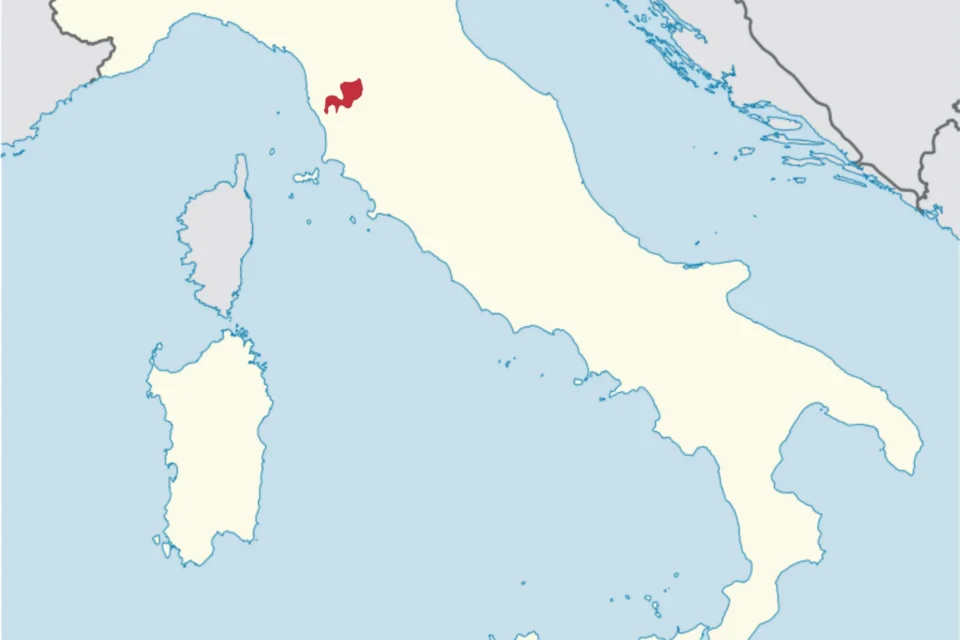
San Miniato is what happens when a strategically important place quietly stops being important. Perched on a hill above the Arno valley roughly halfway between Pisa and Florence, it spent the Middle Ages as an imperial stronghold and a station on the Via Francigena — known then as San Miniato al Tedesco, the German’s San Miniato — and the layers of that history are still stacked up the slope. An emperor’s tower crowns the summit, a Romanesque cathedral faces a green called the Prato del Duomo, convents and loggias thread through the streets, and the whole ridge looks out over a lowland stitched with rivers, poplars and vineyards.
What makes the town compelling today is the combination of grand history and lived-in scale. In a single visit you can climb a fortress tower with a documented medieval past, stand in a church that tradition says Francis of Assisi knew personally, browse museums devoted to truffles, writing and Second World War memory, and then eat white truffle shaved over handmade tagliatelle — for this is one of Italy’s most respected truffle territories, and its autumn market fair draws hunters and chefs from across the country. It is a town of Tuscan substance that almost no international itinerary includes.
Character and history
The hill has been settled since Etruscan and Roman times, but the town’s written story begins with the Franks and Ottonian emperors: in 962 Otto I of Saxony made San Miniato an imperial administrative centre, and under Frederick II of Swabia it became a tax-gathering hub for central Italy, at the empire’s service between the rival powers of Pisa, Florence and Lucca. Sigeric of Canterbury listed it among the stopping places on his return journey from Rome, fixing its place in the geography of the Via Francigena. The Diocese of San Miniato was created much later, in the early seventeenth century, which is why the town, though never large, carries the full apparatus of a cathedral, seminary and episcopal museum.
Its strategic position kept the town exposed. In the Second World War German troops blew up the fortress tower on the hilltop in 1944 and, that same summer, the town endured one of Tuscany’s worst Nazi atrocities, the massacre in the cathedral known as the Eccidio del Duomo. The tower was rebuilt exactly in 1958, and the city’s Museum of Memory now preserves the testimony of that period alongside fascism and resistance history. Out of this recent past comes the town’s understated, untheatrical character: a place that honours its history rather than performing it.
What to see
Start at the summit with the Rocca di Federico II (Frederick II Fortress Tower), built on the emperor’s orders between 1217 and 1223 and now the town’s emblem; the climb earns the widest views in the Valderno, from the Apuan Alps to the towers of Pisa on clear days. A short descent brings you to the cathedral square, where the San Miniato Cathedral (Cathedral of Santa Maria Assunta and San Genesio) — a Gothic-Romanesque duomo of the 1200s — displays the curious detail that gives it away even in photographs: terracotta discs on the façade arranged as the stars of the Great and Little Bear. Its bell tower, the Tower of Matilde (Matilde Tower), rises beside it, and the former sacristies now house the Diocesan Museum of Sacred Art.
On the handsome Piazza della Repubblica, flanked by the medieval San Miniato Town Hall and the seventeenth-century Episcopal Seminary Palace, the town keeps its civic face. Inside the town hall, the Museum of the Town Hall and of the Loretino holds the civic collection; the Renaissance Palazzo Grifoni, with its famous loggia, anchors another corner of the hill.
Seek out the churches: the twelfth-century Church of Santo Stefano and San Michele, home to a wooden crucifix attributed to Pietro Cavallini; the thirteenth-century Church of the Holy Cross (Santissimo Crocifisso); the Church and Convent of San Francesco, traditionally donated to Francis himself; the Church of San Domenico and its Loggiati with the MuMe Museum of Memory among its former convent buildings; and the Church of the Santissima Annunziata and Church of San Iacopo and Santa Lucia further along the ridge. Below the hill, the San Genesio Museum and Archaeological Area excavates the medieval borgo that preceded the town, while the San Miniato Hills Truffle Museum and the Educational Museum of the Civilization of Writing complete one of the most varied small-museum networks in Tuscany. Collections of the Accademia degli Euteleti, the Santa Chiara Conservatory and the Arciconfraternita della Misericordia round out the civic holdings.
How to experience
Come in autumn if you possibly can. On the second, third and fourth weekends of November the National White Truffle Market Fair takes over the historic centre, filling the streets with hunters, tasting stands and the unmistakable perfume of tuber magnatum; the rest of the year, restaurants across town serve truffle dishes, and the hills around remain working truffle ground. Pair the fair with a visit to the Truffle Museum to understand the craft behind the scent.
Walk the ridge end to end — from the Rocca through the cathedral square to San Domenico — in the late afternoon, when the low sun lights the Arno valley. The town also suits slow cultural itineraries: the civic museum network opens sites that reward unhurried curiosity, and an antiques and crafts market enlivens the centre on the first Sunday of each month. Trattorias here lean on the old kitchen of the countryside — mallegato sausage, spuma di gota di maiale spread on crostini, olive oil from the surrounding hills — so plan lunches, not just dinners.
Practical planning
San Miniato lies between Florence and Pisa, a short drive from the Firenze–Pisa–Livorno trunk road; the nearest main rail connections are at Empoli and Pontedera, with local buses climbing to the hill. Cars stay outside the historic centre, and parking at the base of the ridge means a steep but short walk up. Comfortable shoes matter: the town’s streets rise and fall with the hill.
The civic museums and the Rocca keep seasonal and variable hours — check the museum network’s site or the tourist office in Piazza del Popolo before you set out. A half-day covers the hill’s essentials; a full day allows the museums and a long lunch. Spring and autumn are the kindest seasons, and November, for all its damp, is when the town is most itself.
Nearby places
Worth building a day around.
Chiesa del Santissimo Crocifisso
Citata dal portale ufficiale Visit Tuscany tra le chiese della città Non pubblicata
Chiesa della Santissima Annunziata
Citata dal portale ufficiale Visit Tuscany tra le chiese della città Non pubblicata
Chiesa di San Domenico e Loggiati
Convento citato da Visit Tuscany; i Loggiati ospitano il Museo della Memoria civico Loggiati visitabili; nel complesso si trova il MuMe (biglietto)
Chiesa di San Iacopo e Santa Lucia
Citata dal portale ufficiale Visit Tuscany tra le chiese della città Non pubblicata
Chiesa di Santo Stefano e San Michele
Chiesa del XII secolo citata dal portale ufficiale Visit Tuscany: crocifisso ligneo attribuito a Pietro Cavallini, affreschi di Brogi e Lotti Non pubblicata
Chiesa e convento di San Francesco
Complesso citato dal portale ufficiale Visit Tuscany; la tradizione lo lega a San Francesco d'Assisi in persona Non pubblicata
Collezione dell'Arciconfraternita della Misericordia
Citata dal portale ufficiale Visit Tuscany tra i musei della città Non pubblicata
Duomo di San Miniato (Cattedrale di Santa Maria Assunta e San Genesio)
Cattedrale della diocesi di San Miniato, aperta al culto e alla visita; documentata dal portale regionale Visit Tuscany A piano della piazza principale
MuMe — Museo della Memoria
Museo civico ufficiale con orari e biglietto (cumulativo 6,50 euro) Nei loggiati dell'ex convento domenicano
Museo del Conservatorio di Santa Chiara
Citato dal portale ufficiale Visit Tuscany tra i musei della città Non pubblicata
Museo del Palazzo Comunale e del Loretino
Pagina ufficiale nel sistema Musei Civici di San Miniato; orari e biglietti su sanminiatopromozione.it Sale del palazzo comunale; ingresso con biglietto civico
Museo didattico sulla Civiltà della Scrittura
Museo civico ufficiale con modalita' di accesso su prenotazione documentate da sanminiatopromozione.it Accesso solo su prenotazione; lun-ven 9-13, mer anche 14-17
Museo Diocesano d'Arte Sacra
Pagina ufficiale della Diocesi di San Miniato con orari invernali/estivi e tariffe (museo 2,50; cumulato con Torre di Matilde 5,00) Negli ambienti delle antiche…
Museo e area archeologica di San Genesio
Museo civico ufficiale con calendario di apertura e prenotazione (telefonica) documentato da sanminiatopromozione.it Aperture fisse ridotte con prenotazione (sab 15-16, dom 11-12 e 15-16);…
MuTart — Museo del Tartufo delle Colline Sanminiatesi
Orari e gratuità documentati dal portale ufficiale di promozione turistica del Comune Ingresso gratuito; sab/dom/fest 10-13 e 15-18, giorni feriali su richiesta all'ufficio turistico
Palazzo Comunale di San Miniato
Ospita il Museo del Palazzo Comunale e del Loretino (biglietto civico 4/3/2 euro, cumulativo 6,50) Sede comunale; sale museali visitabili con biglietto civico
Palazzo del Seminario Vescovile
Costruito dal 1650, occupa tre lati di Piazza della Repubblica; documentato da fonti istituzionali e accademiche (Università di Pisa) Edificio attivo della diocesi: facciata…
Palazzo Grifoni
Sede della Fondazione Cassa di Risparmio di San Miniato (fonte istituzionale); ospita mostre ed eventi pubblici; scheda sul portale Terre di Pisa Esterno sempre…
Piazza della Repubblica
Piazza principale con Duomo, Palazzo Comunale e Seminario; nucleo della visita della città Spazio pubblico pedonale
Raccolta dell'Accademia degli Euteleti
Raccolta citata dal portale ufficiale Visit Tuscany tra i musei della città Non pubblicata
Rocca di Federico II
Museo civico gestito dal Comune (sistema Musei Civici di San Miniato con CoopCulture); orari e biglietti ufficiali (4/3/2 euro, cumulativo 6,50) Torre con salita…
Torre di Matilde
Biglietto dedicato (3,00 euro) nella pagina ufficiale della Diocesi Salita panoramica; ingresso abbinato al Museo Diocesano
Journeys in San Miniato.
Demo — San Miniato Private Highlights Tour
Let a local expert design your San Miniato day.
Tell us your dates and pace. A travel designer replies within one working day.