San Candido
San Candido is the oldest town in South Tyrol and one of the great showcases of Romanesque architecture in the Alps. Its collegiate church, frescoed dome and cloistered lanes sit at 1,175 metres in the Alta Pusteria, beneath the Dolomites, where a medieval chapter town doubles as a year-round base for the Tre Cime country.
Why visit
San Candido trades on a rare double identity. On one side it is a place of pilgrimage for lovers of medieval architecture: the Collegiate Church of Saints Candidus and Corbinian is widely judged the most important Romanesque sacred building in the Eastern Alps, and the town’s historic core gathers nearly a dozen churches and chapels within a few minutes’ walk. On the other side it is a lively outdoor resort at the entrance to the Sexten Dolomites, with the ski mountains of the Drei Zinnen area above it and the Drava cycle route starting at its doorstep.
The combination is genuinely unusual. You can spend the morning in a 770-year-old basilica and the afternoon riding a cable car towards the Tre Cime di Lavaredo, or pedal from the town centre along a river valley into Austria. Few Alpine towns of three thousand residents hold both a chapter of such antiquity and such immediate access to a UNESCO World Heritage landscape.
Character and history
The town’s origins reach back to 769, when Duke Tassilo III of Bavaria granted land to Abbot Atto of Scharnitz on condition that a Benedictine monastery be founded here for missionary work in the Alpine valleys. The site, probably near the Roman way-station of Littamum, passed under the control of the prince-bishops of Freising, who ruled these estates for more than a thousand years, from the eighth century to 1803. Around 1140 the monastery became a secular collegiate chapter of canons — the oldest such chapter in Tyrol — and the community of craftsmen, farmers and merchants that served it grew into the present town.
That long ecclesiastical stewardship explains the extraordinary density of sacred buildings. Around the collegiate church cluster the Chapter Houses, the canons’ historic residences in the old core; nearby rise the Parish Church of St Michael, rebuilt in baroque form over a twelfth-century Romanesque core, and the small Romanesque Church of the Holy Sepulchre, a funerary and pilgrimage chapel beside the Collegiata. The Franciscan friars arrived in 1691, building the church and cloister of St Leopold that still anchor the town’s spiritual life. The municipality became part of Italy in 1919, and its outlying frazioni of Versciaco and Prato alla Drava retain their own parish churches up the valley.
What to see
Begin at the Collegiate Church of Saints Candidus and Corbinian, a three-aisled Romanesque basilica built in the thirteenth century with the help of a Lombard master builder and crowned by a crossing dome. The late-Romanesque frescoes of around 1280, depicting the creation story, glow above the nave, while a great crucifixion group of about 1250 hangs in the chancel and a three-aisled crypt below holds a Romanesque statue of St Candidus. Beside it, the Museum of the Collegiate Church of San Candido keeps the cathedral treasury, the chapter archive and library, and works commissioned over centuries by the canons.
A short circuit of the old town takes in the Chapter Houses, the Parish Church of St Michael, the Church of the Holy Sepulchre and the Franciscan Church of St Leopold with Cloister. A hill walk leads to the Church of St Sylvester on the Hill above the village; at the historic spa quarter of Bagni di San Candido stands the Church of San Salvatore at the Baths, and the Loreto Chapel and former Hospital Church of St Maurice complete the medieval map. In the frazioni, the Parish Church of St Mary Magdalene at Versciaco and the Parish Church of Prato alla Drava reward quiet detours, while the fortress of Heinfels Castle guards the Pusteria from its hill above the road.
How to experience
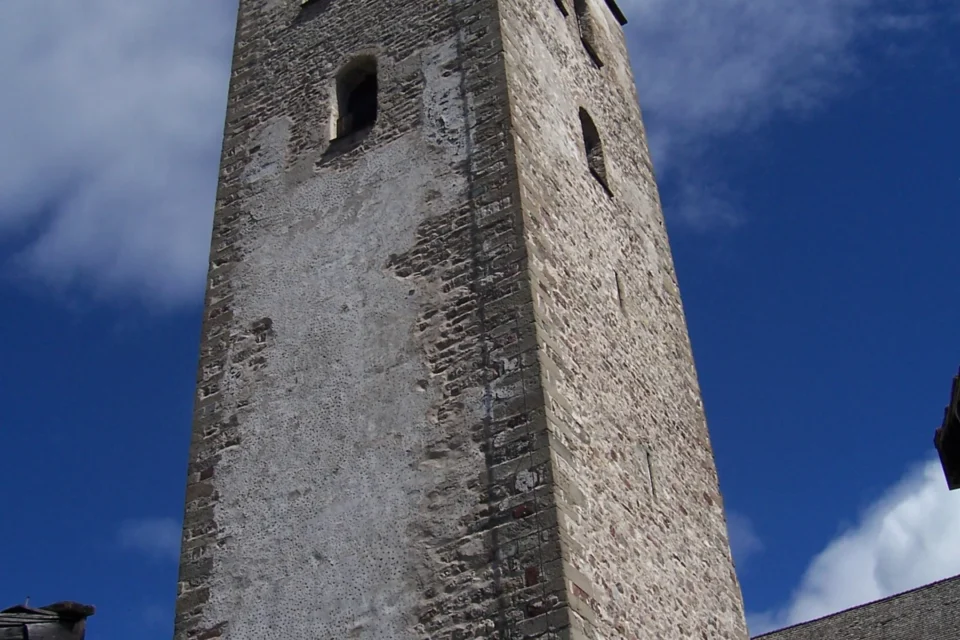
Take the historic-core walk slowly, ideally with the guided historical route the municipality has laid out through its sites, and climb the church tower time into the evening passeggiata along the pedestrian centre. The museum of the Collegiata opens seasonally and offers guided tours; check locally before planning a visit around it.
Then go outdoors. In winter the Haunold ski mountain and the Helm-Rotwand area of the Drei Zinnen ski complex sit minutes from the centre. From spring to autumn the Drava cycle path runs flat and easy from town towards Lienz in Austria, and hiking trails rise towards Mount Elmo, the 2,433-metre summit above the rooftops. Drivers and cyclists alike can follow the Pusteria west towards Dobbiaco and the toll road into the Tre Cime Dolomites, the natural full-day excursion.
Practical planning
San Candido has a railway station on the Pusteria line, with regional services connecting to Bolzano and, in season, over the frontier to Lienz. The historic core is compact and fully pedestrian-friendly; car parks sit at its edges. The altitude of 1,175 metres makes summer days fresh and winter reliable for snow. Accommodation spans farms, family hotels and spa properties, and the tourist office in town distributes material for the historical walk. Because several churches and the museum keep limited or seasonal schedules, verify opening arrangements for your dates rather than assuming year-round access.
Nearby places
Worth building a day around.
Cappella di Loreto
Dedicated page on the official municipal historical path (mik.bz.it). Chapel documented by the municipality; opening regime not published.
Castello di Heinfels
Listed as a fort of Innichen on the official tourism portal dreizinnen.com Historical Places and Buildings page with open/closed status; the municipal historical path…
Chiesa dei Francescani di San Leopoldo con chiostro
Dedicated page on the official municipal historical path (mik.bz.it). Church and cloister in the village centre; opening regime per parish/municipal information.
Chiesa del Santo Sepolcro
Dedicated page on the official municipal historical path (mik.bz.it). Small church adjacent to the Collegiata; opening regime not published.
Chiesa dell'ospedale di San Maurizio
Dedicated page on the official municipal historical path (mik.bz.it). Historic hospital church; opening regime not published.
Chiesa di San Salvatore ai Bagni
Dedicated page on the official municipal historical path (mik.bz.it). Church at the historic baths area of the municipality; opening regime not published.
Chiesa di San Silvestro in Monte
Dedicated page on the official municipal historical path (mik.bz.it). Church on the hill overlooking San Candido; opening regime not published.
Chiesa parrocchiale di Prato alla Drava
Dedicated page on the official municipal historical path (mik.bz.it). Parish church of the Prato alla Drava hamlet, in the municipality of San Candido.
Chiesa parrocchiale di San Michele
Dedicated page on the official municipal historical path (mik.bz.it) describing the 12th-century Romanesque church transformed into baroque form in 1735. Parish church on the…
Chiesa parrocchiale di Santa Maddalena (Versciaco)
Dedicated page on the official municipal historical path (mik.bz.it). Parish church of the Versciaco hamlet along the Rienza, in the municipality of San Candido.
Collegiata dei Santi Candido e Corbiniano
Dedicated page on the official municipal website (Marktgemeinde Innichen) historical path; regional tourism portal suedtirolerland.it describes the monument and its visiting; foundation of the…
Le case del Capitolo
Dedicated page on the official municipal historical path (mik.bz.it) covering the chapter houses and historic residences. Historic house ensemble of the collegiate chapter in…
Museo della Collegiata di San Candido
Registered on the official Ministry of Culture portal cultura.gov.it with address Via Atto, admission EUR 4/3 and contact; listed by the tourism portal val-pusteria.net…
Journeys in San Candido.
Demo — San Candido Private Highlights Tour
Let a local expert design your San Candido day.
Tell us your dates and pace. A travel designer replies within one working day.