Perugia
Perugia, Umbria’s capital, stacks twenty-five centuries onto its hilltop: Etruscan walls and gates, a medieval core gathered around the Pisano fountain, a papal fortress turned underground promenade, and a storied university city alive with students, jazz and chocolate. It is the region’s hub — dense with art, steep in streets, and a base for exploring the green heart of Italy.
Why visit
Perugia rewards depth. Its Piazza IV Novembre is one of Italy’s great medieval squares, and around it stand the civic palace, the cathedral, and the galleries and guild halls that made this the capital of a proud city-state. Beneath the modern street level lie other Perugias: the Etruscan well, the buried quarter inside Rocca Paolina, the excavations under the cathedral floor. Above it all loops a skyline of towers and arches, wrapped by one of the most complete Etruscan wall circuits in Italy.
The city also runs on youthful energy. Home to a famous university for foreigners as well as one of Italy’s oldest, Perugia hosts Umbria Jazz and Eurochocolate, fills its bars with students, and sustains a chocolate industry that perfumes whole streets. Combine this with an art collection of European rank in the National Gallery of Umbria, and you have a capital that behaves like a small city but delivers like a metropolis.
Character and history
Perugia grew from an Etruscan metropolis of the ninth to sixth centuries BC, entered Rome’s orbit after the battle of Sentino, and was rebuilt by Augustus after the Perusine War of 41 BC — the Etruscan Arch still carries the inscription Augusta Perusia from that rebuilding. Five papal conclaves met here between 1216 and 1305, testifying to its medieval weight. The medieval commune’s pride survives in Palazzo dei Priori and in the Fontana Maggiore, whose fifty relief panels by Nicola and Giovanni Pisano form one of the great sculptural cycles of the thirteenth century.
In 1540 the Salt War brought papal revenge: Pope Paul III crushed the Baglioni and raised the Rocca Paolina over a buried quarter of the city, and Perugia remained under papal rule until 1860. The fortress was hated and partly demolished in 1848 and 1861, and since 1983 escalators run through its interior, connecting the lower city to Corso Vannucci through the fossilized streets of the old Baglioni town. The modern city added industry and the artistic ferment that gave Umbria Jazz its stage.
What to see
Start in Piazza IV Novembre, where the Fontana Maggiore (1270s, reliefs by Nicola and Giovanni Pisano, zodiac signs, liberal arts, Aesop’s fables) faces the Perugia Cathedral (San Lorenzo), built over the Etruscan-Roman forum; the Underground Perugia tour descends beneath it. Flanking the square rises Palazzo dei Priori, Gothic seat of the priors, which contains the frescoed Sala dei Notari and, above, the National Gallery of Umbria, one of Italy’s richest regional collections with works from the Middle Ages to the eighteenth century by Piero della Francesca, Fra Angelico, Pinturicchio and Perugino. Across Corso Vannucci, the Nobile Collegio del Cambio preserves Perugino’s Sala dell’Udienza, and the Collegio della Mercanzia keeps its fifteenth-century wooden interior.
Rocca Paolina anchors the lower city: walk the Rocca Paolina passages, passing the Etruscan Porta Marzia embedded in Sangallo’s walls. The Etruscan city remains legible at the Etruscan Well, 37 metres deep under Palazzo Sorbello; at the Etruscan Arch (Porta Augusto); along the Etruscan and Medieval Walls; and at the gates of Porta Sant’Angelo and Porta Trasimena. The thirteenth-century Medieval Aqueduct (Via dell’Acquedotto) makes a pedestrian bridge between the hills.
Religious Perugia is equally rich: the Benedictine San Pietro Abbey with its 70-metre bell tower, the Gothic Basilica of San Domenico housing the National Archaeological Museum of Umbria, the Templar-linked Church of San Bevignate with its rare fresco cycles, Agostino di Duccio’s reliefs in the Oratory of San Bernardino beside the Church of San Francesco al Prato, the early-Christian circular Temple of San Michele Arcangelo, the octagonal Church of Sant’Ercolano, and the University of Perugia Botanical Garden for a green pause.
How to experience
Allow three days. Spend the first on the Piazza IV Novembre cluster and the National Gallery; the second on the Etruscan circuit and Rocca Paolina, ending with the aqueduct walk at sunset; the third for the southern churches and a chocolate pilgrimage along Corso Vannucci. Use the Minimetrò from the Pian di Massiano car parks to arrive without traffic stress. Time a visit to Umbria Jazz in July or Eurochocolate in autumn if festivals appeal, or come in the quiet season, when the galleries belong to you. Evening is Perugia’s best hour: the passeggiata on Corso Vannucci, a glass of Montefalco or Orvieto wine, and the walls glowing amber.
Practical planning
Perugia is Umbria’s transport hub, with a small airport, rail links to Foligno and Terontola, and highway connections to Rome and Florence; the city centre is pedestrian and vertically demanding, so plan the Minimetrò and escalator routes with luggage. Accommodation spans historic palazzi hotels to student-budget guesthouses. Galleries and museums follow Italian state-museum conventions, with closures early in the week at some sites and reduced winter hours — check ahead. Wear serious shoes for the cobbles and steps; the hills are real, but escalators thread the steepest climbs.
Nearby places
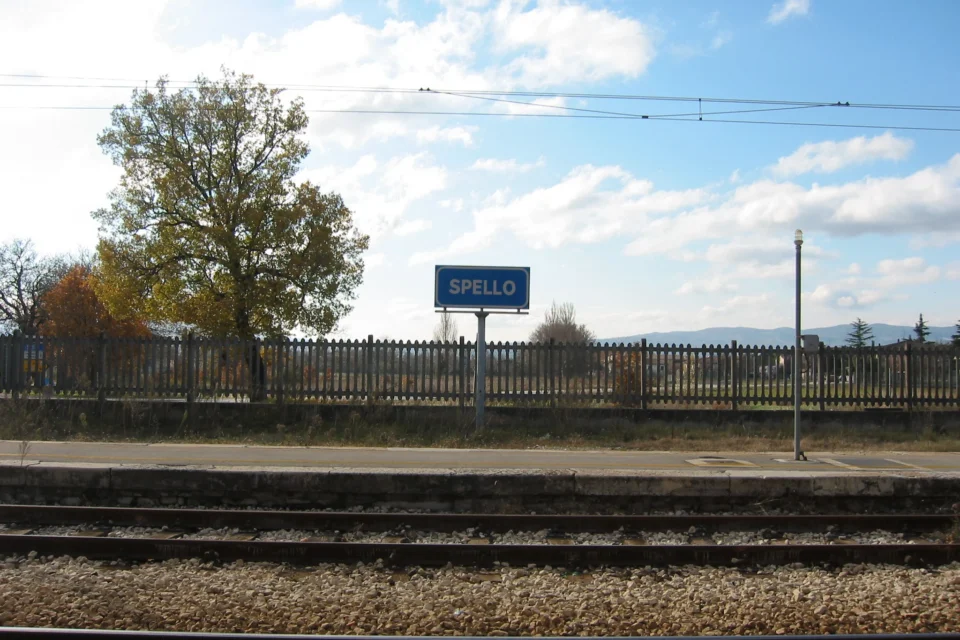
Perugia radiates day trips in every direction. Assisi, with the Basilica of San Francis, is the closest great name; Spello, Bevagna and Montefalco string along the Sagrantino wine road; Todi and Gubbio crown their hills to the south and north; Spoleto lies beyond them. To the west, Panicale, Castiglione del Lago, Passignano sul Trasimeno and the Lake Trasimeno area make the classic lake excursion.
Worth building a day around.
Abbazia di San Pietro
Described by the official regional tourism portal as visitable with its dominant 70 m bell tower. unknown
Acquedotto duecentesco (Via dell'Acquedotto)
The 13th-century aqueduct from Monte Pacciano to Fontana Maggiore is described by the official regional tourism portal. unknown
Arco Etrusco (Porta Augusto)
Described by the official regional tourism portal with the Augusta Perusia inscription; freely visible in Piazza Fortebraccio. unknown
Basilica di San Domenico
Described by the official regional tourism portal as hosting the Museo Archeologico Nazionale in its convent. unknown
Cattedrale di San Lorenzo
Cathedral open to visitors on Piazza IV Novembre per the official regional tourism portal. unknown
Chiesa di San Bevignate
Described by the official regional tourism portal with the Roman domus and fullonica beneath the floor; managed as a museum venue by the Comune.…
Chiesa di San Francesco al Prato
Listed with the San Francesco al Prato complex by the official regional tourism portal. unknown
Chiesa di Sant'Ercolano
Listed with its octagonal plan by the official regional tourism portal. unknown
Collegio della Mercanzia
Listed among the visitable guild halls of Perugia by the official regional tourism portal. unknown
Fontana Maggiore
Described with its Nicola and Giovanni Pisano reliefs by the official regional tourism portal. unknown
Galleria Nazionale dell'Umbria
Official gallery site publishes hours (daily 8:30-19:30), tickets (EUR 10 full / EUR 2 reduced), webshop and free first Sundays. unknown
Mura etrusche e medievali
Etruscan and medieval walls and gates described by the official regional tourism portal. unknown
Museo Archeologico Nazionale dell'Umbria
Official MiC regional museum site confirms the museum is closed for renovation works with no reopening date; EUR 5 ticket applied when open. unknown
Nobile Collegio del Cambio
Official site publishes hours (Mon-Sat 9-13/14:30-17:30, Sun 9-13) and EUR 6 ticket with free categories. unknown
Oratorio di San Bernardino
Called the supreme example of Perugian Renaissance art by the official regional tourism portal. unknown
Orto Botanico dell'Universita di Perugia
Described by the official regional tourism portal with c. 1200 species near the San Pietro abbey. unknown
Palazzo dei Priori
Museum palace hosting the Galleria Nazionale dell'Umbria per the gallery's official site. unknown
Perugia Sotterranea
The official regional tourism portal lists Perugia Sotterranea as an underground route beneath the Duomo. unknown
Piazza IV Novembre
Main square of the historic centre described by the official regional tourism portal. unknown
Porta Marzia
The municipal tourism page for Rocca Paolina names Porta Marzia among its entrances; the sculpted Etruscan gate is visible at all times. unknown
Porta Sant'Angelo
Listed among the historic gates by the official regional tourism portal. unknown
Porta Trasimena
Listed among the historic gates by the official regional tourism portal. unknown
Pozzo Etrusco (Pozzo Sorbello)
Official Fondazione Ranieri di Sorbello site describes the well, the walkway, introductory video and visit management. unknown
Rocca Paolina
Official municipal tourism page lists the entrances and free access during escalator opening hours. unknown
Sala dei Notari
Hall inside Palazzo dei Priori, freely accessible from Piazza IV Novembre during opening hours. unknown
Tempio di San Michele Arcangelo
Described by the official regional tourism portal as one of the oldest circular churches in Italy. unknown
Journeys in Perugia.
Demo — Perugia Private Highlights Tour
Let a local expert design your Perugia day.
Tell us your dates and pace. A travel designer replies within one working day.