Ortona
A port city on a low cliff above the Adriatic, Ortona keeps the relics of the Apostle Thomas, a war-scarred cathedral, an Aragonese fortress over the sea and the memory of the brutal Christmas battle of 1943. Between them runs a coast of trabocchi, coves and protected pine slopes.
Why visit
Ortona works on travellers in unexpected ways. It is at once a pilgrimage city — the Cathedral of St Thomas the Apostle has guarded the relics of the apostle since 1258 — and a place of twentieth-century memory, rebuilt after the near-annihilation of December 1943 when Canadian and German troops fought street by street in what the Canadians called their “Little Stalingrad”. Between those chapters lies a handsome Adriatic town: a fifteenth-century fortress looming over the harbour, a Cascella picture gallery in Palazzo Farnese, a theatre and museum devoted to the composer Francesco Paolo Tosti, and terraced lanes above a working port. The coast north of town is protected as two regional nature reserves, and the famous trabocchi of the Abruzzese shoreline begin just to the south. Add a museum of the battle, a Commonwealth war cemetery in the hills, and seafood cooking of genuine repute, and Ortona earns far more than a lunch stop.
Character and history
The town’s ancient core grew on the promontory above the port; by the Middle Ages its cathedral ranked among the notable churches of the Adriatic coast, rebuilt and enlarged repeatedly after Norman sackings, earthquakes and Turkish raids, its Gothic portals the work of the early fourteenth century. When the relics of the Apostle Thomas arrived from the East in 1258, Ortona became a major goal of Mediterranean pilgrimage. The sixteenth century added the massive Aragonese castle over the sea; the nineteenth gave the city its most famous musical son, the composer Francesco Paolo Tosti, song teacher to a generation of European royalty. Then came the Second World War: between 20 and 28 December 1943, the 1st Canadian Division fought the German 1st Parachute Division through the town in methodical house-to-house combat — the Canadians blasted their way through walls, the tactic remembered as “mouse-holing” — and the battle gutted the cathedral and most of the centre. Ortona’s postwar reconstruction was careful rather than ornamental, and the city today wears its history with evident dignity.
What to see
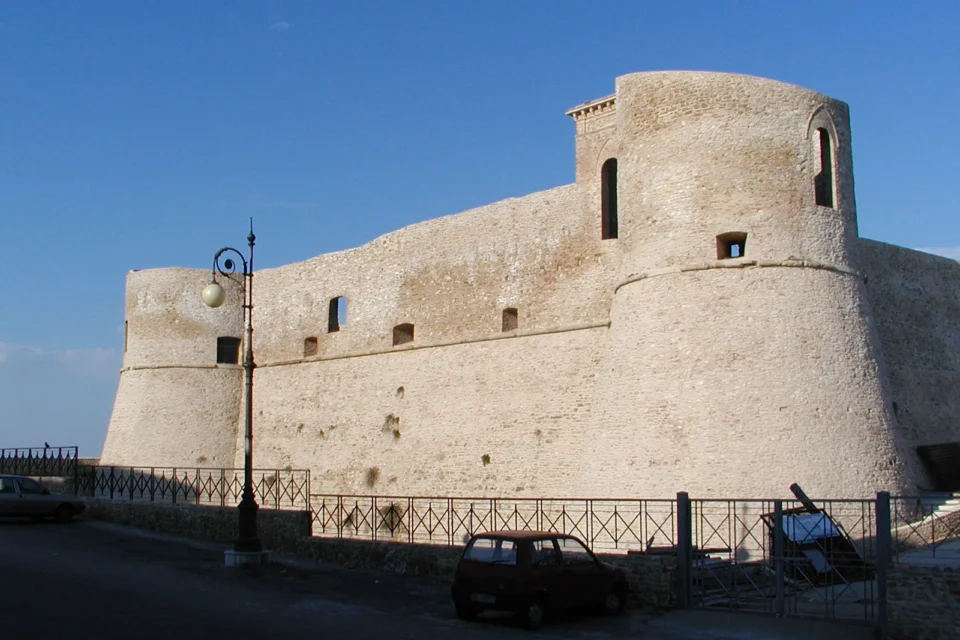
Begin on the promontory with the Aragonese Castle, its towers and inner garden holding the best views over harbour and sea. Below it stands the Cathedral of St Thomas the Apostle, nearly razed in 1943 and selectively rebuilt; its two Gothic portals survive, and the apostle’s relics rest in a seventeenth-century gilded silver urn. War memory is served by the MuBa43 – Museum of the Battle of Ortona in the former convent of Sant’Anna and, on the ridge at San Donato, the Moro River Canadian War Cemetery, where more than 1,300 Canadian dead of the Moro fighting lie above the Adriatic. Art and music fill the second half of a visit: the Civic Museum of Contemporary Art – Cascella Picture Gallery hangs the works of Ortona’s Cascella dynasty in Palazzo Farnese, while the National Tostiano Institute in Palazzo Corvo keeps the composer’s archive and a museum in his name, steps from the Francesco Paolo Tosti Theatre. To breathe out, the Punta dell’Acquabella and Ripari di Giobbe Regional Nature Reserves protect the coves and pine slopes along the coast north of town.
How to experience
Give the town a day and the coast a second. Morning: castle, cathedral and the sanctuary silence around the apostle’s urn. Midday: the MuBa43 museum, ideally with an audioguide or local guide, then drive out to the Moro River cemetery — a sobering, beautifully kept counterpart to the museum’s photographs. Afternoon belongs to art: the Cascella gallery and the Tostiano Institute pair well, and if the theatre’s programme is running, take in a performance as the nineteenth-century audience intended. End the day at the port with brodetto or sea urchins in season. On the second day, follow the coast road north into the two nature reserves for cliff paths and cove swimming, or south toward the trabocchi and their stilted fishing-platform restaurants. Consult the municipality’s culture and tourism pages, comune.ortona.ch.it, for museum hours and guided itineraries, which shift with the season.
Practical planning
Ortona sits about 25 km from Pescara airport and is served by the A14 motorway and the coastal railway between Pescara and Vasto. The historic core is compact and steep in patches; park near the castle or port and explore on foot. Beaches around the reserves are pebbly and unspoilt, so come prepared; the trabocchi coast fills on summer weekends. Museum and cathedral visiting times change with the season and liturgical calendar — verify ahead. May–June and September combine calm seas with quieter streets; December draws Canadian veterans’ families and commemorations around the battle’s anniversary. Local wines from the surrounding hills, notably Montepulciano d’Abruzzo, pair naturally with the port-city kitchen.
Nearby places
Lanciano, city of the Eucharistic miracle and of medieval towers, lies just inland to the south; Vasto, a terrace town above its own bay, continues down the coast; and the Trabocchi Coast strings the shore between Ortona and San Vito Chietino with its unforgettable fishing machines. Over the hills, Guardiagrele and the Majella villages complete a three-day arc.
Worth building a day around.
Castello Aragonese
Official Costa dei Trabocchi destination portal: open daily 9:00-23:00 summer and 9:00-20:30 winter; restored after WWII bombing from 2001; west tower exhibition, east tower…
Cattedrale di San Tommaso Apostolo
Ministry of Culture page: symbolic monument of Ortona, keeps the mortal remains of the Apostle Thomas (arrived 6 September 1258) in a 17th-century gilded…
Cimitero di Guerra Canadese del Moro (Moro River Canadian War Cemetery)
Veterans Affairs Canada (official): 1,615 burials including 1,375 Canadians, created January 1944 by the Canadian Corps for the fallen at Ortona; open to visitors…
Istituto Nazionale Tostiano
Official institute site: institute of national significance (L. 534/96) dedicated to Francesco Paolo Tosti; museum (Sale Tosti) open Tue and Thu 9:30-12:30 and 15:00-18:00;…
MuBa43 - Museo della Battaglia di Ortona
The official MiC venue page explicitly reports temporary closure for restoration works. A reopening date and future admission tariff are not confirmed.
Museo Civico d'Arte Contemporanea - Pinacoteca Cascella
Ministry of Culture page: housed in the 16th-century Palazzo Farnese, holds one of the most important collections of Michele Cascella (53 works) plus donations…
Riserve Naturali Regionali Punta dell'Acquabella e Ripari di Giobbe
Municipal thematic page dedicated to the two regional nature reserves on the Ortona coast.
Teatro Francesco Paolo Tosti
Listed among the places on the municipal site with a dedicated page (teatro category).
Journeys in Ortona.
Demo — Ortona Private Highlights Tour
Let a local expert design your Ortona day.
Tell us your dates and pace. A travel designer replies within one working day.