Oristano
Oristano, the quiet provincial capital of west-central Sardinia, pairs a medieval old town built from the stones of ancient Tharros with lagoons, quartz beaches and a horseback carnival unlike any other in Italy. It is a refined, low-key city that makes an ideal base for the Sinis coast and the fishing villages of the Cabras wetlands.
Why visit
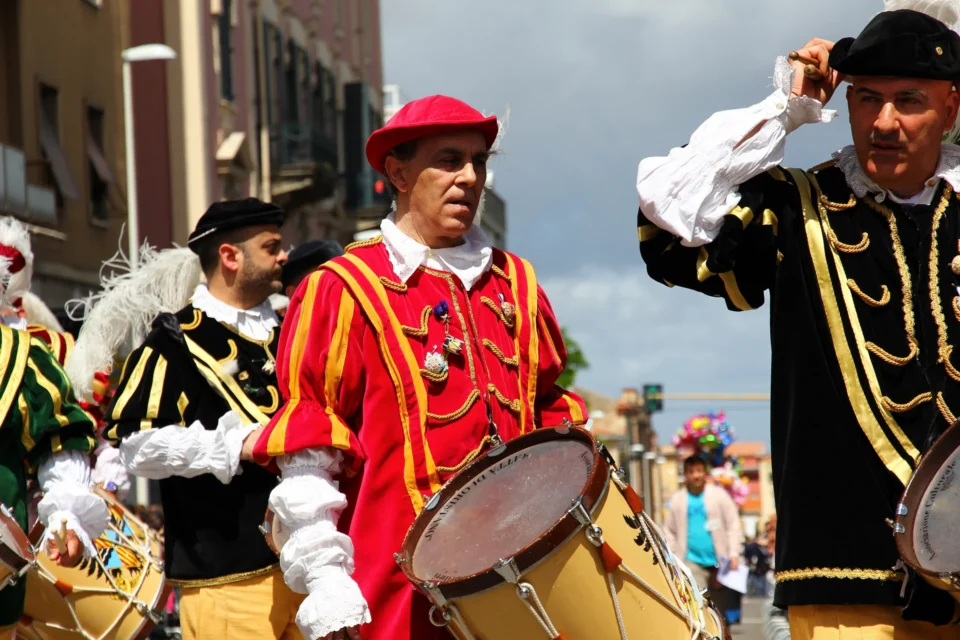
Oristano offers what larger Sardinian cities often cannot: an intact historic centre you can cross on foot in twenty minutes, framed by serious history and extraordinary nature on every side. The city was the capital of the Giudicato di Arborea, the independent Sardinian kingdom whose judge Eleonora promulgated the Carta de Logu, one of the earliest written legal codes in Europe, and her statue still anchors the elegant Piazza Eleonora. Come in February and you can watch sa Sartiglia, a medieval equestrian joust whose star riders aim a lance at a suspended star at full gallop. The rest of the year, the city works as a gateway: the lagoons of Cabras and Santa Giusta draw flamingos and rare wading birds, the quartz-sand beaches of the Sinis Peninsula lie within half an hour, and the lagoon fisheries supply bottarga that graces tables across the island.
Character and history
Founded as Aristanis after the abandonment of nearby Tharros, Oristano grew from the eleventh century into the fortified capital of Arborea, gaining palaces, churches and city walls. The move was born of necessity: in 1070 the bishopric was transferred inland from the coast to escape Saracen raids, and the new town flourished as a result. That medieval layer survives in fragments: the Tower of Portixedda, stretches of rampart, and above all the City Walls and Mariano Tower. The Gothic church of Santa Chiara, a rare island example of that style, the baroque Carmine cloister and the cathedral of Santa Maria Assunta, founded in 1130, trace later centuries. Provincial capital only since 1974, the city feels workaday and self-possessed rather than showy, with around thirty thousand residents, a graceful café life along Corso Umberto, and an economy still tied to the lagoons, fishing, vernaccia wine, confectionery and crafts such as ceramics and wrought iron. Arborea itself outlasted every other Sardinian kingdom, holding out until 1420.
What to see
Start at Piazza Roma, where the City Walls and Mariano Tower rise in isolation — the last significant remnant of the medieval defences. Built in 1290 by Pisan craftsmen for Judge Mariano II, the twenty-eight-metre tower was assembled from sandstone blocks carried from Tharros; a bronze bell was hung in its upper turret in 1430, and an inscription above the pointed arch still records the date. Every Carnival the Sartiglia riders must pass the tower in their gallop. From there, walk to the Duomo, Piazza Eleonora and the Antiquarium Arborense, whose collection of Tharros artefacts completes the story the tower’s stones begin. Just outside the walls, the churches of San Sebastiano and San Martino repay a detour.
How to experience
Time a visit to the rhythms of the city. On Carnival Sunday and Shrove Tuesday, sa Sartiglia fills the streets: about a hundred and twenty horsemen in medieval dress ride in procession and at the gallop, while almond sweets and vernaccia accompany the spectacle — arrive early and expect crowds. Out of season, plan days around the surrounding plain: mornings for the old town and museums, afternoons for the Sinis beaches of Is Arutas, Mari Ermi and San Giovanni di Sinis, whose sand is made of tiny quartz grains. Birdwatchers should take the lagoon roads towards Cabras at dawn. Food is a pleasure here: malloreddus with sausage, lagoon fish, mustazzolus pastries, and vernaccia di Oristano, an aged, oxidised wine closer to a fine sherry than to anything else in Italy.
Practical planning
Oristano is reached from Cagliari’s airport or port by the SS131 and SP56, and sits on the main Cagliari–Sassari rail line, so it works without a car for the city itself; for the Sinis beaches and lagoons, hire one. The old town is flat and easily walkable. Entry to the tower and monuments follows local museum schedules, which vary — check comune and sardegnaturismo.it listings before travelling. The Sartiglia draws the year’s biggest crowds, so book accommodation months ahead for February; spring and autumn are the sweet spots for combining city, birds and empty beaches. Summer is hot on the plain but the coast is close, and Torregrande’s beach, backed by the largest Spanish tower in Sardinia, is ten minutes from the centre.
Nearby places
The city sits perfectly for west-coast exploring. Cabras beside its great lagoon holds the archaeology of Tharros and the famous bottarga producers, while the Sinis Peninsula carries the beaches, the Phoenician ruins and the church of San Giovanni. Inland, Barumini preserves Sardinia’s UNESCO-listed nuraghe within easy reach.
Worth building a day around.
Journeys in Oristano.
Demo — Oristano Private Highlights Tour
Let a local expert design your Oristano day.
Tell us your dates and pace. A travel designer replies within one working day.