Moltrasio
Moltrasio climbs the western shore of Lake Como a few kilometres north of the city, a village built from its own bedrock. The grey-green Moltrasio stone that once roofed Como now paves quiet lanes and terraced gardens here, an eleventh-century Romanesque church waits in the Vignola hamlet, and a volunteer-run ecomuseum keeps the story of the quarries alive.
Why visit
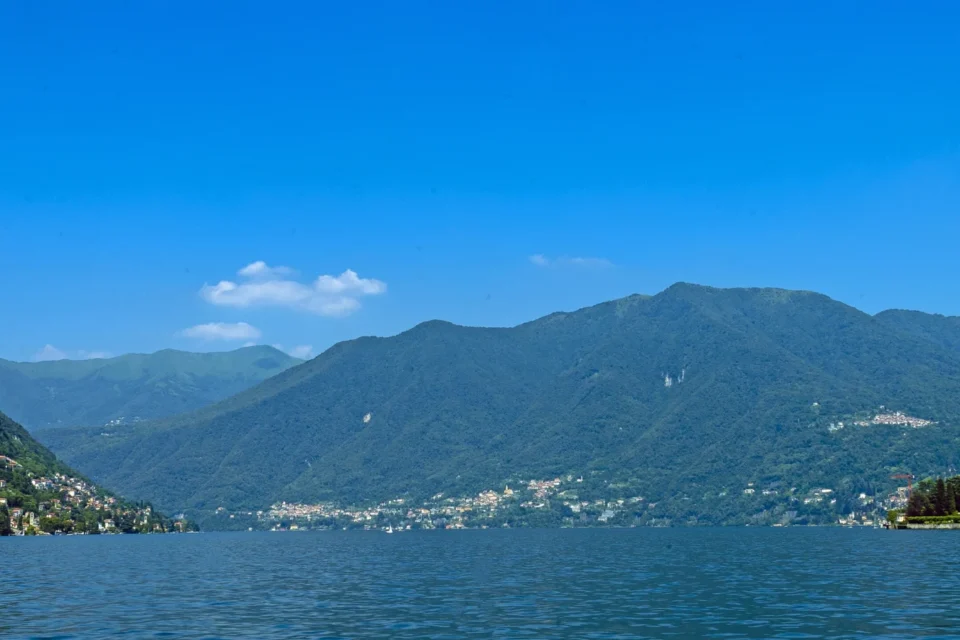
Moltrasio is the Como shore for travellers who prefer texture to spectacle. Instead of grand facades you get a working landscape of stone: stepped alleys, dry-wall terraces held up for centuries, and villas half-hidden in greenery above a narrow lakeside strip. The village is compact enough to explore on foot in an afternoon, yet its ecomuseum network of churches, quarries and mills can fill days if you let a local show you around. Boats connect it to Como and the mid-lake towns, so it works equally well as a day trip or a calm base within sight of the city’s dome.
Character and history
The stone is the story. Moltrasio sits on the Moltrasio Formation, a sedimentary limestone laid down on a Jurassic seabed, whose even strata cut cleanly into building blocks; from Roman times until roughly 1900 it was the dominant building material in and around Como — Roman walls, the medieval Barbarossa walls, baths and ordinary houses — and miles of dry-stone walls terracing the hillsides here are made of it. Quarrying shaped the community: the best building stone came from Moltrasio and nearby Carate, the old workings can still be traced along the hillside paths, and the trade fed the lake’s boats and mule tracks until reinforced concrete finally displaced it. Faith left the oldest monuments: in the Vignola hamlet, an eleventh-century Romanesque church dedicated to Saint Agatha rose beside the ancient Via Regia, served the community from the twelfth century, and even functioned as a lazaretto during the seventeenth-century plague. The parish church of Saints Peter and Paul anchors the lakefront settlement, and grand villas later claimed the shore gardens. Moltrasio’s frazioni — among them Casarico, Somaino, Tosnacco and Vignola — still string up the hill like beads.
What to see
The Church of Sant’Agata at Vignola is the essential stop: an eleventh-century Romanesque building entirely of Moltrasio stone along the old Via Regia, with exterior frescoes of Saint Agatha and Saint Christopher — whom travellers once looked to for luck — sixteenth-century interior frescoes including a Christ Pantocrator flanked by Saints Rocco and Antonio Abate, restored in 2006, a Renaissance wooden crucifix, and the nineteenth-century Lucini Passalacqua chapel beside the churchyard. On the lakefront, the parish Church of Saints Peter and Paul marks the heart of the village. The Ecomuseum of Moltrasio Stone is less a museum than a guided way of seeing: volunteers lead visits to Sant’Agata, the old mill valley and quarry sites, and demonstrate traditional quarrying techniques at the former Cavirolo quarry on special open days. For a self-guided stroll, follow the paths linking the frazioni, where Church of Saints Martin and Agatha waits in the upper village, and the retaining walls themselves become the exhibit.
How to experience
Come by boat if the season allows: the village landing puts you at the foot of the stairways, and the approach from the water explains why everything here steps upward. Join an ecomuseo guided visit — book through the association, which publishes its walks and free weekend openings online — and ask specifically about the mill valley and quarry paths. Between visits, walk the Sentee di Sort towards Rovenna, passing one of the largest old quarries; sturdy shoes are enough. Time a lunch by the landing, then swim from the lido in summer or take the ferry on to Cernobbio and Como. In December, the ecomuseo’s themed Saturdays open churches and the Casa della Zia Ernesta, a rare chance to see inside buildings normally kept locked. The upper frazioni reward aimless wandering: every turn of the stone stairs delivers a new slice of lake between the roofs, and old fountains still run cold in the shade of the walls.
Practical planning
Moltrasio lies on the SS340 Regina road about six kilometres north of Como, with C10 buses along the shore, a boat stop at the landing, and parking scarce near the water — the boat from Como is the relaxed choice. The ecomuseum’s visits require booking and run to a seasonal calendar; the church of Sant’Agata is likewise best seen on guided openings, so check promoltrasio.org, the village’s official pocket guide, before setting out. Spring and autumn give the clearest light on the stone; summer brings swimmers and the lido crowd. Village shops are few — provisions come from Como or Cernobbio. Comfortable, grippy shoes are the single most important item of luggage for this destination.
Nearby places
Moltrasio neighbours the Como-bound shore villages to the south and the mid-lake resorts across and along the water.
Worth building a day around.
Chiesa dei Santi Martino e Agata
Pro Loco: chiesa parrocchiale 'dedicata ai Santi Martino e Agata' con polittico di Alvise de Donati (1507) e Sacra Spina; annuario diocesi di Como…
Chiesa dei Santi Pietro e Paolo
Parrocchia censita da Lombardia Beni Culturali (istituzioni 10100131); la chiesa di Moltrasio figura tra le dipendenze del capitolo della cattedrale di Como dal tardo…
Chiesa di Sant'Agata
Edificio romanico dell'XI secolo interamente in sasso di Moltrasio, nominato nel 1215 (Lombardia Beni Culturali); visite guidate organizzate dall'Ecomuseo del Sasso di Moltrasio con…
Ecomuseo del Sasso di Moltrasio
Ecomuseo attivo con calendario di visite guidate prenotabili (Eventbrite) e contatti ufficiali; riconosciuto dal Comune di Moltrasio; promosso dalla Cooperativa Moltrasina. Visite con iscrizione…
Journeys in Moltrasio.
Demo — Moltrasio Private Highlights Tour
Let a local expert design your Moltrasio day.
Tell us your dates and pace. A travel designer replies within one working day.