Metaponto
Metaponto, the Ionian seaside frazione of Bernalda in Basilicata, guards the remains of one of Magna Graecia’s greatest cities — Pythagoras chose to end his days here. Between the Greek temples of the archaeological areas, the Tavole Palatine standing alone in the fields, and kilometres of golden sand, it serves equal measures of history and beach life.
Why visit
Few places pack ancient Greece and a beach holiday so neatly together. Metapontum was one of the most important cities of the western Greek world, its wealth founded on the extraordinary fertility of the plain between the Bradano and Basento rivers — a belt so productive that the regional tourism authority notes the area is still nicknamed the “southern California” of Italy for its fields of fruit and vegetables. The symbol of the site is unforgettable: the Tavole Palatine, fifteen Doric columns of a sixth-century-BC temple standing in open country by the Bradano, once associated in local memory with Pythagoras’ school. The urban archaeological park preserves the temples of the city itself — Apollo Lykeios, Hera, Aphrodite and Athena — alongside theatre and habitat remains, with finds gathered in the National Archaeological Museum of Metaponto. Add a long sandy seafront with well-serviced beaches and Ionian swimming, and the frazione works for families, classicists and cyclists in equal measure.
Character and history
Legend founded the city in 773 BC with Nestor of Pylos, a refugee from Troy — a founding myth the tourism authority records — but history credits Achaean colonists who planted Metapontum on fertile ground between two rivers. Its most famous resident was Pythagoras, who lived and worked here until his death around 490 BC, founding one of his schools in the city; the Tavole Palatine were long remembered as the “Scuola di Pitagora” in his honour. The temple itself, restored in 1961 and built on the site of a Neolithic village along the prehistoric road from Siris-Heraclea, was first attributed to Athena until a 1926 excavation revealed a votive dedication to Hera; medieval chroniclers still called it “Mensae Imperatoris”, recalling the emperor Otto II’s camp at Metaponto during his 982 campaign against the Saracens. Of the original peripteral temple — thirty-two columns of which fifteen survive, ten on the north flank and five on the south — the stonework shows the weathering of local calcarenite. Excavations across the park, the necropoleis and the sanctuary continue to feed the national museum’s collections. The modern frazione grew around the station and borgo, now fronted by a long promenade and the beaches of the Metapontino.
What to see
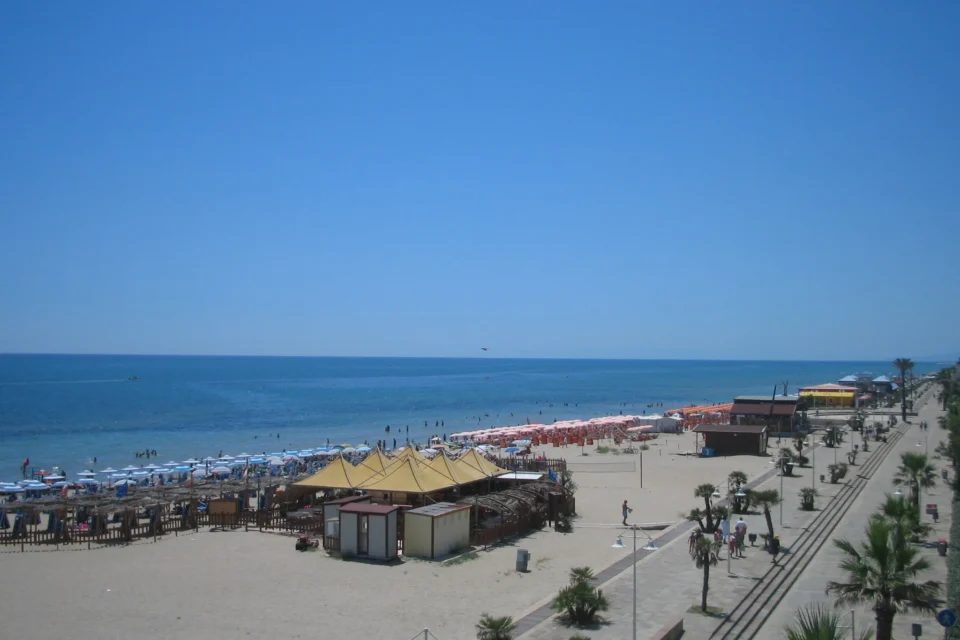
The assigned attraction is the Metaponto Seafront Promenade, the beachfront spine of the frazione where swimming, evening strolls and the family beach scene happen — it is also where most accommodation and lidos cluster. From the seafront, the archaeology is minutes away: the urban archaeological park at Metaponto borgo, with the remains of the temples of Apollo Lykeios, Hera, Aphrodite and Athena, theatre and city quarters; and, about three kilometres away on the Bradano, the Tavole Palatine temple standing among the old coastal dunes. The National Archaeological Museum of Metaponto near the park completes the circuit with the excavation finds.
How to experience
Split your days between sand and stones. Mornings suit the archaeological areas before the heat: the MiC museum site (museometaponto.beniculturali.it) and man-metaponto.cultura.gov.it publish current park and Tavole Palatine hours and ticket arrangements — they change seasonally and parts of the museum have at times been under reorganisation, so check before going. Rent bicycles: the flat country lanes between the borgo, the temples and the Tavole Palatine are ideal riding, and the local cycling club’s heritage routes make an easy half-day loop. Afternoons belong to the sea — the promenade beach is sandy and shallow, friendly for children, while further stretches toward Policoro quiet down. In the evening, follow the locals for fish, fresh pasta and the citrus and peach products of the surrounding orchard belt. Time a visit to late afternoon light on the Tavole Palatine columns: against the dark of the fields, they glow like honey.
Practical planning
Metaponto lies on the Ionian coast of the province of Matera, about forty minutes by car from Matera city; it has its own railway station on the regional line, useful for car-free arrivals from Taranto or Potenza connections, though a car makes combining the temple sites, beaches and inland towns easier. Summer is hot and busy — book seaside accommodation early, and expect the archaeological areas to be at their most crowded mid-morning. Spring and September give the best of both worlds, with swimworthy sea and comfortable sightseeing. Some beach services operate seasonally only; check the official museum and park channels for opening arrangements and any combined tickets covering the museum, park and Tavole Palatine before setting out.
Nearby places
Bernalda, the parent town with its castle and Coppola connection, is minutes inland. Policoro continues the beach-and-museum pairing along the coast, while Matera supplies the essential urban monument of the region. Inland, Craco and Aliano make an adventurous contrast to the seaside.
Worth building a day around.
Journeys in Metaponto.
Demo — Metaponto Private Highlights Tour
Let a local expert design your Metaponto day.
Tell us your dates and pace. A travel designer replies within one working day.