Melfi
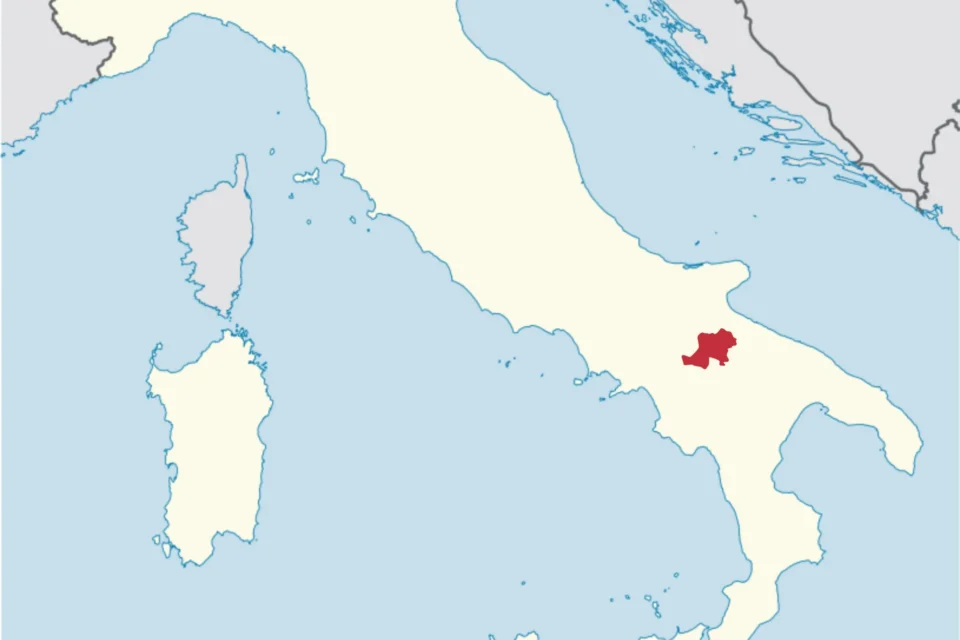
Melfi, at the foot of the volcanic Vulture in northern Basilicata, was the capital of Norman Apulia and the seat of Frederick II’s great 1231 legislation. Its formidable castle guards a national archaeological museum, a Romanesque-Gothic cathedral and a walled old town, while Aglianico del Vulture vineyards and chestnut woods crowd the surrounding hills.
Why visit
Melfi is where southern Italy’s medieval politics were written. The regional tourism authority ranks it among the great Norman cities of Basilicata: Robert Guiscard built the castle that still commands the town, and Frederick II of Staufen enlarged it and proclaimed here the Constitutions of Melfi in 1231, the most important legislative work of the medieval world, which regulated feudal rights and even recognised women’s inheritance. The walls and gates of what was once the capital of the Duchy of Apulia still fold around the borgo, and inside them you find the cathedral’s fifty-metre Romanesque bell tower, rock churches painted in the Byzantine manner, and — inside the castle itself — the National Archaeological Museum “Massimo Pallottino”, home of the celebrated Rapolla sarcophagus. Add the volcanic landscape of the Vulture, its famous Aglianico vineyards and the Marroncino chestnut, and Melfi becomes the natural base for Basilicata’s northern quarter.
Character and history
Melfi’s medieval supremacy was no accident: positioned between Apulia and Campania on the slopes of the extinct Vulture volcano, it became the seat where the Normans held their councils, and the city grew rich as capital of the Duchy of Apulia. The castle that Robert Guiscard founded was transformed under Frederick II into the fortress whose halls hosted the Constitutions of Augustales of 1231. The walled circuit, of which substantial stretches survive, still carries the Porta Venosina, one of six ancient entrances, while ogival arches, patrician palaces and the towers framing the Doria baronal palace mark later centuries of prominence. The cathedral of Santa Maria Assunta pairs its soaring Romanesque bell tower with a Byzantine-influenced facade and an interior of gilded coffered ceilings and seventeenth-century baroque altars. In the hills just outside town, the thirteenth-century rock churches of Santa Margherita — with a volcanic-tuff crypt and the famous Monito dei Morti fresco, probably depicting Frederick II with his family — and Santa Lucia preserve the Byzantine-devotional layer of the area. Modern Melfi balances this heritage with a working-town energy and the gastronomy of the Vulture: Aglianico del Vulture DOCG, praised since Horace, and the Marroncino chestnut.
What to see
The town’s assigned public square, Umberto I Square, is the living centre from which to explore: castle and cathedral stand within a few minutes’ walk, as do the Porta Venosina, the Doria palace complex and the lanes of the borgo. The castle’s interior, with the National Archaeological Museum “Massimo Pallottino” and the Doria halls with their eighteenth-century furnishings, is the essential interior visit; the diocesan museum beside the bishop’s palace adds the cathedral treasury, including a fifteenth-century Pietà in coloured stone. Outside the walls, the rock churches of Santa Margherita and Santa Lucia reward the short drive.
How to experience
Walk the walls first. Enter through Porta Venosina and let the borgo unfold — the square is a good mid-route pause for coffee, and evening brings the passeggiata out under the bell tower. Book the castle-museum visit and check its seasonal schedule on the Ministry of Culture’s Melfi-Venosa institutes portal (melfivenosa.cultura.gov.it), which also lists special events such as the state museums’ free first-Sunday openings and summer festivals in the castles. Food is a primary attraction here: plan a tasting of Aglianico del Vulture in the town’s cantinas, and if you come in autumn you may catch the Marroncino chestnut festivities — dates change, so look them up locally. Drive the Vulture roads afterwards to Venosa or up to Monte Vulture’s woods. Melfi suits a full day from nearby bases, or a two-night stay as the northern Basilicata hub.
Practical planning
Melfi lies in the province of Potenza, at the northwestern corner of Basilicata, close to the A16/A2 motorway corridors — roughly an hour from Potenza, less from Venosa, and convenient from both Naples and Bari directions. The borgo is compact and walkable, but its lanes are steep; park outside the walls and enter on foot through the gates. Summer heat and winter fog both visit the Vulture foothills, so spring and autumn remain the kindest seasons. Opening hours at the castle-museum and the rock churches vary by season and by ministry calendars — confirm on melfivenosa.cultura.gov.it and the regional tourism portal (basilicataturistica.it) rather than older listings. Wine-tasting venues generally require advance contact.
Nearby places
The Vulture area, with its extinct volcano, lakes and vineyards, surrounds the town. Venosa, birthplace of Horace with its abbey and archaeological park, is the closest heavyweight companion, and Acerenza‘s great cathedral lies inland to the south. Muro Lucano and Potenza complete the practical circuit of the north.
Journeys in Melfi.
Demo — Melfi Private Highlights Tour
Let a local expert design your Melfi day.
Tell us your dates and pace. A travel designer replies within one working day.