Marta
Marta is a small fishing town on the southern shore of Lake Bolsena, where the lake’s only outflow river slips away toward the Tyrrhenian coast. Colourful boats, peperino lanes, a hillside sanctuary and one of Lazio’s most vivid rural festivals give this Tuscia borgo an authenticity the bigger lake towns can only imitate.
Why visit
Lake Bolsena’s shoreline holds several pretty towns, but Marta is the one where the lake’s working life is still visible: fishermen haul their nets in the small harbour, boats line the waterfront, and the town’s identity remains tied to what the water and the surrounding fields produce. Travellers looking to slow down find an easy rhythm here — a morning coffee facing the lake, a walk up to the sanctuary on the hill, lunch on fresh lake fish such as the local coregone. The borgo is small enough to absorb in a few hours, yet it anchors a rewarding corner of the Tuscia: Montefiascone and its papal fortress stand just up the road, the beaches of Montalto di Castro and Tarquinia’s Etruscan heritage lie westward, and the lake itself offers swimming and boat trips in season. Come in mid-May, and you will stumble onto the Barabbata, a procession of horsemen, ox-teams and harvest carts that is one of central Italy’s most stirring folk rites.
Character and history
Marta grew as a fishing village at the point where Lake Bolsena drains into the river that shares its name, whose course carries the water down to the Mediterranean near Tarquinia. The medieval borgo, compact and stone-built on its lake terrace, belonged for centuries to the orbit of the papal states and of neighbouring Montefiascone’s bishops, and its parish church took its dedication from St. Martha, the patron invoked for protection on the water. Fishing shaped everything: the guilds and families of the lakefront, the rituals that accompanied the seasons, and the great festival on the hill above town. The Santuario della Madonna del Monte, a church with convent at the top of the path from the borgo, became the spiritual pivot of the community, and on 14 May each year it draws the whole town uphill in the Barabbata, when casenghi on horseback, ploughmen with oxen, farmhands and fishermen parade the products of land and lake to give thanks — a Christian rite grafted onto far older spring festivals of the earth’s fertility. The town keeps its memory in writing, too, in a municipal historical archive that documents centuries of lakeside civic life.
What to see
The Church of Saints Martha and Blaise on Via Amalasunta is the borgo’s principal parish, the church where the fishing families worshipped and where civic and religious life still meet. Climb from the lakefront to the Sanctuary of the Madonna del Monte, the hillside sanctuary above town reached on foot along the old path — the walk itself, with the lake opening below, is the best thing to do in Marta, and the sanctuary courtyard rewards it with silence and views.
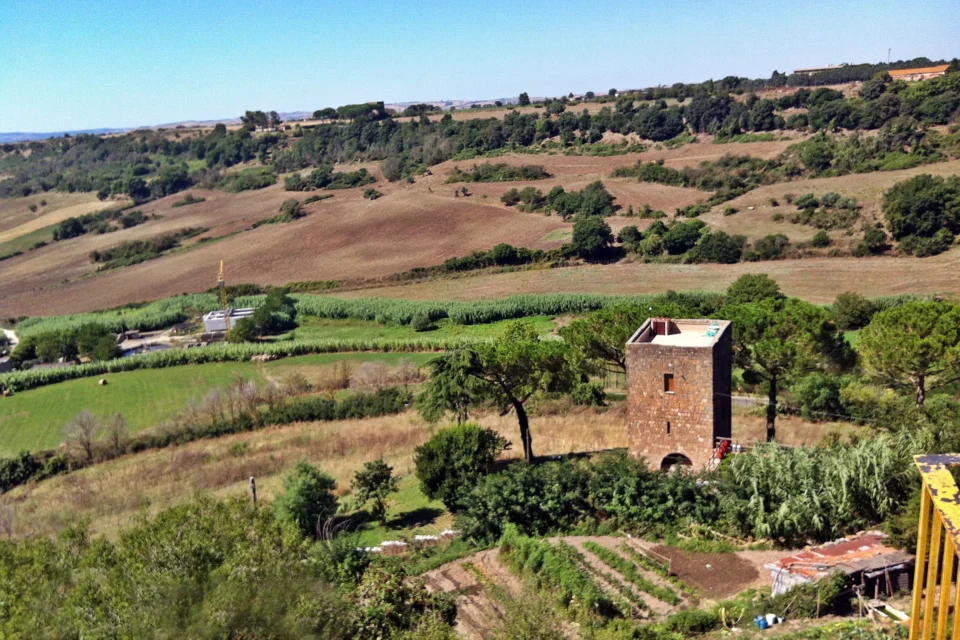
In the historic centre, look for the Clock Tower (Marta), the civic tower that rises above the rooftops and keeps watch over the lake, a useful landmark for orientation in the tangled lanes. For anyone researching the town’s past, the Marta Municipal Historical Archive in the town hall preserves the community’s records. Between sights, walk the promenade and the little port, where the moorings assigned each season to local boats give the clearest picture of the town’s continuing relationship with the water.
How to experience
Take Marta slowly and let the lake set the schedule. Arrive in the morning for the market and coffee on the waterfront, then climb to the sanctuary before the heat of the afternoon; swim or rent a pedal boat from the lakeside establishments in season, and end with lake fish grilled at a family-run trattoria. If your trip falls in mid-May, build everything around 14 May: the Barabbata begins before dawn with a drummer waking the town, builds through a procession of carts piled with produce, flowers and the ritual double-baked ciambelle bread, and culminates at the sanctuary with the categories of farmers and fishermen crossing the church three times — an unforgettable spectacle that belongs to the town rather than to tourism. Marta also works as a calm base between sightseeing bursts: Montefiascone, Bolsena and Capodimonte are all short drives, and the Via Francigena’s lakeside stages pass within easy reach. Check the municipal site (comune.marta.vt.it) for event calendars and sanctuary access before travelling.
Practical planning
Marta lies on the southeastern shore of Lake Bolsena, roughly twenty kilometres from Viterbo and about an hour and a half from Rome by car via the Cassia or the motorway toward Viterbo; public transport runs by bus from Viterbo. The borgo is steep and cobbled in its upper lanes, so wear comfortable shoes for the sanctuary path. Summer brings lake swimmers and the busiest lakeside service; May combines the festival with mild walking weather, while autumn offers quiet, colours and the olive and chestnut harvests of the surrounding hills. Opening arrangements for the church, sanctuary and archive vary and are best confirmed locally. Parking sits below the historic centre; from there, everything in the borgo is on foot.
Nearby places
The lake circle offers close companions: Montefiascone with its papal fortress and wine heritage sits just north, Capodimonte presides over a promontory of the lake, and Bolsena gives the lake its name at the opposite shore. Beyond the water, Tarquinia holds Etruscan painted tombs, Tuscania its medieval basilicas, and Viterbo the papal palace of the popes’ first refuge.
Worth building a day around.
Archivio Storico Comunale di Marta
Il Comune di Marta elenca l'Archivio Storico Comunale tra le strutture culturali: 'raccolta di documenti storici del territorio', consultazione previa richiesta agli uffici comunali.
Chiesa dei Santi Marta e Biagio
Annuario ufficiale della Diocesi di Viterbo: parrocchia dei Santi Marta e Biagio, Zona Pastorale di Montefiascone/Tuscania, chiesa di culto regolarmente aperta (festa titolare documentata…
Santuario della Madonna del Monte
La Diocesi di Viterbo documenta veglie di preghiera diocesane celebrate 'presso il Santuario della Madonna SS. del Monte a Marta (VT)': struttura di culto…
Torre dell'Orologio
Il Comune di Marta la elenca tra i 'Luoghi': 'incastonata nel centro storico del paese, domina dall'alto l'abitato e sorveglia il lago di Bolsena'.
Journeys in Marta.
Demo — Marta Private Highlights Tour
Let a local expert design your Marta day.
Tell us your dates and pace. A travel designer replies within one working day.