Diamante
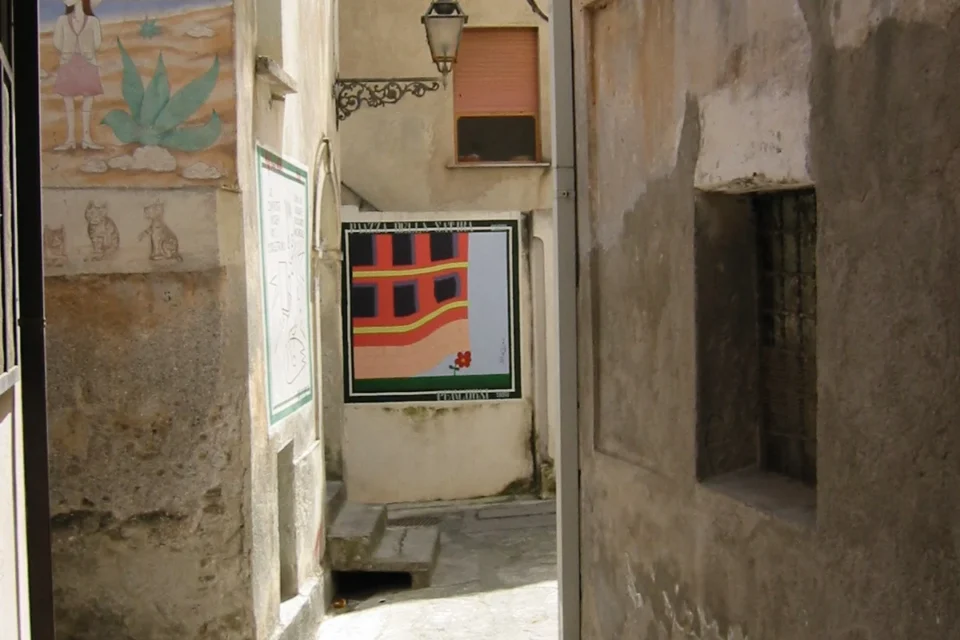
Diamante is a resort town on Calabria’s Tyrrhenian coast, famous for the hundreds of murals painted across its old walls, for the citron and chilli that flavour its cooking, and for a palm-lined seafront that walks the town straight into the sea. On the Riviera dei Cedri facing the islet of Cirella, it is the Riviera at its most personable.
Why visit
Diamante does the Italian seaside holiday with personality rather than gloss. The old fishermen’s quarter is an open-air gallery, its house walls covered in paintings that began as a civic art project and grew into the town’s signature; the beaches are sandy and gently shelving; and the kitchens take unusual pride in the peperoncino, honoured every September with a festival that fills the streets with chilli-themed stalls and competitions. It is a compact place — an evening’s stroll covers the whole centre — which makes it easy to settle into. Use it as a relaxed base for the cedri riviera, for boat trips to the little island offshore, and for day trips into the mountains of the Pollino massif to the north.
Character and history
The town takes its name from the diamond, a symbol of brightness that suitably describes its setting between sea and light. Its coastal position made it a target through the centuries: Saracen raids pushed earlier settlements uphill, and the ruins of Cirella Vecchia, with its baronial castle above the sea, record a fortified hilltown abandoned after bombardments in the Napoleonic era. The citron — the fragrant citrus known as the Diamante citron — has been cultivated in the district for centuries and remains part of the local identity, alongside fishing and, more recently, tourism. The murals for which Diamante is now best known began appearing in the early 1980s, when artists were invited to paint on the town’s walls; the collection has grown to hundreds of works that refresh the streetscapes each year and give the centre the feel of an open-air museum. The neighbouring frazione of Cirella adds an atmospheric half-island crowned by pines, once used as a lookout against pirates.
What to see
Start with the Old Seafront Promenade of Diamante, the elegant Lungomare Vecchio that runs along the sand with its row of palm trees, liberty-style villas and sea-view cafés — the town’s social spine at the evening passeggiata. From there, drift into the centro storico behind it: narrow lanes stacked with murals of every style, from documentary scenes of seafaring life to playful contemporary pieces, so that every turn produces a new painting. Continue to the small harbour, where boats leave for the Cirella island in season, and end at one of the seafront terraces with a plate of spaghetti dressed with the local chilli. The beaches on either side of the centre are the simplest pleasure of all, and in September the Peperoncino Festival transforms the promenade into a week-long celebration of Calabria’s favourite spice.
How to experience
Diamante rewards slow travel. Give a morning to the murals with a map or simply by wandering; the paintings change as works are restored and repainted, so no two visits look alike. Swim in the late afternoon, then join the evening stroll along the promenade before dinner built around the town’s flavours: citron in salads and liqueurs, chilli in everything from pasta to chocolate. If you are there in September, plan several evenings for the festival’s concerts, contests and street kitchens. Drive or take a boat to Cirella for a quieter stretch of coast and views back over the bay, and keep a day free for the Pollino national park, where the high plateau begins less than an hour inland.
Practical planning
Diamante lies on the Riviera dei Cedri in the province of Cosenza, with its own railway station on the coastal line that links Naples with Reggio Calabria; the A2 motorway and the airports of Lamezia Terme and Naples serve the wider area. The centre is flat and easily walkable, and parking sits just beyond the old quarter. Summer is the high season, with the sea at its warmest and the festival in the second half of September; spring and October suit visitors who prefer the walks and the murals to the crowds. As anywhere on the coast, boat trips and beach services operate seasonally — confirm current arrangements through the local tourist office or the Pro Loco (prolocodiamante.it) before relying on them.
Nearby places
The coast continues north to the sandy coves and cliffs of Praia a Mare with the dramatic islet of Dino, and south to Scalea, a stacked white town above a long beach. Inland, the citrus country around Santa Maria del Cedro gives the riviera its name, while the mountain villages of Morano Calabro and the forests of Pollino make a striking contrast to the sea.
Worth building a day around.
Journeys in Diamante.
Demo — Diamante Private Highlights Tour
Let a local expert design your Diamante day.
Tell us your dates and pace. A travel designer replies within one working day.