Colico
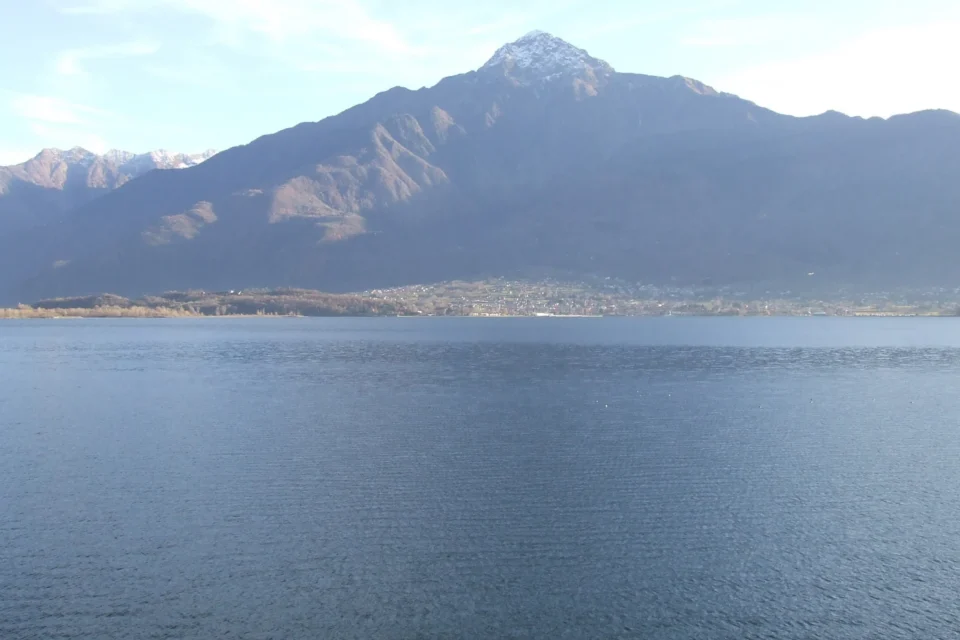
Colico commands the northern end of Lake Como, where the lake narrows towards the Valtellina and the Alpine passes. Four centuries of frontier history have left Spanish forts and Great War batteries on its hills, while Cistercian monks still sing at Piona Abbey. Today it is the lake’s sportiest corner, a hub for kitesurfers, hikers and cyclists.
Why visit
Travellers who reach Colico are usually rewarded with the least crowded and most dramatic lake scenery in the Como basin. The town works for two kinds of visitors at once: those drawn by water sports, beaches and lakeside campsites, and those chasing forts and abbeys. Forte Montecchio Nord, built on the eve of the First World War, is presented as the best-preserved Great War fortress in Europe, its revolving armoured turrets still dominating the confluence of lake and valleys. Across the water, the Romanesque cloister of Piona Abbey offers silence and monks’ liqueurs. Between them lie farm museums, medieval towers, mountain trails and a long waterfront — an unusual breadth for a single lakeside town.
Character and history
Colico’s position guarding the entrances to the Valtellina and Valchiavenna gave it outsized strategic importance. The Spanish rulers of the duchy of Milan threw a star-shaped fortress, the Forte di Fuentes, onto the Montecchio hill around 1603 to control the lake frontier; two centuries later the new Italian state ringed the same heights with Great War batteries, of which Forte Montecchio Nord — built between 1911 and 1914 — is the outstanding survivor. Monastic history runs deeper still: a community existed on the Olgiasca peninsula by the seventh century, the Romanesque church there was consecrated to the Virgin in 1138, and Cistercian monks returned to Piona in 1938. The frazioni keep their rural memory — mills at Villatico, a museum of peasant life, parish churches — while the lakefront below has grown into the northern lake’s centre for sailing and kite sports.
What to see
Begin with Forte Montecchio Nord: its armoured battery with revolving steel turrets, galleries, engine room and hand-painted command-room map survive remarkably intact, and the viewpoint over the lake’s northern basin is worth the walk alone. Across the water, the earth-covered remains of the Forte di Fuentes on Montecchio Est show the geometry of the Spanish defensive design, with the Pian di Spagna wetlands below. On the Olgiasca peninsula, Piona Abbey preserves the Church of San Nicola and one of Lombardy’s loveliest Romanesque cloisters; the monks sell herbal products and liqueurs at the abbey shop. The medieval Tower of Fontanedo, restored in 2019 on the slopes below Monte Legnone, guards older layers of the frontier, and in Villatico the Museum of Peasant Culture of Colico reconstructs rural life of the late nineteenth and early twentieth centuries. The historic Church of San Rocco and the parish Church of San Bernardino in Villatico complete the picture.
How to experience
Give the morning to the forts — Forte Montecchio opens on a seasonal calendar with extra visits by reservation, so check its official site first — and the afternoon to Piona, ideally arriving by boat from the Colico jetty for the approach across the bay. Walkers can pick up the Sentiero del Viandante, the long-distance lakeside trail, and climb towards Rifugio Scoggione or the heights of Monte Legnone; cyclists ride the Valtellina route towards Bormio or the Valchiavenna path in the opposite direction. Kitesurfing and sailing schools work the northern breeze in summer. In Villatico, seek out the restored mills and the farm museum for the valley’s quieter story, then end the day on a beach with the mountains closing in.
Practical planning
Colico has its own railway station on the Lecco–Sondrio line, with direct regional trains from Milan and Lecco, and the ferries of the mid-lake service call here in season — verify timetables with the operators. The tourist infopoint sits by the jetty on Via Pontile. Accommodation ranges from campsites and B&Bs to hotels; summer weekends are busy with sports crowds, so book ahead. Fort, abbey and museum hours vary by season: confirm details on visitcolico.it, fortemontecchionord.it and the abbey’s own pages before setting out. Spring and September combine calm water, walkable trails and thinner crowds.
Nearby places
South along the eastern shore, Bellano and Lierna continue the Sentiero del Viandante towards Lecco, while Mandello del Lario across the water is famed for its motorcycle heritage. All four are same-province destinations from the context list, linked by the lakeside road and railway.
Worth building a day around.
Abbazia di Piona (Priorato di Piona)
Pagina ufficiale del portale turistico comunale Visit Colico ('raro gioiello dell'architettura romanica lombarda', attrazione visitabile). Chiesa romanica di San Nicolò con chiostro gotico; priorato…
Chiesa di San Bernardino (Villatico)
Pagina dedicata sul portale ufficiale Visit Colico. Chiesa principale della parrocchia di Villatico, nel cuore storico della frazione; visita libera negli orari di culto.
Chiesa di San Rocco
Pagina dedicata sul portale ufficiale Visit Colico. Piccola chiesa di grande valore storico-artistico e culturale, facilmente raggiungibile, indicata dal portale ufficiale turistico comunale; visita…
Forte di Fuentes
Pagina ufficiale Visit Colico con orari di visita programmati e modalita' prenotazione. Rovine della grande fortezza spagnola a pianta stellare tra lago di Como…
Forte Montecchio Nord
Sito ufficiale del forte con orari e tariffe; pagina ufficiale turismo Visit Colico. Uno dei complessi fortificati meglio conservati d'Italia, con torrette e cannoni…
Museo della Cultura Contadina di Colico
Pagina ufficiale Visit Colico con indicazione 'APERTURA GRATUITA SU PRENOTAZIONE' e contatti. Museo etnografico del Sistema Museale della Provincia di Lecco (dal 2010); apertura…
Torre di Fontanedo
Pagina ufficiale Visit Colico con calendario 2026, prezzi e prenotazioni (gestione Forte Montecchio Nord). Torre a 500 m sul Monte Legnone lungo il Sentiero…
Journeys in Colico.
Demo — Colico Private Highlights Tour
Let a local expert design your Colico day.
Tell us your dates and pace. A travel designer replies within one working day.