Blevio
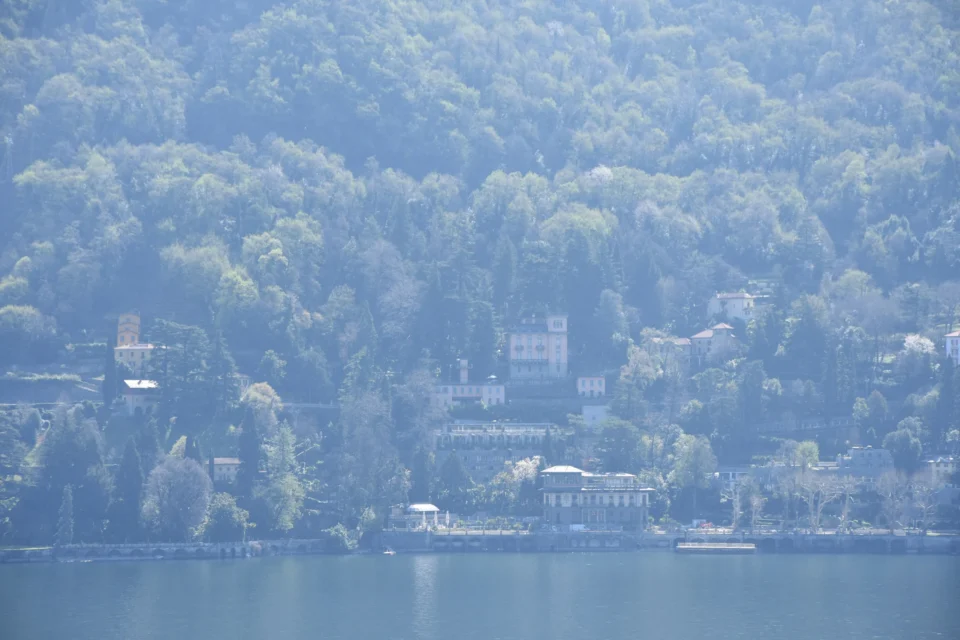
Blevio spreads across the wooded slopes of Lake Como’s eastern branch in seven ancient hamlets that locals still call “the seven cities”. It is a village of villas and echoes: opera singers and ballerinas summered here in the nineteenth century, and today its lakefront, terraced lanes and open-air mosaics invite travellers who prefer their lake villages quiet.
Why visit
Blevio offers the Como experience at a whisper. Where its neighbours draw the crowds, this stretch of shore keeps its gardens, gateways and villas to itself, rewarding those who arrive slowly — by boat, on foot, or with time to spare. The municipality has woven a playful modern layer into the old fabric: a park of outdoor mosaics scattered along the village footpaths, free to wander. History lovers will find surprising depth in the story of Giuditta Pasta, the soprano for whom Bellini wrote Norma, who lived and is buried here; walkers can climb from the shore into hamlets whose names barely appear in guidebooks. It is an easy outing from Como and a restful counterpoint to Bellagio.
Character and history
The name descends from the Celto-Ligurian “Biuelius”, and a written record dates to 1084, with the commune formally constituted by 1279. For centuries Blevio was a scatter of autonomous hamlets above the water — Capovico, Cazzanore, Girola, Meggianico, Mezzovico, Sopravilla and Sorto — joined administratively and bound economically by the lake. Briefly merged with neighbouring Torno under Napoleon in 1807, it was reconstituted after his fall.
The nineteenth century transformed its fortunes. Between the eighteenth and nineteenth centuries the shore attracted the European elite: the composer Pasquale Ricci built Villa Belvedere, where the young Alessandro Manzoni stayed and met his future wife; ballerina Marie Taglioni raised her villa on foundations known as “Ca’ dell’Imperatore”, where Emperor Joseph II had sheltered from a storm in 1769; a Russian prince, so the story goes, earned the nickname “Turbascogli” by blasting a cliff with dynamite for his view. Above all came Giuditta Pasta, the great soprano, who frequented Villa Ferranti (Roccabruna); she rests in the village cemetery. In 1935 the sculptor Arturo Martini worked here, creating his “Gruppo di Blevio”. Today Blevio remains a residential village of roughly a thousand people, protective of its privacy and its views.
What to see
The parish church of the Church of Saints Gordian and Epimachus on Via IV Novembre is the village’s historic spiritual centre and gives the parish its name; nearby, the Church of San Francesco d’Assisi and the small Church of the Immaculate Conception complete the parish’s three churches listed in the Diocese of Como’s directory.
The most distinctive modern attraction is the Mosaici Park of Blevio, a municipal project inaugurated in June 2016 that places durable mosaic artworks along the village footpaths and public green spaces — art you stumble upon between hamlets rather than in a gallery. Beyond the listed sights, the pleasures are scenic: the lakefront walk at Capovico, the stair-lanes climbing toward Sopravilla, and views back across the water toward Cernobbio’s hills. Villa exteriors — Ferranti, Belvedere, Maria — line the shore road; they are private, so admire them from the lane.
How to experience
Arrive like the nineteenth-century guests did, by water: boats connect Blevio with Como and the mid-lake villages, and the approach from offshore explains why the elite chose this shore. Then walk — the seven hamlets string along the hillside, and the mosaic trail gives the walk a purpose, hunting artworks as the gradient steepens. Allow a morning for the shore and an afternoon climbing from hamlet to hamlet, pausing where the lake opens below. Bring a book about Bellini’s Norma and find the cemetery where its first interpreter lies; that kind of literary pilgrimage is exactly what Blevio does best. Finish with a lakeside lunch in neighbouring Torno or back toward Como.
Practical planning
Blevio lies on the Como branch of the lake, a short drive north of Como city along the eastern shore road; buses run along this route, and boat services connect in season, though not all stops are served year-round — check current timetables. Parking is scarce and roadside, so arriving early or by public transport helps. The hamlets climb steeply from the road: the shore stretch is easy, but the upper lanes involve steps and sustained gradients, so wear proper shoes. There are no large hotels or resort services here; treat Blevio as a day trip from Como or Bellagio, or book one of the small lakeside properties. Note that parts of the municipality have suffered flood and landslide damage in recent years — check local notices before setting out on trails. Visitor information is available from the municipality (comune.blevio.co.it) and the Triangolo Lariano tourism portal.
Nearby places
Blevio sits midway between two anchors: the city of Como to the south, with its cathedral and walls, and the village of Torno immediately north, its closest neighbour on the shore. Across the water, Cernobbio lines the opposite bank, while the great garden villages of Lenno, Tremezzo and Bellagio at the lake’s head make longer excursions. For the whole region, see Lake Como.
Worth building a day around.
Chiesa dei Santi Gordiano ed Epimaco
Scheda Lombardia Beni Culturali (CO250-00743) e scheda SIUSA (cultura.gov.it, parrocchia documentata dal sec. XVI, dipendenze del capitolo della cattedrale di Como dal tardo XIII…
Chiesa dell'Immacolata
Censita dall'annuario ufficiale della Diocesi di Como tra le chiese del territorio parrocchiale di Blevio. Chiesa sussidiaria della parrocchia di Blevio; orari non pubblicati.
Chiesa di San Francesco d'Assisi
Annuario enti della Diocesi di Como: parrocchia Santi Gordiano ed Epimaco con sede nella Chiesa di San Francesco d'Assisi, chiesa parrocchiale attiva. Chiesa parrocchiale…
Parco Mosaici di Blevio
Scheda 'Luoghi' ufficiale del Comune di Blevio: parco pubblico aperto alla fruizione. Parco pubblico comunale sul lago.
Journeys in Blevio.
Demo — Blevio Private Highlights Tour
Let a local expert design your Blevio day.
Tell us your dates and pace. A travel designer replies within one working day.