Barolo
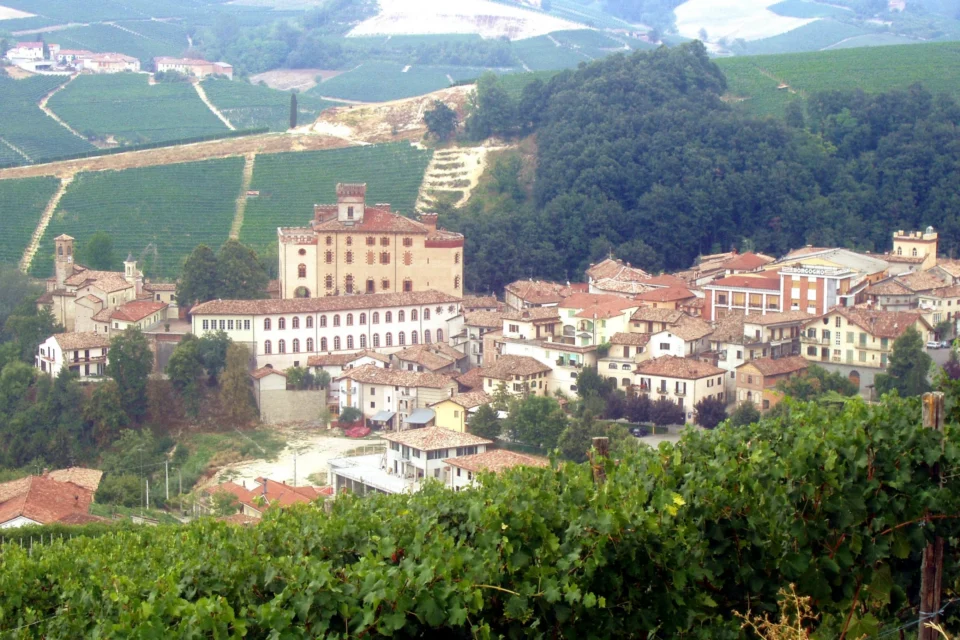
Barolo is a village of a few hundred souls beneath a thousand-year-old castle, and the name the world gives to Italy’s most storied red wine. In the Langhe hills south of Alba — UNESCO-listed vineyard country — it offers a playful wine museum and cellars carved beneath the castle walls.
Why visit
This is where a great wine and a great landscape are the same thing. Barolo the village gives you the entire story in miniature: a medieval castle of the Falletti marchesi filled with the interactive WiMu wine museum, cellars below where the regional enoteca pours the “king of wines” by the glass, and hillsides outside whose single-vineyard names — Cannubi, Brunate, Sarmassa — mean as much to wine lovers as any grand cru. Ranked among Italy’s most beautiful villages, the borgo is small enough to cross in five minutes, yet a whole day dissolves here between museum, tastings and walks into the vines. It is also the perfect hub for the castle-studded villages that share the Barolo DOCG zone.
Character and history
The castle predates the year 1000 as a watchtower over the Tanaro valley, its origins rooted in the tenth century; the marquises Falletti held these hills for centuries. The wine made them famous. Nebbiolo had long been grown here, but it was the Falletti era that shaped Barolo as we know it: the wines of these estates earned the admiration of the House of Savoy’s court in Turin, and the village gave the wine its name — later secured with DOC status in 1966 and the top DOCG classification in 1980. A remarkable woman anchors the story: Giulia Vittorina Colbert, the French-born marchesa Juliette Colbert de Maulevrier, who married into the Falletti family in the early nineteenth century, ran the estates with commercial flair and a reformer’s conscience, founding institutions for local children and turning the castle cellars into a model winemaking operation. Her “Silva” — the estate’s records and legacy — lived on in the castle’s later life. The twentieth century brought a decline in population that left the village remarkably intact, and the twenty-first brought reinvention: the castle became a museum, and in 1999 American artist Sol LeWitt and David Tremlett turned a chapel on the road toward La Morra into one of Italy’s most photographed contemporary artworks, the Cappella del Barolo.
What to see
The Falletti Castle of Barolo is the centrepiece — medieval walls, marchesi’ rooms, and the story of the wine told where it was made. Inside it, the WiMu – Barolo Wine Museum takes you through wine culture with theatrical, family-friendly installations designed by François Confino, from amphorae to smells-and-sounds rooms. Descend to the cellars for the regional enoteca and its tastings. In the castle’s vaulted spaces, the MAP – Aula Picta Museum shows contemporary painting in an unexpectedly intimate setting. In the village itself, the Parish Church of San Donato stands on the little main square; and just outside, along the road toward La Morra, seek the multicoloured chapel by Sol LeWitt and David Tremlett — art-country pilgrims come for it alone. Vineyard paths leave directly from the village streets.
How to experience
Plan a full half-day, better a whole day. Do the castle and WiMu first — the museum is genuinely fun for non-experts and children — then a guided tasting in the cellars to give the theory a glass of practice. Afternoon: walk into the vineyards on the marked paths toward Cannubi or up toward the Serradenari ridge, the highest point of the Barolo zone, for views that explain the wine’s geography better than any lecture. Eat in the village or at a neighbouring trattoria: the Langhe repertoire of tajarin, agnolotti and hazelnut desserts was built for Nebbiolo. Wine travellers should book cellars ahead; October, with the Alba truffle fair nearby, is festive and busy, while spring and early summer give the greenest hills. Drivers beware: the delight of this country is the slow road, not the itinerary.
Practical planning
Barolo lies about 50 kilometres southeast of Turin and 40 northeast of Cuneo; there is no railway station, so come by car or with a tour/taxi from Alba, which has the nearest trains. Parking sits at the village edge and everything else is on foot — the streets are steep in places. The WiMu is open daily, but hours and prices change with the season and events, so check wimubarolo.it before travelling; the museum also runs family programmes and combined tickets with partner castles. Comfortable shoes, a light layer for cellar visits, and a designated driver or booking of a transfer service will make the day perfect. Midweek visits are noticeably quieter than weekends.
Nearby places
The DOCG’s villages ring the hills: La Morra with its belvedere over the vineyards, Monforte d’Alba in its horseshoe of ridges, Serralunga d’Alba beneath its towering medieval keep, and Castiglione Falletto at the centre of it all — the first three on the same-province list, the fourth a bordering commune of the zone mentioned without needing a link. Alba, the truffle capital, is the natural gateway, while Barbaresco, across the Tanaro, offers its namesake wine and tower as the friendly rival. Grinzane Cavour completes the castle circuit. Together they form one of Italy’s great slow-driving itineraries.
Worth building a day around.
Castello Falletti di Barolo
Il castello ospita il WiMu – Museo del Vino, aperto tutti i giorni 10:30-19:00 con biglietteria dedicata; pagine ufficiali wimubarolo.it con indirizzo, orari e…
Chiesa Parrocchiale di San Donato
La sezione 'Luoghi – Edificio di culto' del sito comunale di Barolo documenta la Chiesa Parrocchiale di San Donato come edificio di culto del…
MAP – Museo Aula Picta
La biglietteria ufficiale del sistema museale di Barolo (wimubarolo.it/biglietti-e-info) pubblica il biglietto combinato WiMu + MAP – Museo Aula Picta, a prova di apertura…
WiMu – Museo del Vino
Sito ufficiale wimubarolo.it/biglietti-e-info: aperto tutti i giorni 10:30-19:00 (ultimo ingresso 18:00), intero 9 EUR, riduzioni e cumulativi; pagina aperta e verificata il 2026-08-31 (SRC-italy-master-0034-001).…
Journeys in Barolo.
Demo — Barolo Private Highlights Tour
Let a local expert design your Barolo day.
Tell us your dates and pace. A travel designer replies within one working day.