Acerenza
Known as the “cathedral city”, Acerenza rises on a hill above the upper Bradano valley, wrapped in vineyards and fields. Roman, Norman and Renaissance layers meet in its monumental cathedral, rock-cut caves and stone-portal palazzi — a compact Lucanian borgo counted among the Most Beautiful Villages of Italy.
Why visit
The regional tourism authority describes Acerenza as dominating the upper Bradano valley with all its ancient beauty, and the phrase is fair: the silhouette is defined by one of southern Italy’s great cathedrals, while the lanes below collect sixteenth- and eighteenth-century palazzi, carved stone portals, and cellars hollowed from rock. It belongs to the club of the Borghi più Belli d’Italia, yet sees a fraction of the traffic of Matera or the Vulture. For travellers threading between Potenza, Melfi and Venosa, it is the perfect half-day of architecture and quiet — and its cathedral crypt alone repays the climb.
Character and history
The nickname “città cattedrale” says everything about Acerenza’s identity: for centuries this was an episcopal stronghold, and the archdiocese endures today. The town carries traces of a Roman past, a Norman period and a Renaissance rebuilding, layered on its hilltop site surrounded by vineyards and fields. Its noble palazzi narrate that story — the sixteenth-century palace of the former Prefecture, and eighteenth-century buildings such as the Gala palace and the old Curia, their stone portals adorned with coats of arms and sculptures. Practical life left its mark too: caves cut into the rock served as storage cellars for Aglianico, the red wine for which this corner of Basilicata is known, and a local museum of woodcarving traces an ethnographic path through traditional woodworking craft.
What to see
The heart of the town is the historic centre, whose lanes link the palazzi and viewpoints of the hilltop. Its monument is the Cathedral of Santa Maria Assunta and San Canio, rising in Romanesque-Gothic style at the centre of the borgo. The regional tourism page highlights its artistic treasures, including sixteenth-century paintings and frescoes, and the majestic system of apses; inside, the structure is strikingly dynamic, a Latin cross enlivened by a sequence of turrets and apses that seem to chase one another around the choir.
Beneath the presbytery lies the impressive Renaissance crypt, its ceiling covered with frescoes by Todisco di Abriola, above a valuable sarcophagus of the Counts Ferrillo and an ancient holy-water font. The Diocesan Museum occupies the building that once housed the Seminary of Acerenza; it preserves not only treasures from the cathedral but also finds that witness the life and spirituality of the Benedictine monks, priests and bishops who lived within these walls. Among its most important pieces is a bust of the emperor Julian the Apostate (331–363), a rare classical survival in a church collection.
How to experience
Take the cathedral first, in morning light when the apses on the east end glow, then descend into the crypt for the frescoes and the Ferrillo sarcophagus, and finish at the diocesan museum to understand the clerical history that shaped the town. Afterwards, walk the centre slowly: the palace facades, the sculpted portals, and the rock-cut cellars where Aglianico still rests. Wine is the natural thread here — look for tastings of the local Aglianico in the cellars or at small producers in the surrounding vineyards, availability permitting. The woodcarving museum adds a craft dimension to a visit that rewards two or three unhurried hours. For current museum access and liturgical times, consult the diocese at diocesiacerenza.it or the municipal site comune.acerenza.pz.it.
Practical planning
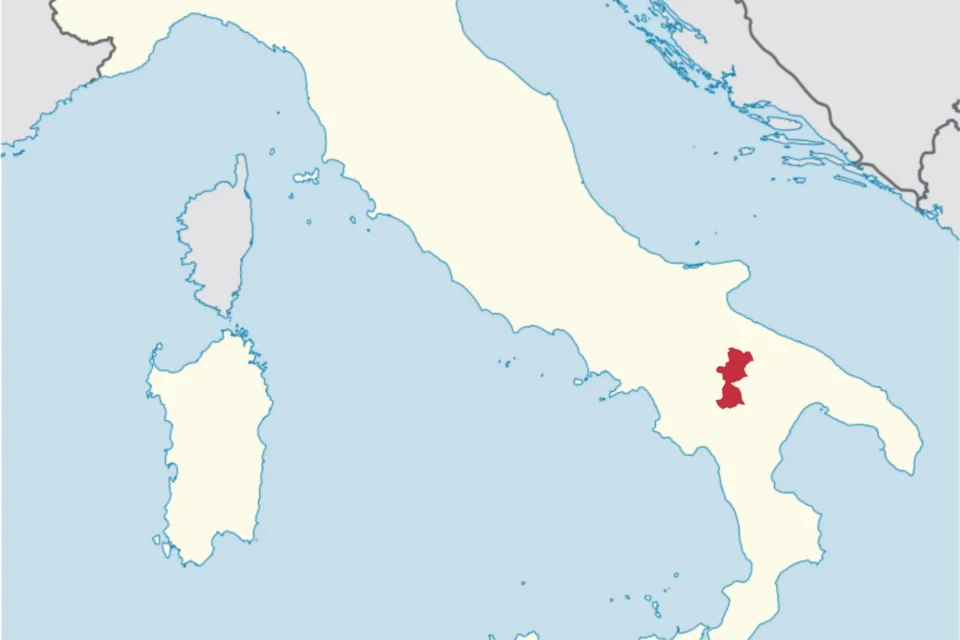
Acerenza sits in the province of Potenza, roughly half an hour’s drive from Potenza city and within easy reach of Melfi, Venosa and the Vulture area; a car is the practical way in, and parking sits below the historic core. The centre is compact but steep, so comfortable shoes matter. Combine it with a Bradano valley food stop — bread, cured pork and Aglianico are the local staples. Museum and cathedral visiting arrangements vary with the liturgical calendar and seasons, so verify locally before travelling; the regional tourism portal basilicataturistica.it carries the destination page and contacts.
Nearby places
Within easy driving distance lie Melfi under its Norman castle in the Vulture area, Roman Venosa with its abbey and Horace’s birthplace, and Muro Lucano on the road towards Potenza — all nearby candidates from the canonical list that pair naturally with a visit.
Worth building a day around.
Centro Storico di Acerenza (PZ)
APT Basilicata — Basilicata Turistica, in “Centro Storico di Acerenza (PZ) - Basilicata Turistica”, identifies Centro Storico di Acerenza (PZ) as a visitor-relevant attraction…
Museo Diocesano Acerenza
APT Basilicata — Basilicata Turistica, in “Museo Diocesano Acerenza - Basilicata Turistica”, identifies Museo Diocesano Acerenza as a visitor-relevant attraction associated with Acerenza. Verified…
Journeys in Acerenza.
Demo — Acerenza Private Highlights Tour
Let a local expert design your Acerenza day.
Tell us your dates and pace. A travel designer replies within one working day.