Sappada
High among the Dolomites at the head of a green valley, Sappada is an Alpine village that speaks German and builds in timber. Its old borgo of dark Blockbau houses, its Plodar dialect and the source of the Piave in the high valley above make it one of the Alps’ most distinctive cultural islands.
Why visit
Sappada feels transported. The official destination site calls it an authentic cultural island of Germanophone language and traditions — the Plodar dialect has been spoken here for centuries, a Tyrolean Bavarian variety carried across the mountains by settlers — and the village’s dark-wood houses with flowered balconies and carved decorations still set the tone. Travellers come for the architecture of the old borgo, recognised among the Borghi più Belli d’Italia; for hiking beneath the Dolomiti Sappadine in summer; for skiing and snowshoeing in winter; and for the emblematic walk to the source of the Piave, the river of Italian history, in the high Val Sesis. Between outings there are canederli and malga cheeses, small museums in timber houses, and a mountain rhythm few Italian towns still keep.
Character and history
Sappada’s story begins with migration. In 973 Emperor Otto II granted the Cadore region to the Bavarian bishops of Freising, and during the eleventh century German-speaking settlers — many from the Villgraten valley in present-day East Tyrol — moved into this high basin, bringing the tongue that became Plodarisch. The settlement was first written down in 1269 as Pladen, then part of a mining district; Venice absorbed it in 1420, and later centuries attached it administratively to Belluno and, from 1866, to Italy. What never changed was the valley’s interior life: the dialect, the festivals, the legends, and the Blockbau building tradition that shapes the borgate of the old village. In 2017, after a long campaign that began with a referendum, the municipality transferred from Veneto to Friuli-Venezia Giulia — a rare administrative crossing of regional borders that recognised where the community’s ties actually ran. The twentieth century left its marks too: the high passes around the valley saw Great War transit, remembered today in a small museum and a peace monument.
What to see
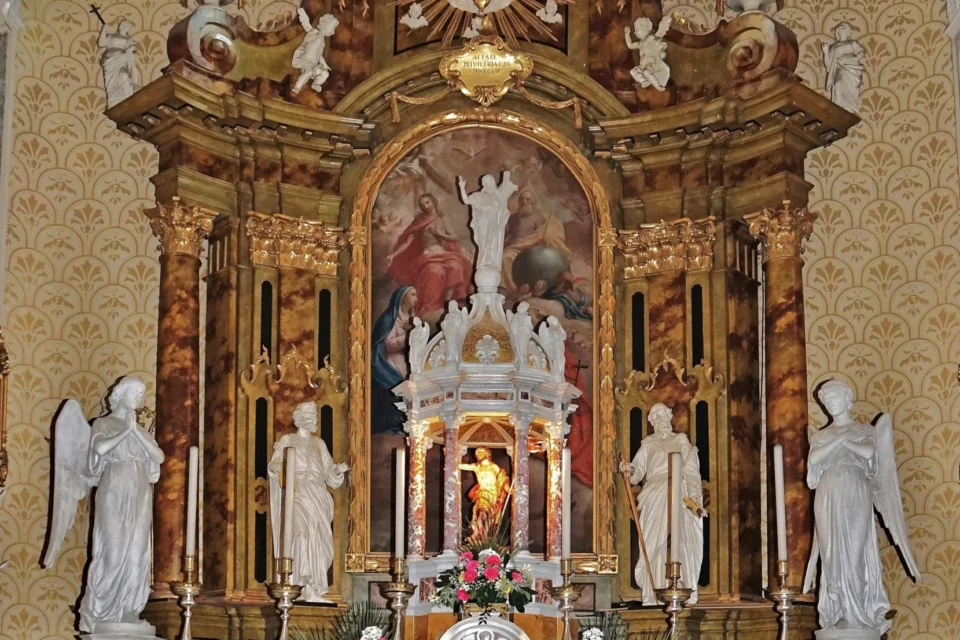
Start in Sappada Vecchia (Old Sappada), the historic borgo where the timber houses stand oldest and densest, and step inside the Giuseppe Fontana Ethnographic Museum, an 1850 Blockbau house filled with the material culture of the Plodar world. The House Museum of Peasant Civilization (Puicher s’Kottlars house) in the borgata Cretta shows a complete nineteenth-century farmhouse with its barn and stable, while the Small Museum of the Great War keeps the valley’s wartime memory. The churches punctuate the villages: the Church of Santa Margherita in the old borgo and the Church of Sant’Osvaldo at Cima Sappada, near the Regina Pacis Shrine. The Calvary of Sappada threads a devotional path of fourteen chapels up the slope. For the landscape that justifies everything else, walk to the Source of the Piave River (Val Sesis) beneath Mount Peralba, follow the mill stream to the Cascatelle waterfalls of Sappada, and climb to the Miravalle viewpoint for the wide valley panorama. The Flame of Peace monument closes the circuit with its message drawn from the war years.
How to experience
Take the village slowly first: an evening wander through Sappada Vecchia when the low sun hits the timber facades tells you more than any signboard. Then choose your season’s rhythm — marked trails, nordic walking and mountain biking from late spring; ski lifts and cross-country tracks in winter; snowshoe routes in between. The Val Sesis walk to the Piave’s source is the signature outing, a full day at altitude that rewards with wildflower meadows and the little stone marking the river’s beginning. Eat the valley’s own table — canederli, malga cheeses, Alpine sweets — and if your timing catches a Plodar festival or procession, join it: the community keeps its traditions publicly and warmly. The tourism portal and sappadadolomiti.com list current trail and lift conditions.
Practical planning
Sappada sits at about 1,250 metres at the eastern edge of the Dolomites, reached by mountain roads from the Piave valley side; in winter, check conditions and tyre requirements before travelling. Accommodation spreads across the borgate, and the resort infrastructure is compact rather than sprawling. Museums, churches and the lifts keep seasonal and weekly schedules — confirm through visitsappada.it, the official site, and the Dolomiti tourism portal. Pack layers at any time of year: the valley evenings are cool even in July. Walkers should carry water and check hut opening dates for the high routes; drivers get the easiest access in summer and the most scenic one after the first snows.
Nearby places
Tarvisio, on the Austrian and Slovene borders to the northeast, is the closest listed neighbour for a contrasting forest-and-lakes excursion, with Venzone and Gemona del Friuli en route down the valley towards Udine.
Worth building a day around.
Belvedere Miravalle
Elencato dal portale ufficiale VisitSappada tra i punti panoramici del territorio. Non determinato in dettaglio.
Calvario di Sappada
Il portale ufficiale VisitSappada indica il Calvario con 14 cappelle decorate/illuminate tra i luoghi del borgo. Percorso esterno a piedi con salita.
Casa Museo della Civiltà Contadina (casa Puicher s'Kottlars)
Sito ufficiale Sappada Dolomiti Turismo elenca la Casa Museo della Civiltà Contadina a Borgata Cretta: casera a modulo semplice con stalla-fienile della seconda metà/secondo…
Cascatelle di Sappada
Il portale ufficiale VisitSappada elenca le Cascatelle sul Rio del Mulino tra i luoghi da visitare. Raggiungibili a piedi dal borgo.
Chiesa di Sant'Osvaldo
Il portale ufficiale VisitSappada indica la Chiesa di Sant'Osvaldo (costruita 1732, ricostruita 1773) a Cima Sappada. Nel borgo di Cima Sappada, accanto al Museo…
Chiesa di Santa Margherita
Il portale ufficiale VisitSappada indica la Chiesa di Santa Margherita a Sappada Vecchia, prima documentazione nel 1327. Nel borgo antico.
Fiamma della Pace
Elencato dal portale ufficiale VisitSappada tra i luoghi del borgo. Non determinato in dettaglio.
Museo Etnografico Giuseppe Fontana
Sito ufficiale Sappada Dolomiti Turismo (Consorzio): apertura estiva (2025: 24 giugno-6 settembre; giu/lug/set lun-mer-ven 17-19, agosto tutti i giorni 17-19; aperture di gruppo su…
Piccolo Museo della Grande Guerra
Sito ufficiale Sappada Dolomiti Turismo elenca il Piccolo Museo della Grande Guerra, dedicato al fronte della fonte del Piave e agli uomini che si…
Santuario Regina Pacis
Elencato dal portale ufficiale VisitSappada tra i luoghi del borgo. Non determinato.
Sappada Vecchia (Plodn)
Portale ufficiale VisitSappada presenta Sappada Vecchia come borgo storico visitabile con case Blockbau; certificazione 'Uno dei Borghi più Belli d'Italia' (borghipiubelliditalia.it, scheda 'Sappada Vecchia/Plodn')…
Sorgente del Piave (Val Sesis)
Il portale ufficiale VisitSappada indica la Val Sesis come sito simbolico 'Qui nasce il fiume Piave' tra le destinazioni del territorio di Sappada. Raggiungibile…
Journeys in Sappada.
Demo — Sappada Private Highlights Tour
Let a local expert design your Sappada day.
Tell us your dates and pace. A travel designer replies within one working day.