Pantelleria
A volcanic island adrift between Sicily and Africa, Pantelleria is built of black lava, windowless dammusi, and vineyards of bush-trained Zibibbo trained low against the wind. It offers no sandy beaches; instead there are hot springs, crater lakes, underwater caves, and a landscape unlike anywhere else in Italy.
Why visit
Pantelleria rewards travellers who prefer raw geography to groomed resorts. The island — the Visit Sicily portal calls it the “black pearl” — rises from deep water closer to Africa than to Sicily, its coastline a succession of lava cliffs, jagged coves, and sea caves rather than beaches. What it lacks in sand it repays in experiences: bathing in the mineral lake of an extinct volcano, following steam vents on the mountainside, swimming in wave-fed rock pools, and sleeping in a domed dammuso of dry black stone. Its vineyard culture carries UNESCO recognition, and its food is unlike the Sicilian mainstream.
Character and history
Settlement reaches back some five thousand years to a farming-and-fishing people who built a village at Mursia behind a cyclopean lava wall and buried their dead in domed stone tombs, the sesi, which still dot the landscape. Greeks came, then Phoenicians, who built the port and began the island’s vine tradition; Rome seized Cossyra, as it was known, during the Punic Wars, and the Castello Barbacane — a lava-stone fortress later reinforced in 1535 — now displays imperial portraits found on the acropolis hills. Later centuries brought Byzantine and Arab rule, both of which left marks on the island’s buildings and its farming habits.
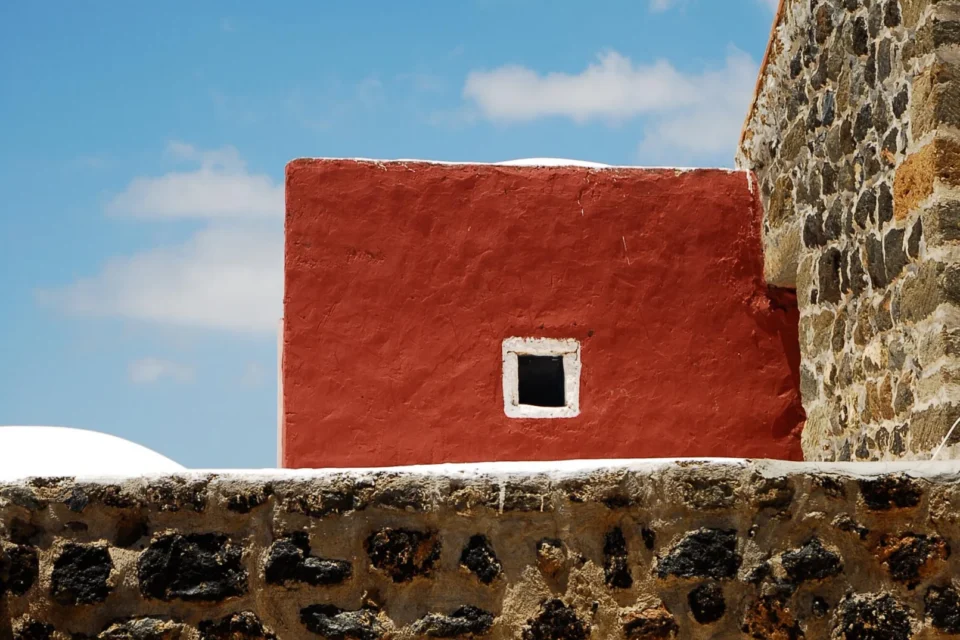
Everything about the island answers the wind. The dammusi, thick-walled lava dwellings with white domed roofs, shelter against gales; the circular giardini panteschi, dry-stone towers up to three metres high, protect a single citrus tree within. Dry-stone building is itself UNESCO-listed heritage practice, and the island’s vineyards remain a working culture rather than a museum piece.
What to see
The island’s protected heart is the National Park of Pantelleria, which manages a network of walking and cycling trails across Montagna Grande and the old farming terraces. On the park’s edges lie the island’s essential sights: the Specchio di Venere, the “Mirror of Venus,” a mineral lake filling an extinct crater where warm springs feed natural mud baths; the favare, steam vents escaping rock fissures on the mountain slopes; and the Elephant Arch at Cala Levante, a lava formation whose trunk curves over the water. The hot spring of Gadir and the wave-fed Laghetto delle Ondine at Punta Spadillo complete the circuit of bathing places.
How to experience
Explore by scooter or car on the coast road that circles the island, stopping at coves rather than racing between them. Bathe where the locals do: smear yourself with the lake’s warm mud, rinse in the sea at Cala Gadir, and end the day at a thermal spring such as Nikà, where warm water meets the cool sea. Snorkellers have their pick of underwater scenes, from the seagrass meadows off Bue Marino — the most sheltered and family-friendly cove — to the submerged archaeological route marked at Cala Gadir, where ancient anchors lie on the seabed. Fish couscous is the island’s signature plate, carrying an African accent, followed by ravioli with ricotta and mint, pesto pantesco of raw tomato and basil, and sweets such as cannateddro and mustazzola; the sweet, amber Passito di Pantelleria pours over dessert or stands in for it. Buy capers in sea salt — the island’s star crop, grown on dry-stone terraces and harvested through the summer months — as the souvenir that actually fits in a suitcase.
Timing matters more here than almost anywhere in Sicily. The island is windy by nature, and the tramontana can shut coves for a day; build slack into any plan. Boats run sunset trips toward Balata dei Turchi, a cove once used by corsair landings, and the park’s marked foot and cycling itineraries make it easy to assemble a week of walking without ever repeating a view.
Practical planning
Ferries and hydrofoils connect Pantelleria with Trapani, with crossing times varying by vessel and season, and a small airport receives flights from Sicilian and mainland cities; schedules thin out in winter, so plan the return as carefully as the arrival. Accommodation concentrates in restored dammusi, which book out far ahead in summer. There is reliable fuel and food shopping in the main town, but coves are undeveloped — carry water, shoes for volcanic rock, and windproof layers even in July. Spring and June, and September into October, offer warm swimming with gentler light and fewer boats.
Nearby places
The Egadi island of Favignana and the mainland ports around Trapani are the natural first stops on either side of the crossing, while Mazara del Vallo, whose tuna fleets work the same stretch of the Strait of Sicily, shares the island’s seafaring outlook.
Worth building a day around.
Journeys in Pantelleria.
Demo — Pantelleria Private Highlights Tour
Let a local expert design your Pantelleria day.
Tell us your dates and pace. A travel designer replies within one working day.