Nuoro
Nuoro, the informal capital of the Barbagia at the foot of Monte Ortobene, is the city Sardinians call the “Sardinian Athens” — a compact provincial capital of historic quarters, neoclassical cathedral, a national archaeological museum of real depth, and the birthplace of Nobel laureate Grazia Deledda. It is the cultural gateway to the island’s mountainous heart.
Why visit
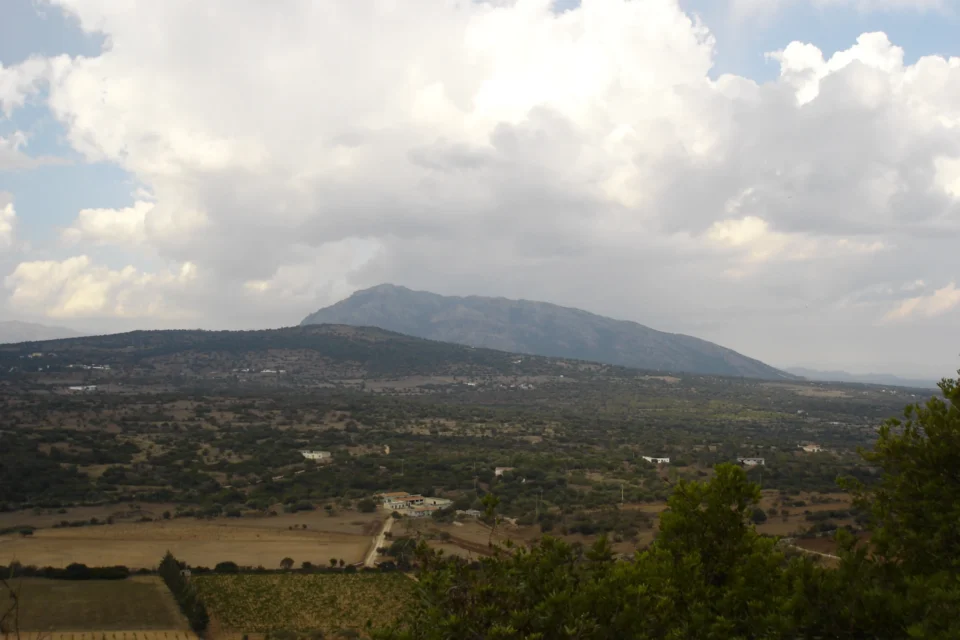
Nuoro is not a resort, and that is the point. Set among hills below the wooded slopes of Monte Ortobene, it grew from shepherd country into the intellectual capital of interior Sardinia, producing writers, sculptors and a cultural life that has run continuously since the nineteenth century. Visitors come for the layers: the Deleddiano museum in the Nobel Prize-winner’s birthplace; the MAN, with the strongest collection of early twentieth-century Sardinian art anywhere; a national archaeological museum whose treasures include evidence of Bronze Age surgery; and a nuraghe standing inside the city itself, wrapped by the remains of a village of more than a hundred and fifty huts. Add the Festa del Redentore on Monte Ortobene each late August, the island’s most heartfelt procession, and a food scene of uncomplicated mountain honesty, and Nuoro makes both a rewarding stop and the best base for exploring the Barbagia.
Character and history
The most populous town of the Barbagia region sits at around 550 metres between the Gennargentu foothills and the Monte Ortobene park, whose sixteen hundred hectares of holm oak shelter domus de Janas and rare wildlife. Nuoro’s quarters — Séuna and Santu Pedru among them — preserve the atmosphere of the old town that Deledda put into her novels, which carried Sardinia to European readers; she called Monte Ortobene the city’s soul, and she is buried in the little church of la Solitudine on its flank. The city’s main church tells its modern history: the Cathedral di Santa Maria della Neve rises on the hill the locals call sa tanchitta, a neoclassical building begun in the 1830s on the site of an older church, designed by the friar-architect Antonio Cano and blessed in 1853, its Ionic portico and twin towers facing the piazza above Corso Garibaldi, the historic social spine of the city. Around it, cultural institutions — museums, the Tribu space, craft ateliers — keep the “Sardinian Athens” nickname current rather than nostalgic.
What to see
Begin at Corso Garibaldi and the cathedral, then step into the neighbouring church of Sanctuary della Madonna delle Grazie in Séuna — one of Nuoro’s oldest places of worship, built in the late seventeenth century with late-Gothic forms, a carved trachyte portal and rose window, and eighteenth-century frescoes of apostles and prophets; the “miraculous” wooden Madonna now lives in the larger modern sanctuary nearby, and her feast fills the piazza every 21 November. The National Archaeological Museum ‘Giorgio Asproni’, housed in the neoclassical palace of its namesake near the cathedral, sweeps from Palaeolithic finds and the Corbeddu cave remains through a rich nuragic collection — including objects from the sacred well of Su Tempiesu — to Phoenician, Punic and Roman material; its most moving exhibit is the reconstructed Early Bronze Age burial of a woman from the Dorgali area, bearing evidence of what the museum describes as the island’s earliest successful trepanation. Finally climb to the Nuraghe Tanca Manna, a Middle Bronze Age single tower with a tholos chamber on a hill in the city’s southern edge, ringed by the rectangular huts of an early nuragic village, with views towards Monte Ortobene.
How to experience
Nuoro repays unhurried walking: the Séuna and Santu Pedru quarters, the Deleddiano museum, an espresso on Corso Garibaldi, then the climb to the cathedral piazza for the view. Book a guided tour or workshop at Tanca Manna — the archaeological park runs experimental-archaeology sessions and evening readings in season. Time a visit to the Festa del Redentore, the last Sunday of August, when the whole city climbs Monte Ortobene behind the great statue of the Redeemer; or to the early-September Autunno in Barbagia, when villages across the province open cellars and workshops. Eat the interior’s cooking — roast meats, culurgiones, seadas — in trattorie rather than hotel dining rooms, and pair it with Cannonau from the surrounding hills.
Practical planning
Nuoro sits roughly an hour’s drive from Olbia and its airports, and is well placed for day trips to Orgosolo, Mamoiada, Dorgali and the Gulf of Orosei. A car helps for the countryside, but the city itself is compact and walkable, with car parks below the centre. Spring and autumn are ideal; winters are cold and occasionally snowy, and August is busy but festive. Museum opening hours vary through the year — check current schedules on sardegnaturismo.it and the museums’ own pages before travelling. Sunday mornings can be quiet; plan visits around the 21 November and Redentore dates if ritual is what you came for.
Nearby places
Mamoiada, home of the Mamuthones masks, and Orgosolo, with its murals, are both within half an hour. The mountains of Gennargentu rise to the south, while Dorgali and the Gulf of Orosei bring you to caves and coves in under an hour.
Worth building a day around.
Cattedrale di Santa Maria della Neve
Regione Sardegna — SardegnaTurismo, in “SardegnaTurismo - Sito ufficiale del turismo della Regione Sardegna”, identifies Cattedrale di Santa Maria della Neve as a visitor-relevant…
Museo archeologico nazionale ‘Giorgio Asproni’
Regione Autonoma della Sardegna — SardegnaTurismo, in “Museo archeologico nazionale 'Giorgio Asproni' | SardegnaTurismo”, identifies Museo archeologico nazionale ‘Giorgio Asproni’ as a visitor-relevant attraction…
Nuraghe Tanca Manna
Regione Autonoma della Sardegna — SardegnaTurismo, in “Nuraghe Tanca Manna | SardegnaTurismo”, identifies Nuraghe Tanca Manna as a visitor-relevant attraction associated with Nuoro. Verified…
Santuario della Madonna delle Grazie
Regione Sardegna — SardegnaTurismo, in “SardegnaTurismo - Sito ufficiale del turismo della Regione Sardegna”, identifies Santuario della Madonna delle Grazie as a visitor-relevant attraction…
Journeys in Nuoro.
Demo — Nuoro Private Highlights Tour
Let a local expert design your Nuoro day.
Tell us your dates and pace. A travel designer replies within one working day.