Mazara del Vallo
On Sicily’s westernmost shore, closer to Tunisia than to Palermo, Mazara del Vallo layers Phoenician memory, Arab urbanism, and Norman conquest into a working fishing city. A medieval Kasbah, an ancient cathedral, and a bronze satyr pulled from the deep give it one of the island’s most distinctive cultural profiles.
Why visit
Few Sicilian cities compress so much history into so walkable a centre. Mazara was the first Arab landing place on the island in 827 and remained an emirate capital before Count Roger the Norman took it in 1072, and the city still lives between those worlds: a labyrinthine Kasbah quarter where North African shops and tiled courtyards thrive, Norman churches on sacred ground older still, and one of the Mediterranean’s largest fishing fleets working the Strait of Sicily. Add the Dancing Satyr — a Greek bronze raised from the seabed in 1998 — and you have a destination that rewards curiosity more than it caters to it.
Character and history
Legend gives Mazara a Phoenician founder, but its defining early chapter is Arab: two centuries under Islamic rule shaped the historic Kasbah, its streets laid out in the dense, shaded pattern of a North African medina where philosophers, judges, and merchants once walked. The Normans under Roger of Hauteville conquered the city in 1072, and the cathedral basilica rose on layered ground where earlier places of worship had stood, blending Romanesque, Greek, and later Baroque elements. Roger built a castle in the same years; today its sole survivor is the pointed gateway on Piazza Mokarta, named for the Muslim commander who tried and failed to retake the city in 1075.
The modern city belongs to the sea. Around three hundred large deep-water vessels and thousands of crew make it one of the Mediterranean’s great fishing ports, and that economic openness has made Mazara a byword for integration, its Tunisian community an accepted, visible part of daily life. The Visit Sicily portal puts it well: this is a city that sums up the character and history of an entire island, from Islamic medina to Norman nave to modern trawler deck.
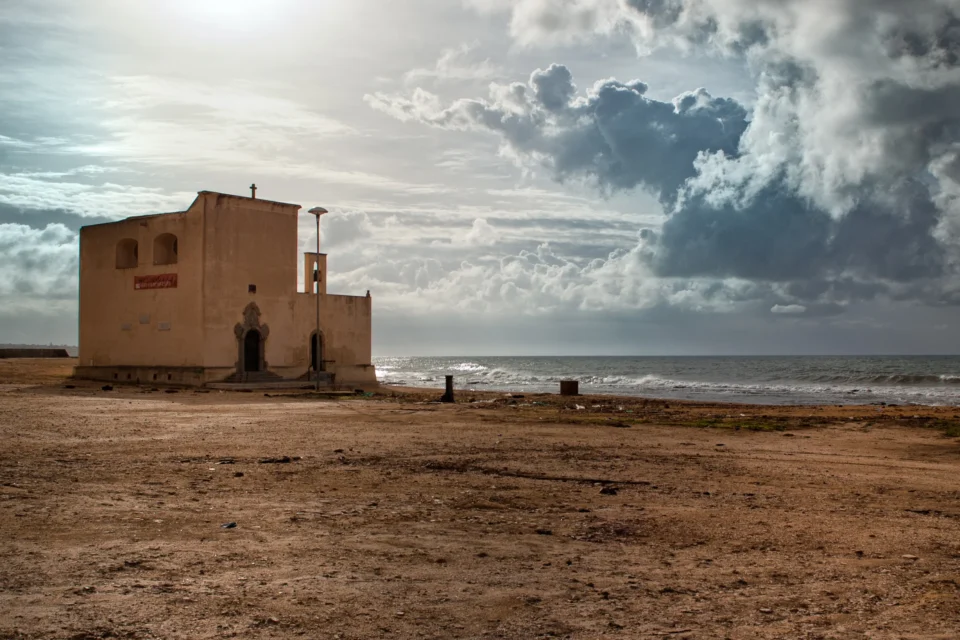
The sacred map rewards close reading, too. The churches of Madonna delle Giummare and San Nicolò Regale keep their Norman Romanesque lines near the riverbed, the Baroque church of San Francesco serves the old centre, and on the seafront stands the little church of San Vito. Piazza della Repubblica gathers the seminary, the bishop’s palace, and the town hall, linked to the cathedral by the arched loggia known as the Tocchetto; the former Jesuit college nearby now holds civic collections. Nature adds a final layer: the lake of Preola and the Gorghi Tondi reserve to the south protect wild orchids and the Sicilian pond turtle, a reminder that the Mazarese territory is wetland and dune as much as city and sea.
What to see
Begin at the Museum of the Dancing Satyr, housed in the deconsecrated church of Sant’Egidio, where the slender bronze — recovered in March 1998 by the fishing boat Capitan Ciccio at a depth of some five hundred metres in the Strait of Sicily — floats in a darkened room. Then walk the Kasbah, the old Arab quarter of alleys and whitewashed, tile-hung houses kept alive by the Tunisian community. The Cathedral of the Santissimo Salvatore, founded in the Norman era and reworked in the seventeenth and eighteenth centuries, faces the elegant Piazza della Repubblica with its seminary and Diocesan Museum. The Norman Arch completes the circuit, a fragment of Roger’s castle in a garden square.
How to experience
Mazara is best read slowly, on foot, quarter by quarter. Take the Kasbah at an unhurried pace — courtyards, artisans’ workshops, and corner vendors repay wandering more than a checklist. Fish couscous is the city’s signature plate, followed closely by the prized red shrimp landed by its own trawlers; eat where the crews eat, near the port. Evening is for the seafront promenade and the little church of San Vito by the water. Spring brings comfortable temperatures and a city that belongs to its residents rather than to tour buses.
Practical planning
The city sits on the southwestern Trapani coast, roughly an hour from Trapani airport by car, with rail connections along the Castelvetrano–Mazara line. The historic centre is compact and flat; park outside the Kasbah’s narrow lanes and explore on foot. Museums keep seasonal opening patterns, so verify times for the Satyr museum before setting your day around it. Combine Mazara with the wine country toward Marsala or the beaches toward Trapani; a car makes both easy. Friday and Saturday evenings animate the centre; Sunday can be quiet.
Nearby places
The salt pans and windmills of Trapani and the hilltop town of Erice lie to the north, while Marsala’s wine cellars and Mozia’s Phoenician lagoon are an easy drive east. For a longer arc, the fishing port of Sciacca continues the maritime theme along the southern coast.
Worth building a day around.
Arco Normanno
Regione Siciliana — Visit Sicily, in “Mazara del Vallo | Visit Sicily official page”, identifies Arco Normanno as a visitor-relevant attraction associated with Mazara…
Cattedrale del Santissimo Salvatore
Regione Siciliana — Visit Sicily, in “Mazara del Vallo | Visit Sicily official page”, identifies Cattedrale del Santissimo Salvatore as a visitor-relevant attraction associated…
Kasbah di Mazara del Vallo
Regione Siciliana — Visit Sicily, in “Mazara del Vallo | Visit Sicily official page”, identifies Kasbah di Mazara del Vallo as a visitor-relevant attraction…
Museo del Satiro Danzante
Regione Siciliana — Visit Sicily, in “Mazara del Vallo | Visit Sicily official page”, identifies Museo del Satiro Danzante as a visitor-relevant attraction associated…
Journeys in Mazara del Vallo.
Demo — Mazara del Vallo Private Highlights Tour
Let a local expert design your Mazara del Vallo day.
Tell us your dates and pace. A travel designer replies within one working day.