Baia
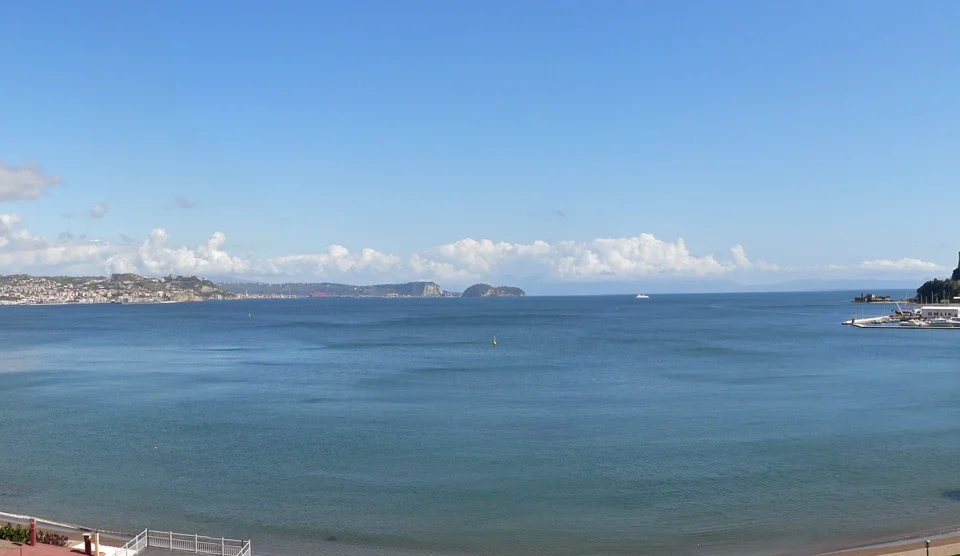
Baia, the seaside quarter of Bacoli on the Phlegraean coast, was the luxury resort of the Roman elite, where emperors built dome-crowned baths above a favoured bay. Today its ruins rise on land and sink beneath the sea, giving travellers archaeology in two elements.
Why visit
No bay in the world shines more delightfully than Baia’s, wrote Horace, and the ruins confirm the compliment. On the crater slope above the water, the Ministry of Culture runs an archaeological park of imperial bath halls so vast that later generations mistook them for temples; below the waves, a protected underwater park preserves streets, villas and mosaics of the ancient town, slowly submerged by the restless ground of the Phlegraean volcanic field. Few places on the Mediterranean let you walk a Roman domed rotunda in the morning and float above sunken marbles in the afternoon. An Aragonese castle above it all houses the archaeological museum of the Campi Flegrei, completing a site of unusual density.
Character and history
Ancient Baiae was where Rome’s powerful came to be seen: senators and emperors kept villas on terraces that stepped down five levels or more to the shore, their painted ramps and marble dining halls facing Vesuvius, Sorrento and Capri. What made the place fashionable was the ground itself — volcanic springs of hot mineral water, channelled through conduits to heat saunas and immersion pools. In the age of Augustus, builders raised what remains the earliest known large-scale hemispherical concrete dome, made possible by local pozzolana; the great domed halls we now call the temples of Mercury, Diana and Venus, raised roughly a century apart, were never temples at all but vaulted bathing halls, misnamed by later antiquarians. As the empire faded, so did the fashion, and the ground sank: bradyseism, the slow breathing of the volcanic caldera, lowered the coast and drowned the ancient shoreline. In the Middle Ages the ruins even served as improvised hospices with masonry beds for curative baths, a practice the Romans themselves never developed. The Aragonese castle, built above the bay from the fifteenth century, watched over these waters in later troubled times.
What to see
The Archaeological Park of the Baia Roman Baths covers the crater slope, its villa terraces and the great vaulted halls; the so-called Temple of Diana and Temple of Venus are its dome-crowned showpieces, while the Baia Monumental Park keeps the archaeology-nature belt along the ridge. Above the bay, the Baia Castle shelters the Archaeological Museum of the Phlegraean Fields, whose statues and reliefs include pieces recovered from the drowned nymphaeum of Emperor Claudius and from the Blue Grotto of Capri. Most extraordinary is the Baia Underwater Archaeological Park: guided routes such as the Terme del Lacus, Secca delle Fumose, Villa dei Pisoni and the Portus Julius complex, visited by glass-bottomed boat, snorkelling or certified diving, over villas, nymphaea and baths beneath the surface.
How to experience
Plan two halves: land and water. Take the archaeological park in the cooler morning, reading the official descriptions at pafleg.cultura.gov.it, the Campi Flegrei park authority’s site; note that the domes reward patience more than speed. Then book an underwater-park excursion — boat trips with viewing panels suit non-swimmers, while divers follow routes over the mosaics — through the park’s official channels at parcoarcheologicodibaia.it, which lists affiliated dive centres. Finish with the castle museum in the late afternoon light. Between visits, the seafront of Baia and Bacoli offers fish restaurants with a local crowd rather than a resort one. Sea conditions and site closures occasionally follow the volcanic activity of the caldera, so check the park authority’s notices before travelling.
Practical planning
Baia lies within the comune of Bacoli, west of Naples and Pozzuoli, reached by car via the Tangenziale (Pozzuoli or Arco Felice exit) or by the Cumana railway to Fusaro or Lucrino followed by a short ride. Tickets for the state sites are modest and a cumulative circuit ticket covers several Campi Flegrei locations, but hours and prices change with season — confirm current arrangements on the park authority and Ministry pages rather than guidebooks. The underwater park requires booking ahead, especially in summer; swimming over the ruins unguided is restricted. Wear shoes suited to rough archaeological ground, carry sun protection on the exposed terraces, and build slack into the day: this coast rewards lingering.
Nearby places
The volcanic heart of the coast, with its amphitheatre and Rione Terra, is next door: Pozzuoli. The whole protected coastal area around Baia is described in Campi Flegrei, and the first Greek colony of the mainland west lies nearby at Cuma. The bay islands of Ischia and Procida sit just offshore.
Worth building a day around.
Castello di Baia
Pagina ufficiale MiC: castello aragonese 1490-1493 ingrandito in eta vicereale; orario 9:00-18:30, chiusura lunedi. 9:00-18:30 (ultimo ingresso 17:30); chiusura lunedi; parzialmente accessibile
Museo archeologico dei Campi Flegrei
Il Parco documenta il museo nel Castello di Baia, aperto nella configurazione attuale nel 2010.
Parco archeologico delle Terme di Baia
Pagina ufficiale MiC con descrizione degli scavi e delle grandi cupole; tariffe e chiusura lunedi sul sito del Parco. Percorsi interni su pendio del…
Parco Monumentale di Baia
Pagina ufficiale MiC: area demaniale di circa 14 ettari con resti di villa romana; nessun orario/biglietto dedicato pubblicato. Percorsi esterni; modalita di apertura da…
Parco Sommerso di Baia
Sito ufficiale dedicato: visite guidate, diving, percorsi archeologici sommersi (Portus Julius), visite notturne; sede via Lucullo 94. Visite in barca con visita subacquea dal…
Tempio di Diana
Pagina ufficiale MiC: grande sala a cupola del complesso termale, separata dal Parco delle Terme dalla ferrovia Cumana. Visibile dall'esterno; eventuale apertura interna da…
Tempio di Venere
Pagina ufficiale MiC: rotonda ottagonale a cupola ombrello, isolata tra la strada e il porto di Baia. Visita esterna dal contesto urbano
Journeys in Baia.
Demo — Baia Private Highlights Tour
Let a local expert design your Baia day.
Tell us your dates and pace. A travel designer replies within one working day.