Motor Valley
Between the Po plain and the first Apennine slopes, a cluster of towns produces some of the fastest machines on earth. Motor Valley is a corridor of factories, museums and circuits from Bologna through Modena and Reggio Emilia to Ravenna, where Ferrari, Ducati, Pagani and their rivals share one working landscape.
Why visit
Nowhere else do so many great motorsport names share so small a patch of land. Within an hour’s drive you can walk a hall of scarlet racing motorcycles in Bologna, watch a hypercar take shape near Modena, and stand in front of the tractors that started Ferruccio Lamborghini’s empire. This is living industry rather than nostalgia: the workshops are active, the test tracks hum, and the guides who show you around often build the cars themselves. The concentration is remarkable, and so is the variety. Collector garages, university engineering programmes and driving schools sit alongside the famous brands, so even travellers with only a passing interest in engines find plenty of design, artistry and human story to hold them. For anyone who cares about engineering, craft or speed, the density is extraordinary.
Character and history
The region’s motor culture grew out of an older craft tradition. Emilia-Romagna was already a land of workshops, foundries and agricultural engineering when Enzo Ferrari and his rivals set up after the First World War, and that practical base explains why so many companies took root here rather than elsewhere. Mechanics moved between firms, suppliers settled nearby, and a competitive pride developed that still colours local conversation. Ducati began in Bologna in 1926 as a maker of radio components and turned to motorcycles after the war, eventually defining its identity through desmodromic valve engineering and racing success that now stretches across multiple world championships. Ferruccio Lamborghini, a tractor manufacturer, founded his car company in 1963 out of a famous dispute over a clutch, choosing the flat farmland near Bologna for a factory that would challenge the established grand tourers. The newest chapter belongs to Horacio Pagani, whose factory near San Cesario sul Panaro represents a more recent, near-obsessive school of carbon-fibre craftsmanship, with each hypercar assembled beside the museum that celebrates it. The area markets itself as “the land where speed was born,” and the claim holds up.
What to see
The Ducati Museum at Borgo Panigale, on Bologna’s northern edge, traces nearly a century of motorcycle design and pairs its galleries with a factory tour through the active production lines. South-east of Modena, the Horacio Pagani Museum sits beside the atelier where Zonda, Huayra and Utopia models are assembled, a rare chance to see hypercar construction at close range. At Funo di Argelato, just north of Bologna, the Ferruccio Lamborghini Museum honours the founder himself, displaying the tractors, the Miura and other cars he championed. Beyond these three, the wider territory holds the factories and collections of Ferrari, Maserati and Dallara, plus working circuits at Imola and Misano.
How to experience
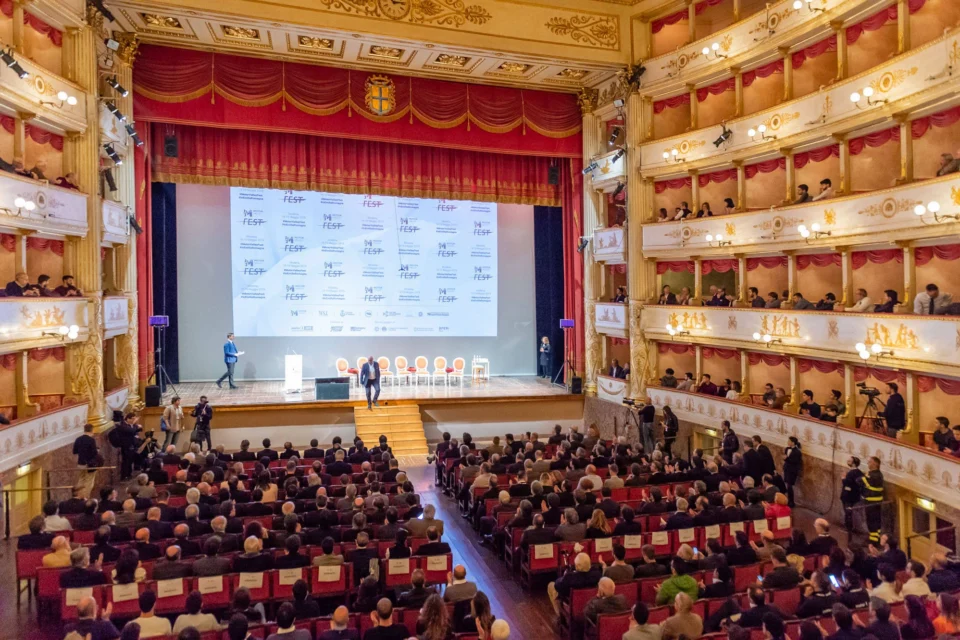
Book ahead: every manufacturer museum runs its own ticketing and tour system, and factory visits are capped. The practical rhythm is one museum per half-day, linked by car across the Via Emilia. Combine two contrasting visits in a single day, perhaps motorcycles in the morning and hypercars after lunch. Guided tours reward the extra time; at the Ducati complex the route crosses the assembly lines, and at Pagani the atelier visit is inseparable from the museum itself. Timing matters less for the museums than for events, when the whole valley shows its character at once; the annual Motor Valley Fest in Modena gathers the brands in the streets, and race weekends at Imola or Misano turn the region red. Manufacturers post opening details and tour availability on their own sites, so confirm directly before travelling.
Practical planning
A car is by far the easiest way to cover the corridor, though trains along the Milan–Bologna line serve Modena and Bologna well, and Pagani runs a shuttle from Castelfranco Emilia station. Museums cluster around San Cesario sul Panaro, Sant’Agata Bolognese, Maranello and Funo di Argelato, so base yourself in Modena or Bologna and radiate outward. Factor in lunch: the towns along the route are proper food destinations in their own right, and a slow midday meal between two factory visits is part of the experience. Factory tours frequently sell out weeks in advance, especially in spring and autumn, and many close over the August holidays or on weekends when production stops. Check each company’s official site for current schedules and reservations rather than relying on aggregators.
Nearby places
Modena makes the natural headquarters for a Motor Valley trip, with its UNESCO-listed centre and restaurant scene; see Modena. Maranello, home of Ferrari, lies just beyond it and deserves its own half-day: Maranello. To the north-west, Bologna combines the Ducati experience with porticoed streets and serious food: Bologna.
Worth building a day around.
Museo Ducati
Official ducati.com Borgo Panigale Experience page (hours, tickets, online booking); listed by museidibologna.it and motorvalley.it. Open daily except Wednesday 9:00-18:00, last entry 30 min…
Museo Ferruccio Lamborghini
Official museum website museolamborghini.com (hours and bookings); listed by Bologna Welcome. Open Tue-Fri 10:00-13:00 / 14:00-18:00, Sat-Sun 10:00-13:00 / 14:00-18:30, closed Monday; guided visits…
Museo Horacio Pagani
Official pagani.com museum pages (tickets and guided visits) and booking portal pagani.modenatur.it; tel. +39 059 4739202. Museum open daily 9:30-18:00 (no booking needed; entry…
Journeys in Motor Valley.
Demo — Motor Valley Private Highlights Tour
Let a local expert design your Motor Valley day.
Tell us your dates and pace. A travel designer replies within one working day.